What Is the Safest Ski Helmet? Certified, MIPS, and Snug Fit
The Short Version: The safest ski helmet is certified to ASTM F2040 or EN 1077, includes a rotational-impact system such as MIPS, and fits your head correctly. A 4- or 5-star Virginia Tech STAR rating adds independent confirmation of impact performance.
Certification confirms a helmet meets minimum impact standards. MIPS adds a low-friction layer that moves slightly inside the helmet to help reduce rotational motion in angled impacts. A correctly fitted helmet sits level and snug, stays put when you shake your head, and leaves no gap above your goggles.
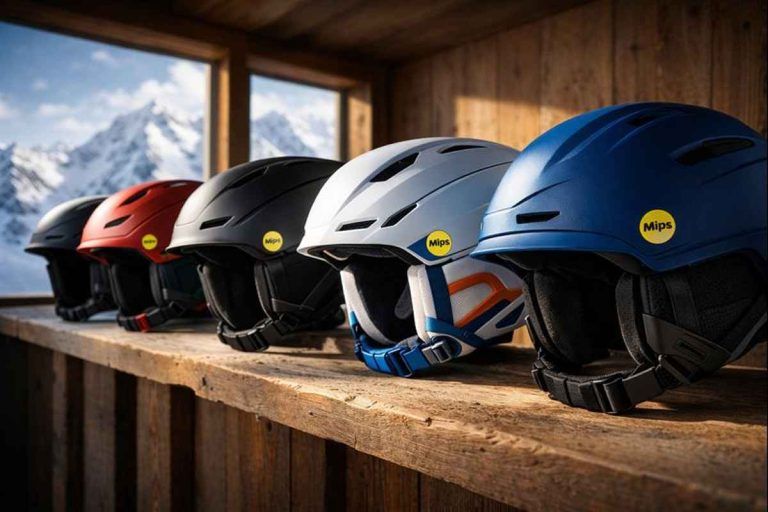
Walk into any ski shop in November and you’ll find a wall of helmets that all look roughly the same. Matte black, a few vents, a little yellow MIPS (Multi-directional Impact Protection System) dot on the back. The price tags run from under $100 to well over $300, and the question every one of us asks while standing there is the same: which one of these is actually going to protect my head?
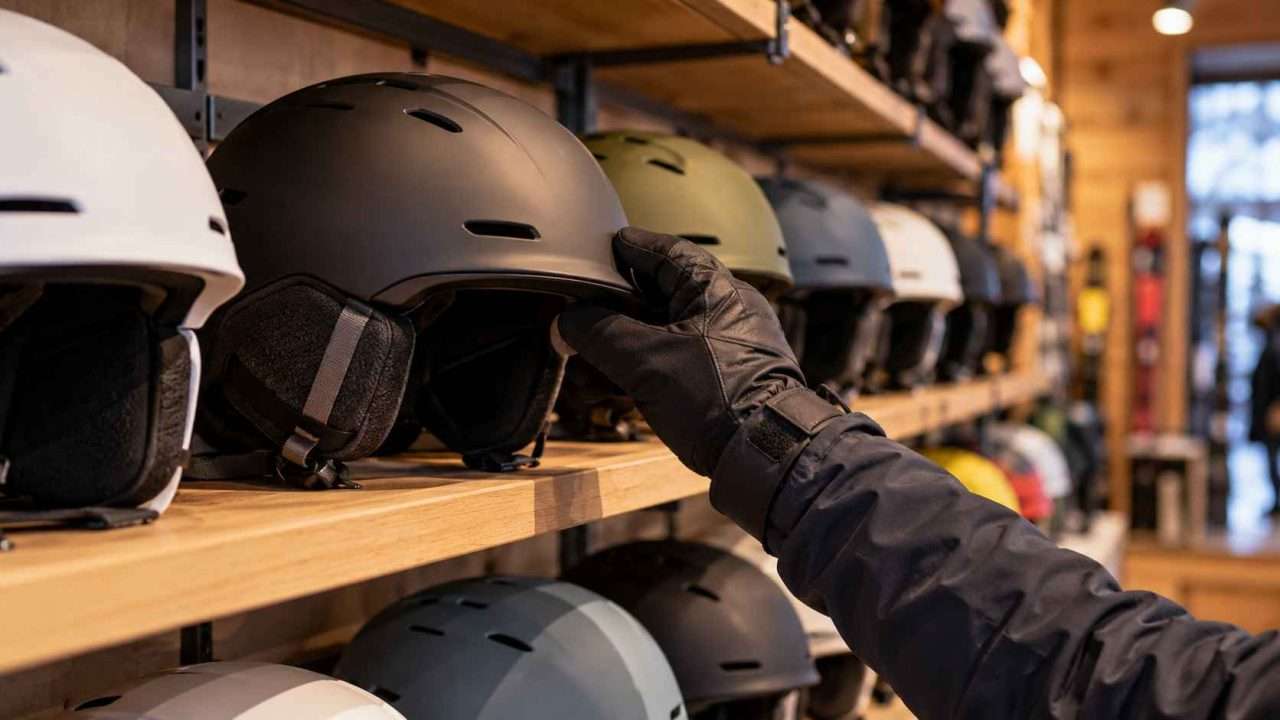
I’ve bought snow helmets for myself and for four kids over the years, and I’ve stood in that aisle more times than I care to count, turning helmets over to read the label inside the liner. In my experience, the salesperson’s answer usually depends on what’s in stock (and on how close it is to closing time).
The honest answer is a little more interesting than “the expensive one.” There is no single safest ski helmet for everybody, but there are clear, testable things that make one helmet safer than another.
What Is The Safest Ski Helmet?
The safest ski helmet is one that carries a snow sports safety certification, adds a rotational impact system like MIPS, fits your head snugly with the chin strap properly adjusted, and is still in good condition. Price, brand, and color come a distant second to those four things (sorry, but matching your jacket isn’t a safety feature). Let’s take a look at each of them.
If you’re hoping for a single brand and model name, I’m going to disappoint you. Heads come in different shapes, skiers crash in different ways, and helmet models change every season. What doesn’t change is the list of features that separate a genuinely protective helmet from one that simply looks the part.
Here’s what the safest ski helmet for your head should have:
- Snow-specific certification: ASTM F2040 (from ASTM International, formerly the American Society for Testing and Materials), CE EN 1077 (CE is the European conformity mark and EN stands for European Norm, Class A or B), or both, printed on the label inside the helmet.
- Rotational impact protection: MIPS, MIPS Spherical, SPIN, WaveCel, or a similar system designed for angled impacts.
- A proper fit: snug all the way around, sitting level on your head, with the chin strap adjusted so it can’t roll off.
- Good condition: no crash history, no cracks, no compressed foam, and straps that aren’t fraying.
- Independent testing where available: a Virginia Tech STAR rating is a useful tiebreaker, if your helmet has been tested.
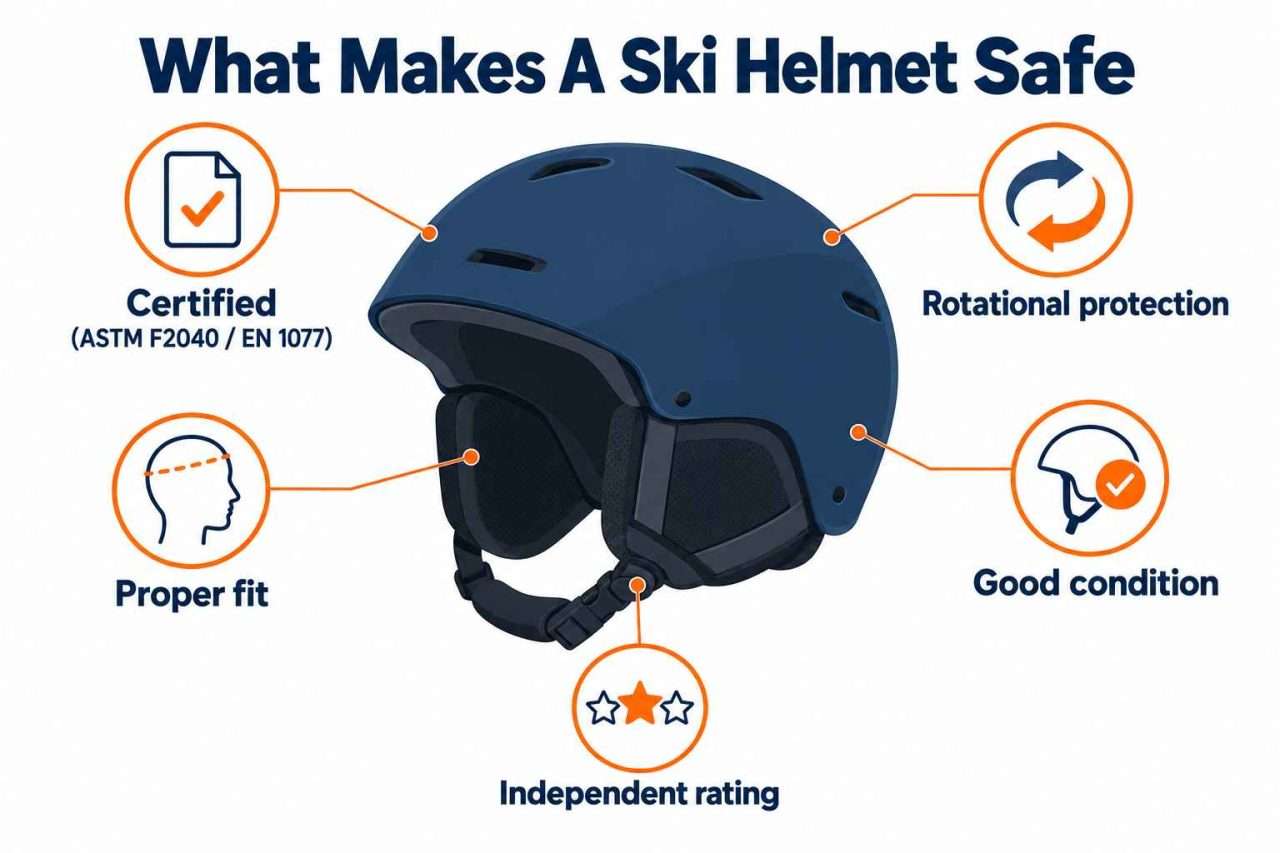
Notice what isn’t on that list? Price. We’ll come back to that, but it’s worth knowing up front that a $100 helmet and a $300 helmet can both tick every box above.
How Does Ski Helmet Testing Actually Work?
Every certified snow helmet has survived a series of lab tests before it reaches the shelf. The main event is impact testing, where a helmet fitted to a metal headform is dropped onto a steel anvil while sensors inside measure how hard the “head” decelerates. Think of it as dropping a bowling ball wearing a helmet onto a kitchen floor, then measuring how much of the jolt got through.
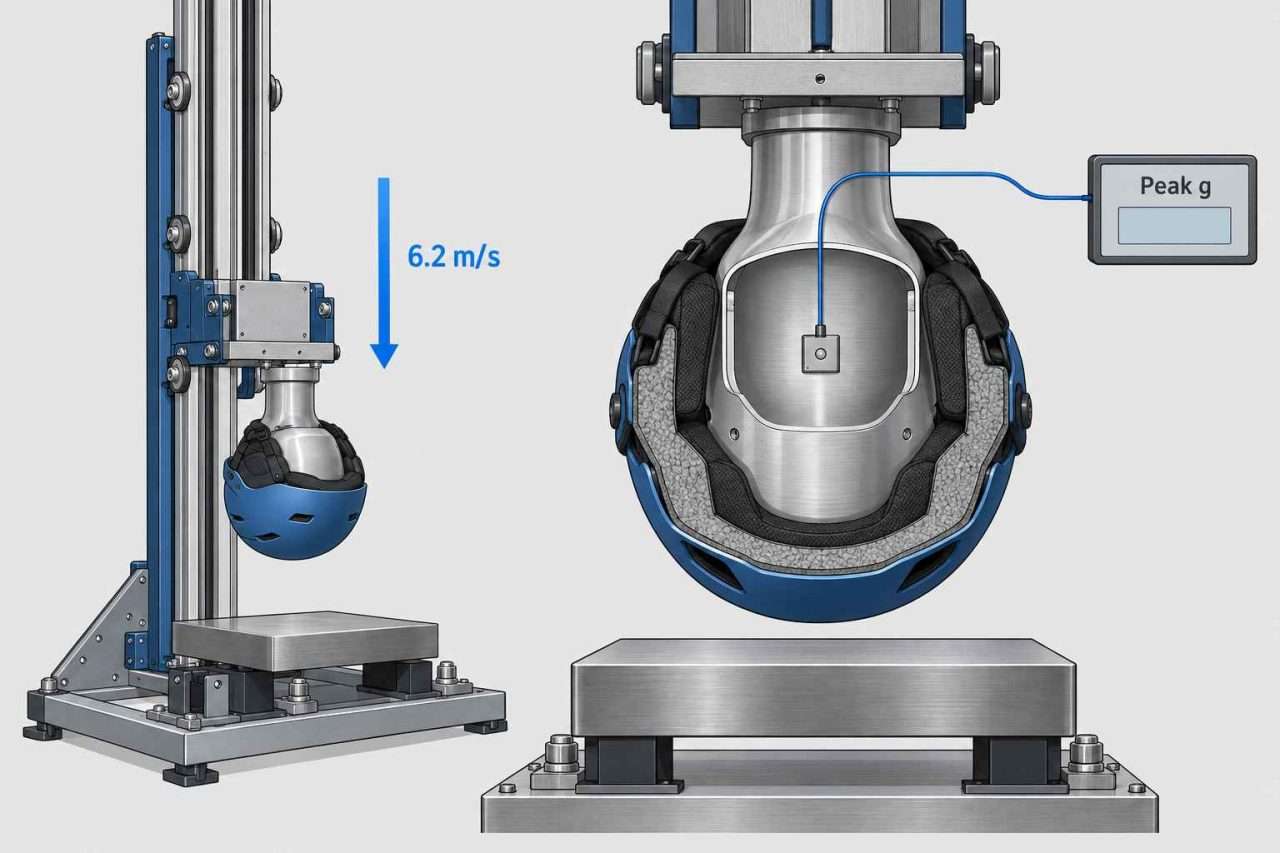
In the U.S., the relevant standard is ASTM F2040, the specification for helmets used in recreational snow sports. It’s voluntary, but most helmets sold here carry it. According to Sweet Protection’s summary of the standard, ASTM drops the helmet at 6.2 m/s onto a flat anvil (and at a lower speed onto hemispherical and edge anvils), and peak acceleration can’t exceed 300 g (300 times the force of gravity).
Europe’s CE EN 1077 drops the helmet at 5.42 m/s, with a stricter 250 g limit, and tests at room temperature, at -25°C, and after artificial aging. It also covers penetration testing, where a 3 kg striker is dropped onto a pointed punch to simulate a ski pole tip or tree branch, plus retention system testing to make sure the straps hold and the helmet stays on.
What’s The Difference Between EN 1077 Class A And Class B?
EN 1077 comes in two classes. Class A helmets must cover the ears and pass penetration testing from a 750 mm drop, while Class B helmets cover a smaller area and are penetration tested from 375 mm. Plenty of popular recreational helmets are Class B, so don’t treat it as a fail grade.
The take-away from all this ski helmet testing is that the U.S. and European standards overlap a lot but aren’t identical. ASTM hits harder but allows a higher g limit, while EN 1077 hits a little softer but sets a tighter ceiling and adds penetration testing. A helmet carrying both has passed both sets of hoops, which is a good sign in itself.
| Test | ASTM F2040 (U.S.) | CE EN 1077 Class A | CE EN 1077 Class B |
|---|---|---|---|
| Flat anvil impact speed | 6.2 m/s | 5.42 m/s | 5.42 m/s |
| Peak acceleration limit | 300 g | 250 g | 250 g |
| Ear coverage required | No | Yes | No |
| Penetration test drop | Not listed in summary | 750 mm | 375 mm |
| Retention system tested | Yes (strength and roll-off) | Yes | Yes |
| Rotational impact tested | No | No | No |
Is A Certified Helmet Automatically The Most Protective Ski Helmet?
No. Certification is a pass/fail floor, not a ranking. A helmet that scraped through at 249 g gets exactly the same sticker as one that recorded 150 g, and nothing on the label tells you which is which.
There’s also a speed gap worth thinking about. Researchers who reviewed real snow sport head injuries in British Columbia reported average skier speeds of 12.7 m/s (roughly 28 mph), which is about double the 6.2 m/s ASTM drop. The same study found falls caused 54% of head injuries, with jumps at 17% and collisions with objects or people at 15%.
Before anyone says “so why bother,” remember that your forward speed and the speed your head actually hits the snow are two different numbers. Most head hits come from ordinary falls, which is exactly the kind of impact a certified helmet is built to manage. The point being, certification isn’t a guarantee, but it’s the foundation everything else sits on.
Do Ski Helmets Actually Prevent Brain Injuries?
They prevent a lot of head injuries, but they aren’t magic against concussion. A 2010 meta-analysis of 12 studies in the Canadian Medical Association Journal found helmeted skiers and snowboarders had 35% lower odds of head injury (an odds ratio, or OR, of 0.65), with no increased risk of neck injury. It’s older data, but it remains the most thorough pooled analysis on the question.
The same paper notes that traumatic brain injury is the leading cause of death and serious injury among skiers and snowboarders. So what about concussion specifically? A 2023 evidence review by Agar and colleagues highlighted a multicenter study where helmet use didn’t significantly reduce the odds of concussion (OR 1.28), yet did cut the odds of a more serious head injury (OR 0.47).
That’s the honest picture. Standard helmets are very good at stopping skull fractures and the worst outcomes, and less good at the rotational forces that cause concussion. That gap is exactly why rotational protection has become the dividing line between a good helmet and the most protective ski helmet you can buy, and you’ll find more of the numbers in our ski helmet safety statistics.
Why Does Rotational Protection Matter So Much?
Most real crashes don’t hit the snow dead straight. You land at an angle, your head keeps moving, and your brain twists inside your skull. Rotational impact forces like these are strongly linked to concussion, and none of the certification tests mentioned above measure them.
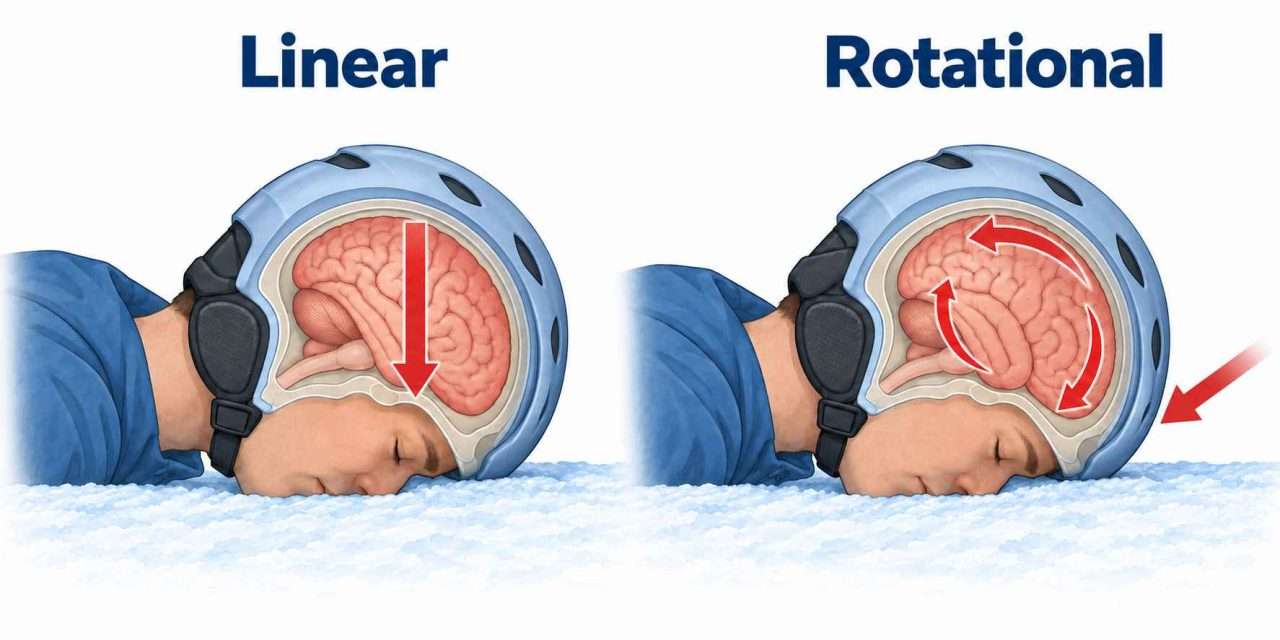
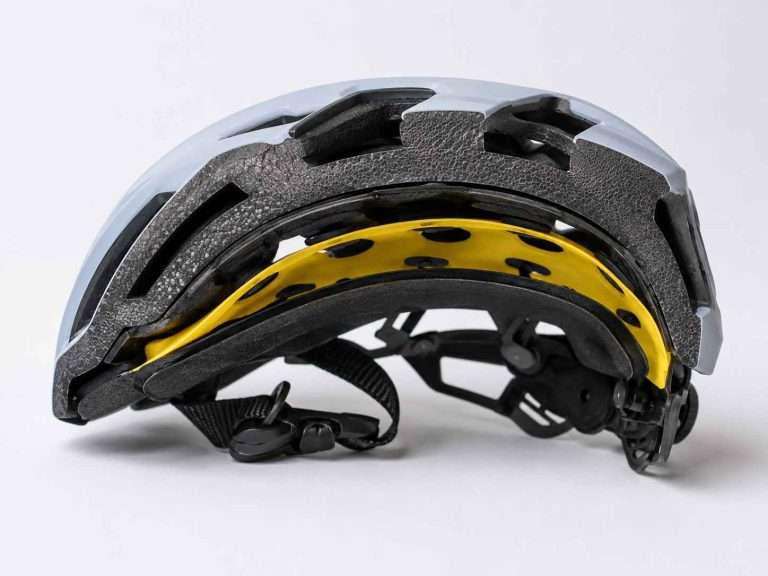
In a shop, put on a MIPS helmet and gently twist the shell with your hand. You’ll feel it shift a little around your head, and that small slip (10 to 15 mm, according to the study below) is the whole idea.
Rotational systems tackle this in different ways. MIPS uses a thin low-friction liner, while MIPS Spherical (found in Giro helmets) uses two foam layers that move against each other like a ball and socket, POC’s SPIN (Shearing Pad INside) uses silicone-filled pads, and WaveCel uses a collapsible cell structure.
Does any of it work in snow helmets? A 2021 study in the Annals of Biomedical Engineering compared standard, MIPS, and WaveCel helmets in angled impacts. In the worst-case rear impact, predicted concussion probability was 89% for the standard helmet, 67% with MIPS, and 7% with WaveCel.
A cynic might point out that one of the authors is a co-inventor of WaveCel, which the paper declares in its conflict-of-interest statement. Regardless of that, both systems cut rotational acceleration in all six impact conditions tested, which is hard to argue with.
So is MIPS just a ploy to sell you a pricier helmet? Fair question, and the same paper notes bike helmet tests have found some rotational systems work far better than others. Snow helmets have fewer vents and a comfort liner over the slip layer, so the authors caution against assuming bike results carry over.

What Do Ski Helmet Safety Ratings Tell You?
Since certification only tells you a helmet passed, independent ski helmet safety ratings try to tell you how well it passed. The best known are from the Virginia Tech Helmet Lab, which rates each snow helmet on 12 impact tests covering front, side, and rear hits at two anvil angles.
Unlike certification tests, Virginia Tech measures both linear acceleration and rotational velocity, then combines them into a STAR (Summation of Tests for the Analysis of Risk) score. A lower score means lower estimated concussion risk, and more stars means better protection. Across its rating programs, the lab has said that it generally recommends any 4- or 5-star helmet.
Here’s the catch. Only a few dozen snow helmets have been rated so far, very few earn 4 or 5 stars, and many of those top performers are older models that are hard to find on store shelves today. Plenty of well-regarded current MIPS helmets land at 3 stars.
Common sense says use the ratings as a tiebreaker, not a shopping list. If two helmets fit you equally well and one has a higher STAR rating, take the higher-rated one. If your helmet hasn’t been tested, that doesn’t mean it failed anything, it just hasn’t been through the lab yet.
Does Shell Construction Change How Safe A Ski Helmet Is?
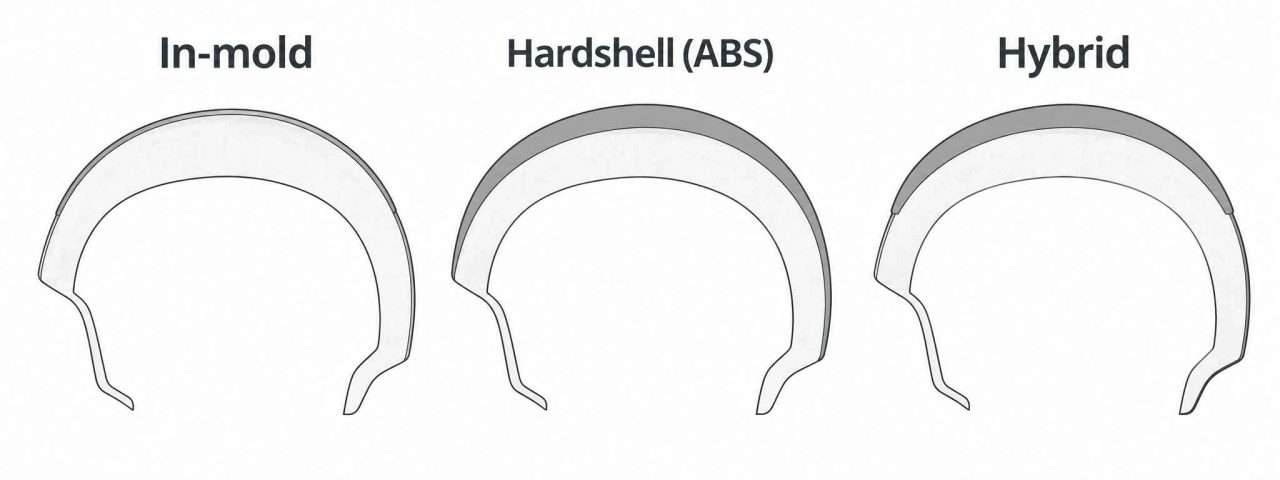
It changes how a helmet handles the knocks of daily life, and to a lesser degree how it handles a crash. Underneath almost every ski helmet is a liner of EPS foam (Expanded Polystyrene), the same white foam your takeout coffee cup or new TV box padding is made from. The shell on top is where designs differ.
- In-mold construction: a thin polycarbonate shell (the tough, clear plastic used in safety glasses) is fused to the EPS during molding. Lighter, but the thin shell scuffs and dents more easily.
- Hardshell (ABS) construction: a thicker ABS (Acrylonitrile Butadiene Styrene) shell, the same plastic as LEGO bricks, is molded separately and attached to the foam. Heavier, more durable, and usually cheaper. (They’re also the ones that survive being thrown in the back of the car by teenagers – ask me how I know.)
- Hybrid shell construction: combines both, often with a hard ABS top where the helmet takes the most abuse and lighter in-mold sections elsewhere.
Some helmets add extra energy-absorbing layers. Koroyd is a honeycomb of thin welded tubes (picture a bundle of drinking straws) that Smith says is 95% air and crumples on impact. Smith pairs it with EPS in what it calls Aerocore construction.
You’ll also see EPP (Expanded Polypropylene) in some liners, the springy foam used in car bumper cores. EPP recovers after a hit, where EPS crushes and stays crushed, but that doesn’t make a helmet crash-proof.
Every construction type above can pass certification, so construction is a comfort, weight, and durability choice more than a safety verdict.
Why Is Fit The Safety Feature Nobody Talks About?
This is where common sense needs to prevail: a $300 helmet that wobbles is less safe than a $90 helmet that fits. If a helmet can shift or tilt back during a fall, the foam isn’t where it needs to be when your head meets the snow. Even the 2010 meta-analysis couldn’t account for helmet fit, and its authors noted that poorly fitted helmets would make protection look worse than it really is.
Proper helmet fit and sizing starts with measuring your head with a soft tape just above your eyebrows. Then check that size against the manufacturer’s chart, because a medium from one brand can be a small from another. Our guide on how to measure your head for a helmet walks you through it.
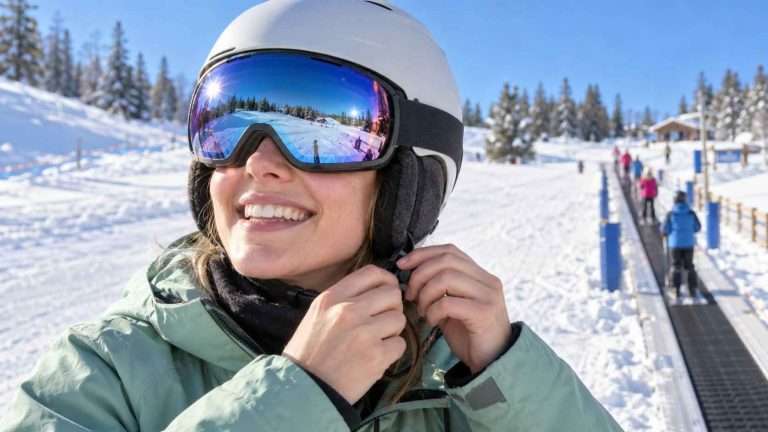
Once it’s on, the helmet should sit level, meet the top of your goggles with no gap, and feel snug before you touch the dial. Dial systems like the Boa fit system fine-tune that fit, but they can’t fix a helmet that’s the wrong size.
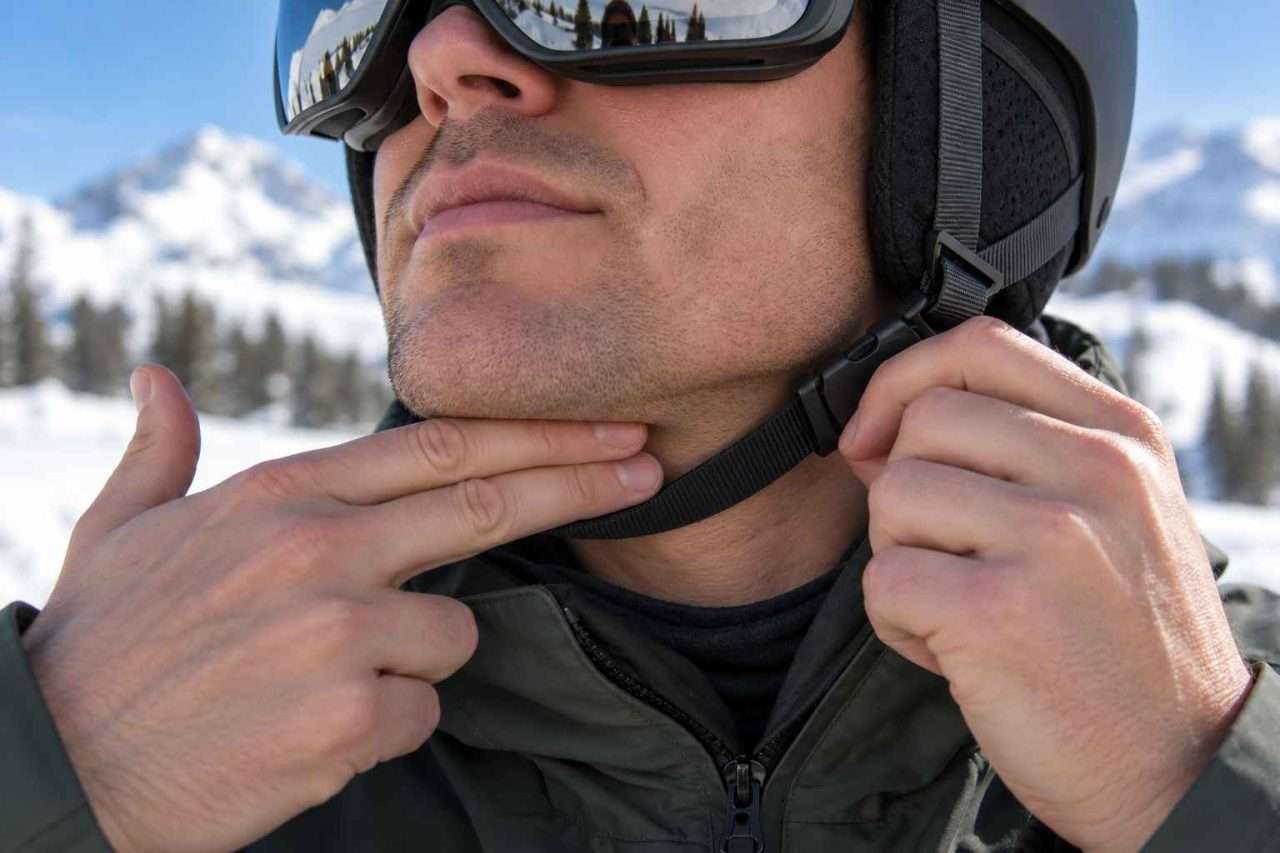
Then comes chin strap adjustment. You should fit no more than one or two fingers between strap and chin. Then try to roll the helmet forward off your head with the strap buckled, and if it moves, tighten it.
If your head is on the larger side, there are fully certified ski helmets for big heads, so there’s no need to squeeze into one that doesn’t fit. And if you’re buying for kids, resist the urge to go a size up “to grow into.” A helmet that fits them next year doesn’t protect them this year.
What Makes The Safest Snowboard Helmet Different?
Nothing, as far as the standards are concerned. Ski and snowboard helmets are tested to the same ASTM F2040 and EN 1077 standards, so the safest snowboard helmet is chosen exactly the same way as the safest ski helmet.
How you fall is a different story. Snowboarders catch an edge and go over backward, and research cited in the 2021 Annals of Biomedical Engineering study found the back of the head was the most impacted area (53%) in snowboarding. Those backward falls can rotate the head even without an angled surface.
So if you ride, pay extra attention to rear coverage and rotational protection. A helmet that sits too far back, or one pushed up by a beanie underneath, leaves exactly the spot you’re most likely to hit less protected. (And yes, the beanie-under-the-helmet look has been going around for years, and it still isn’t a good idea.)
When Does A Safe Helmet Stop Being Safe?
After one good hit. Nearly every ski helmet is a single-impact design, meaning the EPS crushes to absorb the energy of a crash and doesn’t spring back. It cannot and will not return to its original shape.
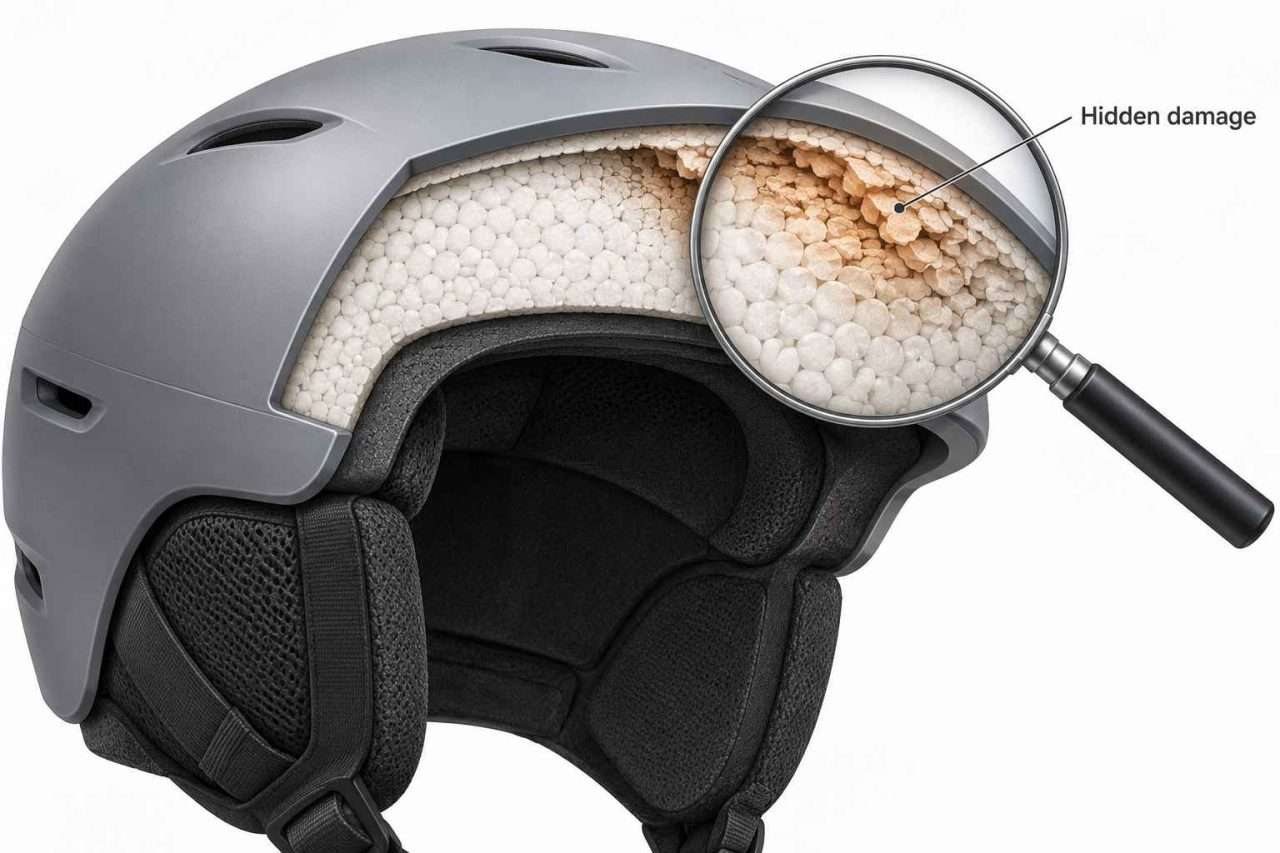
If your helmet has taken a real impact, replace it, even if it looks perfectly fine. Crushed foam often hides under an undamaged shell, and the next crash will find that weak spot before you do. Don’t risk it, replace it.
I learned this one firsthand. One of my helmets came through a hard fall on icy hardpack without a mark on the shell, but when I peeled back the comfort liner there was a flattened patch in the foam about the size of a thumbprint. It went in the trash that night.
Time and wear count too. The Snell Memorial Foundation recommends replacing a helmet after five years of normal use, pointing out that worn comfort pads can make a helmet one to two sizes too big. We cover the details in how long ski helmets last.
That’s also why second-hand helmets are a gamble. You have no idea whether a used helmet has been dropped on a parking lot, crashed into a tree, or left on a hot dashboard all summer. Common sense says saving $40 on a mystery helmet isn’t much of a bargain when it’s protecting the only brain you’ve got.
Does Paying More Get You A Safer Helmet?
Not necessarily. Every certified helmet has passed the same impact tests, so a $95 helmet and a $295 helmet with the same label have cleared the same bar. Yes, the helmet makers would love you to believe otherwise.
What extra money usually buys you is lighter weight, better ventilation, finer fit adjustment, nicer padding, and extras like audio pockets or magnetic buckles. Those make a helmet more pleasant to wear all day. That matters more than it sounds, because the helmet you’re happy to keep on your head is the one that protects you.
The one upgrade that clearly earns its keep is rotational protection, and it’s now common well below $150. So, if you’re on a budget, spend it on certification, MIPS (or similar), and fit, in that order, and skip the bells and whistles.
Which Ski Helmets Tick The Most Safety Boxes Right Now?
We don’t formally review helmets, but here are some current models that check the boxes above in different ways and at different prices. Every one has MIPS and snow certification listed by its maker. Check the Virginia Tech snow helmet list before you buy, because star ratings change as new models are tested.
| Helmet | Shell | Rotational | Certification (maker) | Fit System | Weight (M) | List Price |
|---|---|---|---|---|---|---|
| Smith Vantage 2 MIPS | Hybrid + Koroyd | MIPS | ASTM F2040, EN 1077 | Boa 360 | 500 g | $295 |
| POC Obex MIPS | Hybrid (polycarbonate + ABS top) | MIPS | ASTM F2040, EN 1077 B | 360° dial | 500 g | $250 |
| Scott Flow Pro MIPS | In-mold polycarbonate | MIPS | EN 1077 B | Dial | ~500 g | $240 |
| Pret Fury X MIPS | In-mold multi-shell | MIPS | ASTM F2040, EN 1077 B | Dial (RCS QR) | 421 g | $220 |
| Pret Cynic X2 MIPS | In-mold | MIPS | ASTM F2040, EN 1077 | Dial (RCS QR) | N/A | $160 |
| Giro Ledge MIPS | Hardshell | MIPS | EN 1077 | Auto Loc 2 | 500 g | $95–$125 |
Disclosure: As an Amazon Associate, we earn from qualifying purchases. Disclosure Statement.
The Smith Vantage 2 MIPS is the most feature-packed of the bunch, with full Koroyd coverage, a Boa dial, and 40 adjustable vents. The POC Obex MIPS is a good example of a hybrid shell, while the Scott Flow Pro MIPS adds a RECCO reflector and a magnetic Fidlock buckle.
Pret’s Fury X MIPS is the lightest here and has single-lever adjustable venting, and its sibling the Cynic X2 MIPS brings the same reinforced in-mold shell at a lower price (with fixed vents). If budget is tight, the Giro Ledge MIPS gives you a tough hardshell and MIPS for under $130.
What Belongs On Your Safest Ski Helmet Checklist?
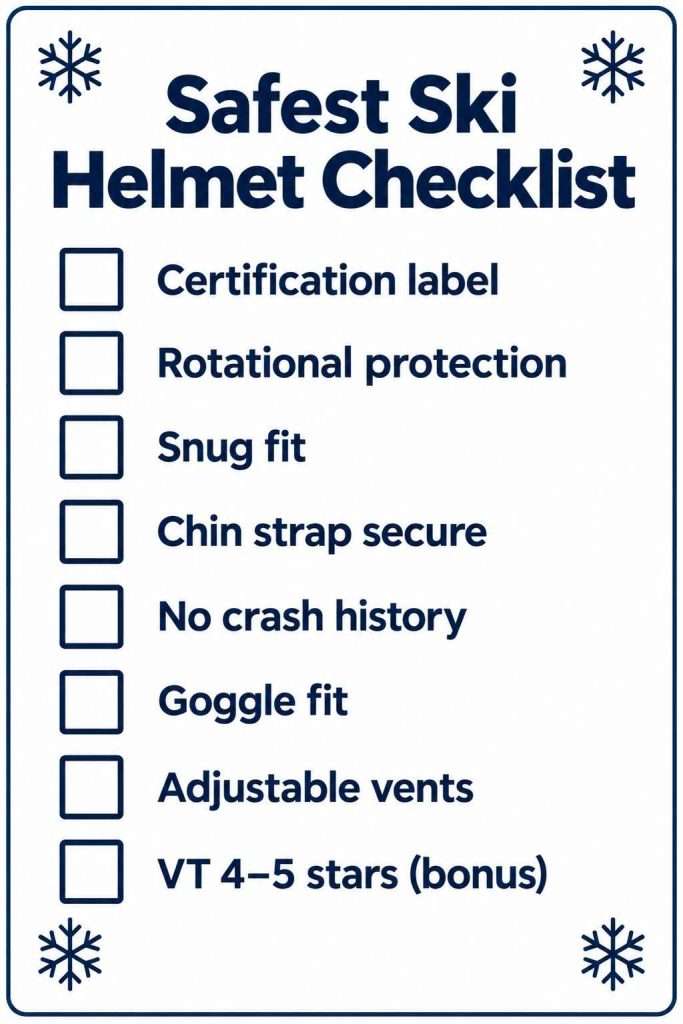
Take this into the store with you, or run through it before you click “buy.” I still pull back the liner on every helmet I try on to find the certification label, and if a helmet fails any of the first five, I keep looking.
- Certification labels inside the helmet show ASTM F2040 and/or CE EN 1077.
- A rotational system is present (MIPS, MIPS Spherical, SPIN, WaveCel, or similar).
- It fits snugly before you touch the dial and doesn’t rock front to back.
- The chin strap buckles comfortably and stops the helmet rolling off.
- It’s new, or you know its full history, with no impacts, cracks, or dents.
- It works with your goggles, with no gap at the forehead.
- Adjustable vents let you stay comfortable (a hot, sweaty head is a distracted head).
- Bonus: a 4- or 5-star Virginia Tech rating, if the model has been tested.
So, Is There Such A Thing As The Safest Ski Helmet?
Not in the sense of one model that beats all others for everyone. The safest ski helmet is the certified, rotationally protected helmet that fits your head properly and hasn’t been crashed. Beyond that, it comes down to common sense.
No helmet will save you from skiing too fast for the conditions or showing off in the trees for your friends (they weren’t watching anyway). Your helmet is the last line of defense, not the first. Wear it every run, replace it when it’s done, and heads don’t bounce.
Frequently Asked Questions
Are magnetic Fidlock buckles as secure as traditional ski helmet buckles?
Fidlock puts its helmet buckles through drop and pull testing, so a magnet isn’t the only thing standing between you and a runaway helmet. The common-sense check is the same as with any buckle (and no, a strap you can fit your whole fist under doesn’t count as fastened).
Do ski helmets expire if they have never been crashed?
Pull out the liner and you’ll find a small sticker with the month and year it was made. If that date is well past the five-year mark, don’t risk it, replace it.
Does cold, UV exposure, or heat degrade the EPS foam in a ski helmet?
EPS (expanded polystyrene) is the same white foam your takeout coffee cup is made of, and you’ve seen what happens to one of those left on a sunny dashboard. Heat can soften and deform the foam where you can’t see it, while UV slowly makes the shell and straps brittle, so the hot car and the sunny windowsill are where helmets really age.
How should a ski helmet be stored in the off-season to preserve its protection?
The garage rafters, the attic, and the trunk of your car are all out, since summer heat and damp are hard on the foam and the glue holding it all together. If you wouldn’t leave a chocolate bar there until December, don’t leave your helmet there either.
Are removable ear pads on a ski helmet compatible with EN 1077 Class A certification?
That’s not a knock on Class B, which protects the top and back of your head and is what most of us wear on the groomers (flip one over and you’ll see the ear pads are just soft fabric and foam, great for hearing your friends yell ‘wait up’). Unless you’re racing giant slalom, super-G, or downhill under FIS (International Ski and Snowboard Federation) rules, which call for Class A, Class B is a perfectly sensible choice.
Are ski helmets legally required for children in any countries or ski resorts?
In the US, New Jersey became the first state to require helmets for skiers and snowboarders under 18 back in 2011. Regardless of the law, nearly every ski school will insist on a helmet for your kids anyway (try signing up a seven-year-old without one and see how far you get).
Do helmet audio systems or headphones reduce ski helmet safety?
The real risks are the improvised ones, like cramming hard earbuds or headphones under ear pads that weren’t designed for them, or cranking the volume until you can’t hear the snowboarder bearing down behind you. So, stick with audio-ready gear, keep the volume down, and keep your ears on the mountain.
RELATED READS