Australian Bicycle Helmet Standards: What the 2024 Rules Require
The Short Version: The Consumer Goods (Bicycle Helmets) Safety Standard 2024 is Australia’s mandatory federal requirement for bicycle helmets sold in the country. A helmet must comply with one of six recognized standards: AS/NZS 2063:2020, AS/NZS 2063:2008, EN 1078:2012+A1:2012, CPSC 16 C.F.R. Part 1203, ASTM F1447-18, or Snell B-95.
The updated standard took effect March 22, 2024, with an 18-month supplier transition period ending September 21, 2025. AS/NZS 2063:2020 is the primary domestic standard, covering impact protection, retention system strength, and coverage for bicycles and wheeled recreational devices including e-bikes and scooters.
A few months back, I was talking to a friend who had just moved to Australia from the US. She’d taken her bike and her CPSC-certified helmet with her, and someone at the bike shop mentioned she might want to check whether her helmet was legal here. She laughed it off – a helmet is a helmet, right? So I went and had a look at what Australia’s rules actually say. What I found was more interesting than either of us expected.
Australia has its own bicycle helmet standard – AS/NZS 2063 – but the rules around it changed significantly in 2024. My friend’s CPSC helmet was fine. In fact, it had been fine for a couple of years. But the way that gets explained (or doesn’t get explained) in most places leaves a lot of riders confused about what they actually need to look for on a sticker.
So let’s take a look at how Australian bicycle helmet standards work, what changed in 2024, how AS/NZS 2063 compares to the US and European standards, and what you actually need to know when you’re buying a helmet in Australia.
What Is the AS/NZS 2063 Bicycle Helmet Standard?
AS/NZS 2063 is the joint Australian and New Zealand standard for bicycle helmets. The “AS” stands for Australian Standard and “NZS” for New Zealand Standard – it’s a shared standard that both countries develop together through Standards Australia and Standards New Zealand.
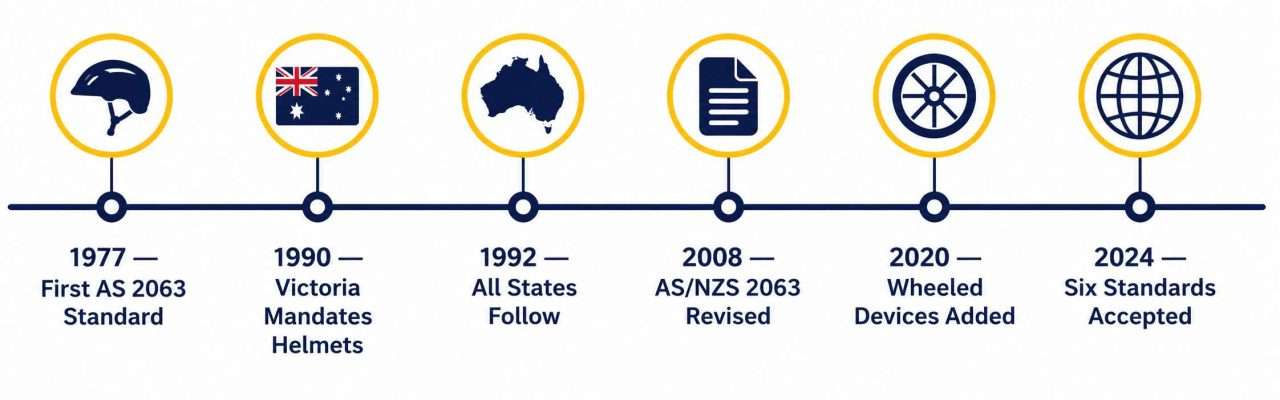
The standard has been around in various forms since 1977, but the version that matters now is AS/NZS 2063:2020 – the third edition, which was updated in 2020 and amended again in June 2022 (Amendment No. 1). The big change in the 2020 edition was expanding the scope from bicycles only to all wheeled recreational devices. We’ll get to what that means in a moment.
The standard covers what you’d expect: impact energy absorption, helmet stability during a crash, retention system strength (that’s your chin strap and buckle), load distribution, peripheral vision clearance, and labelling requirements. Think of it as the checklist a helmet has to pass before it can legally be sold in Australia as a bicycle helmet.
What Did the 2024 Update Actually Change?
Here’s where things get interesting. In March 2024, the Australian Competition and Consumer Commission (ACCC) issued an updated mandatory standard: the Consumer Goods (Bicycle Helmets) Safety Standard 2024. This took effect on March 22, 2024, with a transition period running until September 21, 2025. From 22 September 2025, suppliers must comply with the 2024 standard.
The key change wasn’t a new testing regime – it was a formal expansion of which standards are now legally acceptable. Under the 2024 mandatory standard, a helmet sold in Australia for bicycle use must comply with any one of these six standards:
- AS/NZS 2063:2020 – Helmets for use on bicycles and wheeled recreational devices
- AS/NZS 2063:2008 – Bicycle Helmets (previous version)
- EN 1078:2012+A1:2012 – the European standard for bicycle, skateboard, and roller skate helmets
- US CPSC 16 C.F.R. Part 1203 – the US mandatory standard
- ASTM F1447-18 – the US voluntary standard
- Snell B-95 – the Snell Memorial Foundation’s bicycle standard
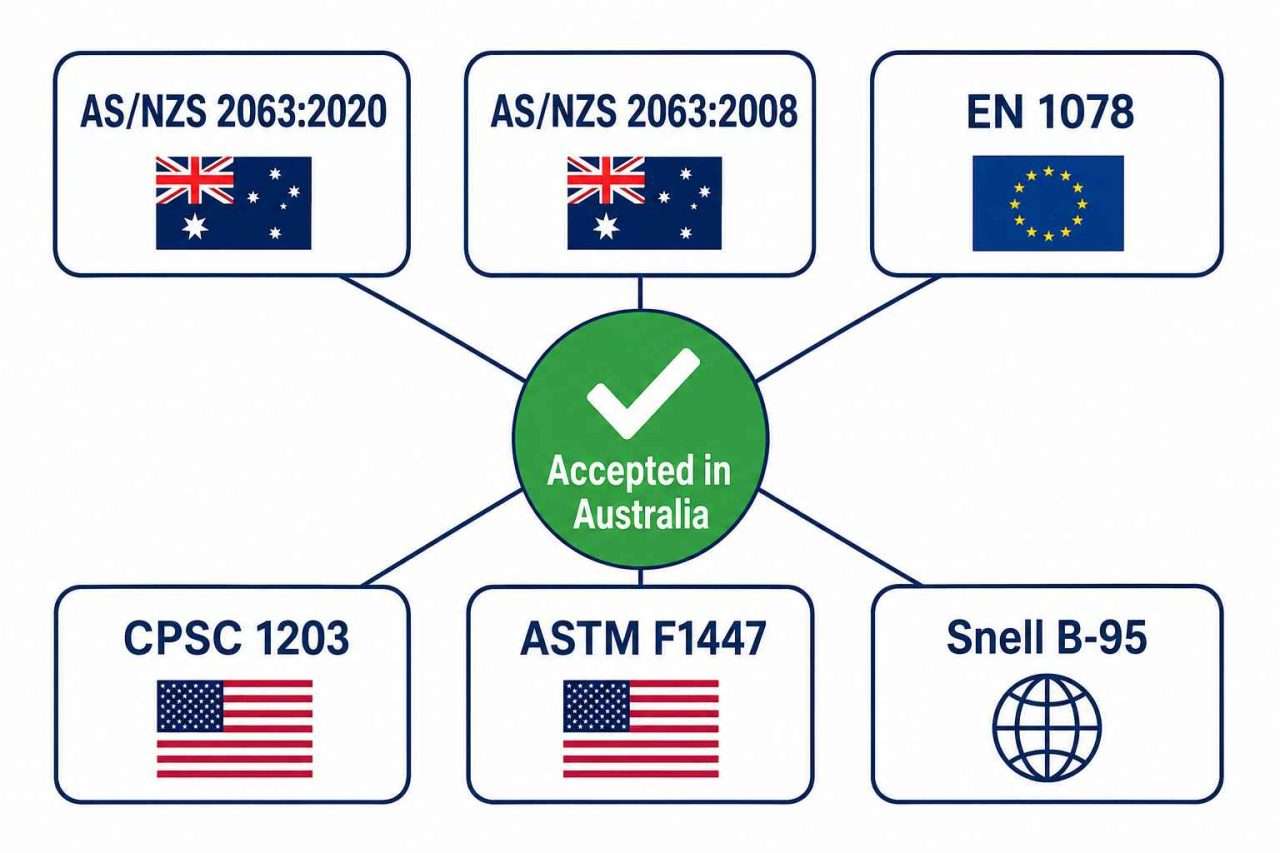
So my friend’s CPSC helmet? Perfectly legal. A European EN 1078-certified helmet brought in by a traveller? Also fine. The 2024 update essentially formalised what had already been happening in practice for years: international standards that meet an equivalent level of protection are now explicitly listed as acceptable. What the update didn’t do was weaken the requirements – all six standards include robust impact testing and retention system requirements.
What Does AS/NZS 2063:2020 Actually Test?
The standard runs helmets through several tests. The main one is the impact energy attenuation test – this is the drop test where a helmeted headform gets released from a set height onto an anvil, and an accelerometer inside the headform measures how much force gets transmitted through. Under AS/NZS 2063:2020, the drop height is 1.5 meters onto a flat anvil only, and peak acceleration must not exceed 300g.
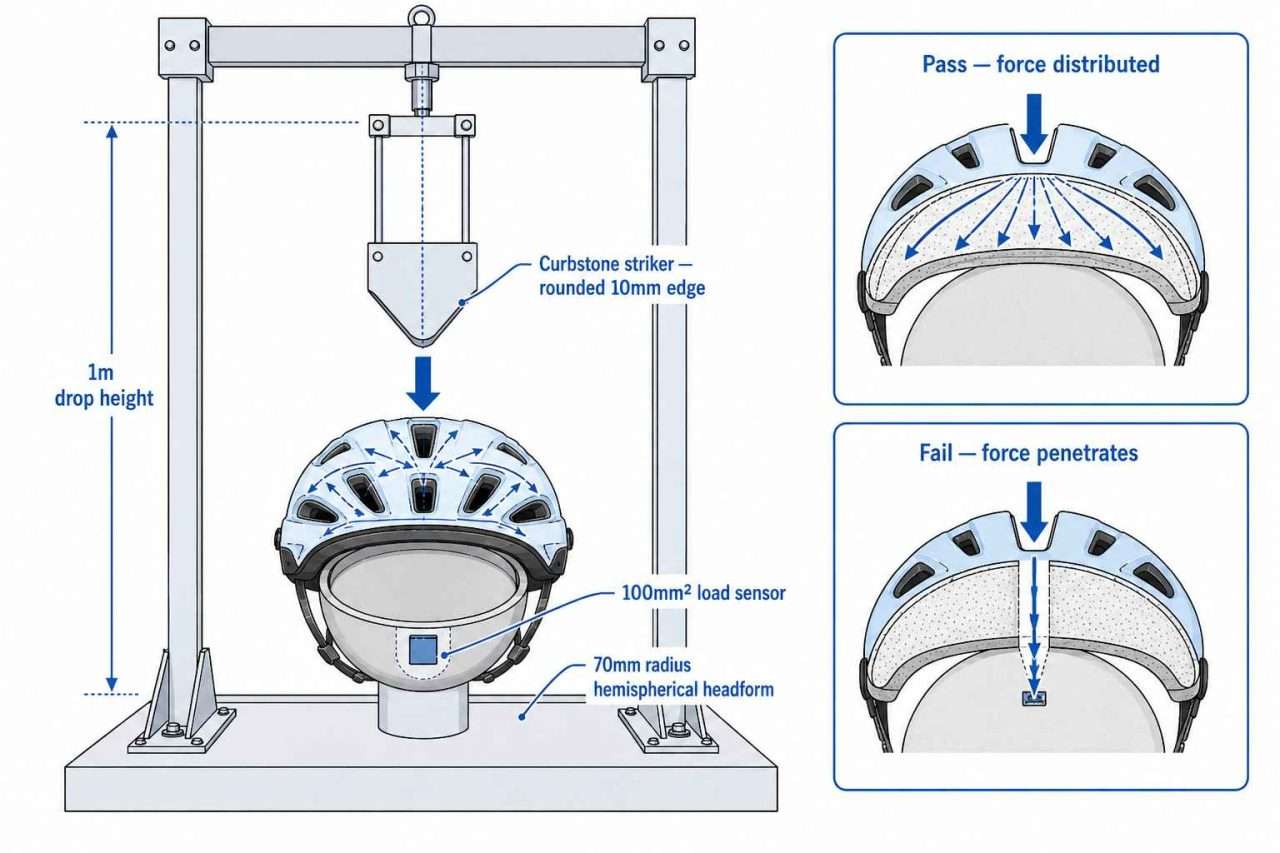
That last part – flat anvil only – is one of the key differences from the US CPSC standard. CPSC testing uses three anvil types: flat, hemispherical (imagine a dome, like a rock), and curbstone (a sharp edge, simulating a curb). AS/NZS 2063 only uses the flat anvil. That means it doesn’t specifically test how the helmet handles a sharp-edge impact in the same way CPSC does.

Beyond impact testing, AS/NZS 2063:2020 also covers:
- Dynamic retention strength – the chin strap must withstand dynamic loading without excessive stretch or failure. Any strap contacting the throat must be at least 15mm wide.
- Helmet stability – the helmet must stay in the correct position during a simulated crash, tested with a dynamic stability test.
- Load distribution – a point loading test checks that the helmet distributes concentrated force (from a sharp protrusion, say) across the head rather than focusing it on one spot.
- Peripheral vision – the helmet must not block the rider’s field of view.
- Construction requirements – no external projections taller than 5mm (except ventilation holes), and no sharp edges likely to cause injury.
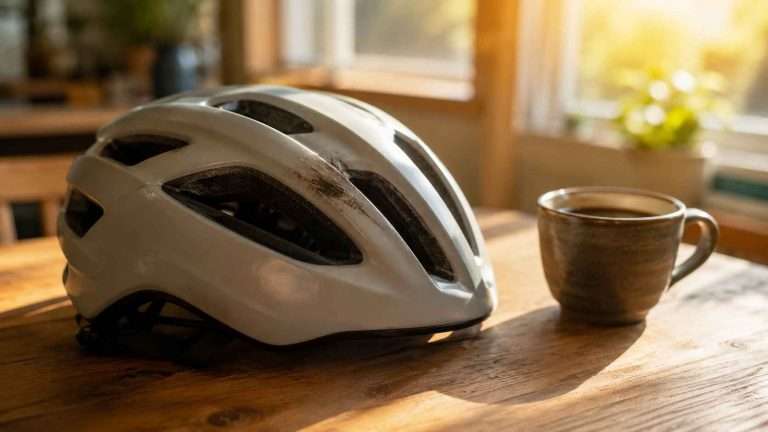
Pre-treatment conditioning is also required before testing, to simulate real-world conditions: helmets are tested after exposure to heat, cold, and moisture. This matters because foam that performs well fresh off the shelf may behave differently after a summer in a hot car or a wet ride in winter.
What Wheeled Devices Does AS/NZS 2063:2020 Cover?
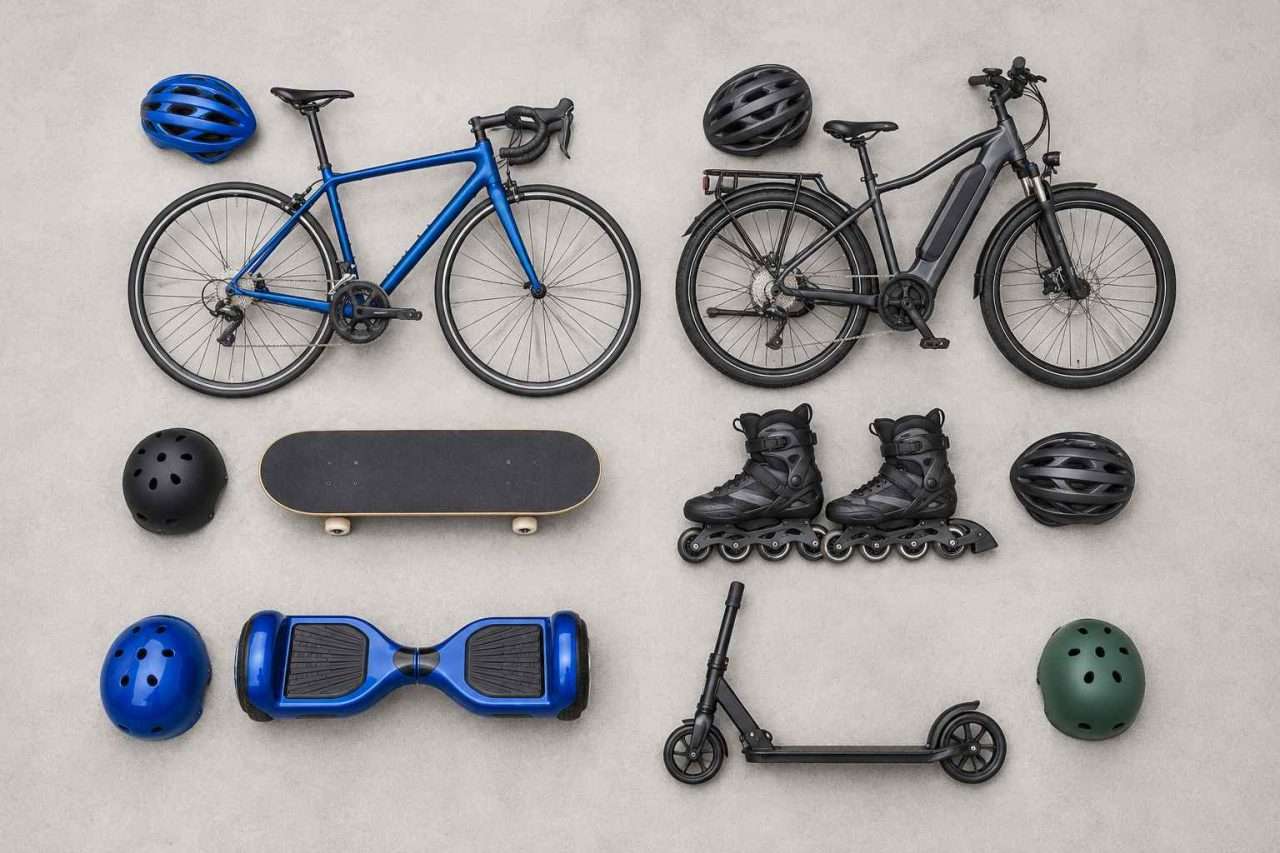
This is one of the things that makes AS/NZS 2063:2020 genuinely distinctive. The 2020 edition expanded the standard’s scope well beyond bicycles. It now explicitly covers helmets used with:
- Bicycles – traditional and electric (e-bikes)
- Skateboards
- Roller skates and rollerblades
- Hoverboards
- Kick scooters – both manual and electric
That’s a broader scope than both CPSC (bicycles only) and EN 1078 (bicycles, skateboards, roller skates). The practical implication is that a single AS/NZS 2063:2020-certified helmet is explicitly suitable for all of those activities – you don’t need to hunt for a separate standard for your kid’s scooter. The point being, it’s a tidier framework for a world where people use more than just bikes.
One important note: the mandatory standard applies to helmets worn when riding a bicycle. A helmet certified only for skateboarding that isn’t marked or intended for cycling is not covered by the bicycle helmet mandatory standard. If you’re buying a helmet in Australia for a bike, the sticker needs to reference one of the six accepted standards.
Is It True Australia Was First to Make Helmets Mandatory?
Yes – and it’s worth understanding why that matters. Australia became the first country in the world to introduce compulsory bicycle helmet wearing for all cyclists regardless of age, starting in Victoria in 1990 and rolling out nationally in the early 1990s. The original mandatory product safety standard that underpinned those laws came from the Trade Practices (Consumer Product Safety Standard) (Bicycle Helmets) Regulations 2001.
The 2024 update replaces that older framework under Australian Consumer Law, but the principle is the same: if you’re riding a bicycle in Australia, you’re legally required to wear a helmet that meets one of the accepted standards, and the helmet must display an identifying mark certifying compliance. The helmet also has to be in good repair and proper working condition – a cracked or damaged helmet doesn’t count, even if it once passed certification.
Individual states and territories administer enforcement, which is why you’ll see slightly different wording across jurisdictions, but the underlying national mandatory standard applies everywhere in Australia. The NSW Government, for example, explicitly lists all six accepted standards on its road rules page for cyclists.
Are There Any Exemptions to the Standard?
Yes, two. The Consumer Goods (Bicycle Helmets) Safety Standard 2024 does not apply to helmets used exclusively for downhill mountain bicycle racing or BMX bicycle competitive racing. These activities have their own discipline-specific safety standards – primarily ASTM F1952 for downhill mountain bike racing – which are considered separately from general bicycle use.
If you’re a recreational rider, commuter, or even a casual mountain biker, the exemption doesn’t apply to you. It’s specifically for competitive racing contexts where helmets are subject to different performance requirements and separate regulatory oversight.
How Does AS/NZS 2063:2020 Compare to CPSC and EN 1078?
Let’s look at the numbers side by side. The thing to keep in mind is that g-force limits and drop heights don’t tell the whole story – you need to look at both together.
| Feature | AS/NZS 2063:2020 | CPSC 1203 (US) | EN 1078 (Europe) |
|---|---|---|---|
| Max G-Force | 300g | 300g | 250g |
| Flat Anvil Drop | 1.5 m | 2.0 m | 1.5 m |
| Hemispherical Anvil | Not tested | 1.2 m | Not tested |
| Curbstone/Kerbstone | Not tested | 1.2 m | 1.06 m |
| Anvil Types | 1 (flat only) | 3 | 2 |
| Pre-Treatment | Heat / Cold / Moisture | Heat / Cold / Water / Ambient | Heat / Cold / UV / Ambient |
| Device Scope | All wheeled devices | Bicycles only | Bikes, skates, boards |
| Certification | Compliance marking required; often third-party certified. | Self-certification | CE marking |
Mobile users: swipe left/right to see all columns.
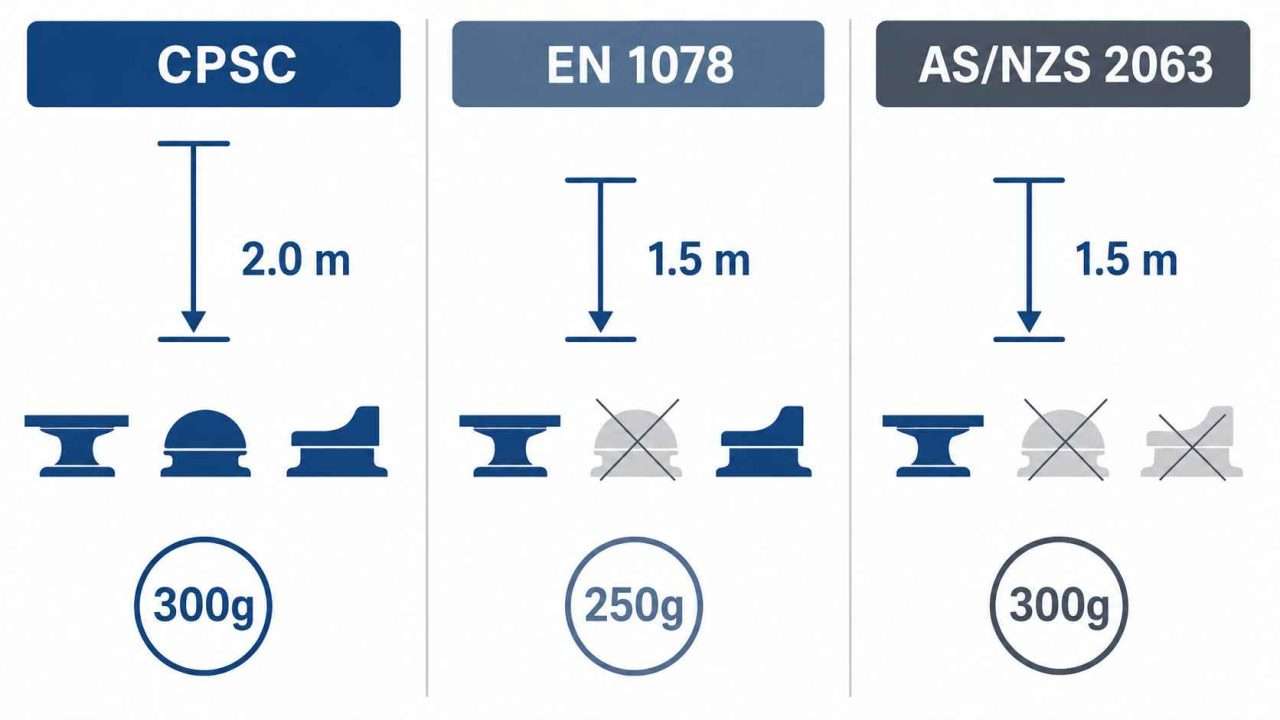
A couple of things stand out. First, CPSC uses the highest flat-anvil drop height of the three – 2.0 meters versus AS/NZS 2063’s 1.5 meters – and it’s the only standard that uses three different anvil types. More anvil types means more surface geometries tested, which is a more comprehensive approximation of real-world crash scenarios.
Second, the EN 1078 g-force limit of 250g looks stricter than AS/NZS 2063’s 300g, but EN 1078 testing uses lower impact energies overall. Lower numbers on a gentler test don’t necessarily translate to better real-world protection – you have to look at what generated those numbers. For a deeper look at how these standards differ in testing methodology, see the article on how helmets are tested during certification.
The point being: AS/NZS 2063 sits in the middle of the pack on testing severity. It’s less comprehensive than CPSC in terms of anvil variety, but covers the broadest range of wheeled activities under a single framework.
What About the NSW Helmet STAR Rating Program?
Australia has something neither the US nor Europe has: an independent state-level helmet rating program that goes beyond mandatory certification. The Helmet STAR (Safety Testing and Assessment Ratings) program is run by NSW Crashlab, the road safety research facility of Transport for NSW. It tests helmets against AS/NZS 2063 requirements and then rates them from one to five stars based on how well they actually perform – not just whether they pass.
The STAR program includes additional testing that the mandatory standard doesn’t cover, including oblique impact tests that assess rotational force protection – the kind of forces that happen when your head hits the ground at an angle rather than straight on. This is actually how many real crash impacts occur, and it’s a gap in all three major mandatory standards. The STAR program also measures variability: a helmet that consistently performs well across multiple impact sites scores higher than one that does brilliantly in one spot and poorly in another.
The STAR ratings are publicly available on the Transport for NSW road safety website. If you’re buying a helmet in Australia, it’s worth checking whether the one you’re considering has been rated. Passing mandatory certification gets you on the road legally – a high STAR rating tells you more about how the helmet actually performs in a crash.
How to Find the Certification Mark on Your Helmet
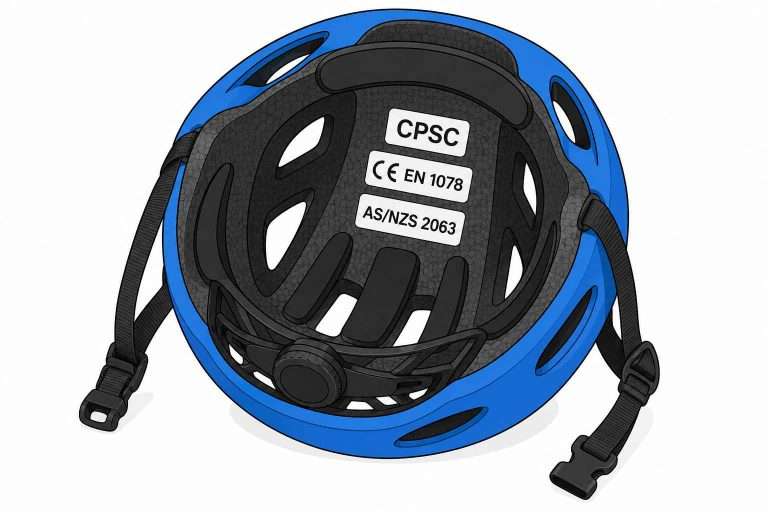
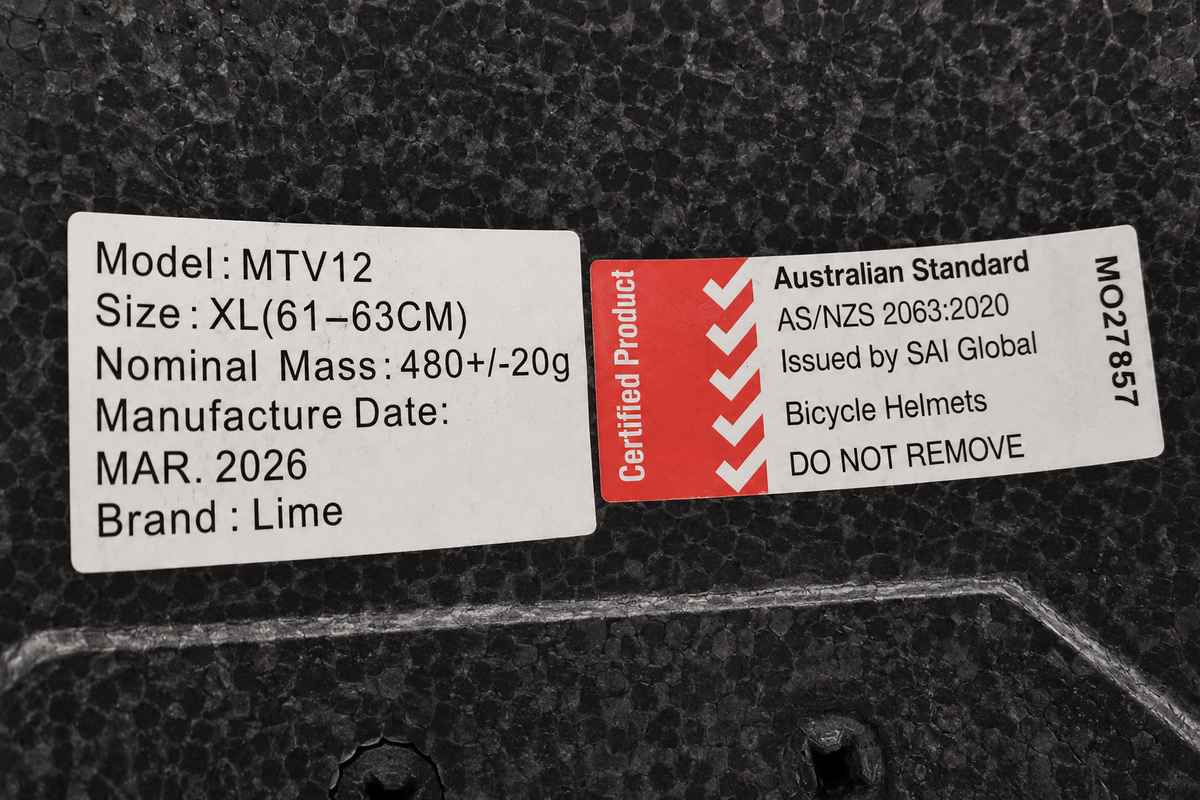
Under the mandatory standard, every compliant helmet sold in Australia must carry an identifying mark certifying which standard it meets. In practice, you’ll find this on a label inside the helmet – look at the foam liner or the inside of the outer shell. The label will typically state something like “AS/NZS 2063:2020” or “CPSC 16 CFR Part 1203,” depending on which standard the manufacturer certified to.
A few things to check when you’re looking at that label:
- Standard reference number – one of the six accepted standards must be listed
- Manufacturer name and address – helps with traceability
- Year of manufacture – relevant if you’re buying second-hand, since helmets have a service life
- Size information – to confirm the helmet is appropriate for your head circumference
If there’s no label, or the label references a standard not on the accepted list, the helmet doesn’t comply with Australian requirements. That’s a good reason to buy helmets from established retailers rather than unknown online sellers, where certification claims can be harder to verify.
What’s the Difference Between AS/NZS 2063:2020 and AS/NZS 2063:2008?
Both versions are still legally acceptable under the 2024 mandatory standard, so it’s worth knowing what separates them. The 2008 version was written specifically for bicycle helmets only. Its impact attenuation limit was 250g peak, with a drop height of 1.5 meters on a flat anvil. It’s a solid standard, and helmets certified to it are still compliant.
The 2020 edition made several meaningful changes. It expanded the scope to wheeled recreational devices. It updated the g-force limit to 300g (higher than the 2008 version’s 250g, but paired with updated testing parameters). It added normative product conformity and batch testing requirements – meaning manufacturers have to demonstrate consistent production quality, not just one-off sample compliance. It also updated the specification of impact velocities and clarified the intent of test site selection across the helmet surface.
Amendment No. 1 from June 2022 refined definitions further and improved clarity around testing procedures. If you’re buying a new helmet today, it will almost certainly be certified to the 2020 standard – but if you come across a helmet marked AS/NZS 2063:2008, it’s still legally acceptable for riding in Australia.
Does Australia Have Special Rules for E-Bikes?
AS/NZS 2063:2020 explicitly includes electric bicycles within its scope, so a standard bicycle helmet certified to that standard (or any of the other five accepted standards) is currently the legal requirement for e-bike riding in Australia. There’s no separate mandatory e-bike helmet standard in Australia at this point, unlike some European countries where speed pedelecs – e-bikes capable of higher assisted speeds – are increasingly expected to meet the NTA 8776 e-bike standard.
The question is whether that will change. Higher-speed e-bikes are capable of crashes at significantly greater impact velocities than traditional bicycles, and the standard drop-test heights used in AS/NZS 2063 were calibrated around typical bicycle speeds. Riders using Class 3-equivalent e-bikes (assisted to around 45 km/h) in Australia would be sensible to look at helmets that carry additional certifications or have been independently rated for higher impact performance.
What Does This Mean for Riders Buying Helmets in Australia?
For most riders, the practical takeaway is straightforward. When you’re buying a helmet in Australia for bicycle use, look for any of the six accepted standards on the internal label. An AS/NZS 2063:2020 label is the local standard. A CPSC or EN 1078 label is equally valid. The key is that the helmet has been tested against one of those six standards and carries the certification mark.
If you want to go further than the mandatory minimum, check the NSW Crashlab STAR ratings. A four- or five-star rating means the helmet performed significantly above the pass/fail baseline – not just technically compliant, but measurably better at actually protecting your head. That’s common sense applied to a purchasing decision.
And regardless of which standard is on the label: if your helmet has been dropped hard, been in a crash, is cracked, or is more than a few years old, replace it. Certification tells you a new helmet was built to protect you. Condition tells you whether it still can. For more on the lifespan of helmets and when to replace them, that’s worth reading separately.
So, to put it simply: Australia’s mandatory standard accepts multiple internationally recognised certifications, AS/NZS 2063:2020 is the preferred local standard but not the only legal option, and the NSW STAR program is the most useful tool Australian riders have for comparing real-world performance beyond the pass/fail baseline. Check the label, check the ratings, and wear the thing properly.
Australian & New Zealand Bicycle Helmet Standards: Your Questions Answered
Is AS/NZS 2063 suitable for automotive sports?
If you’re involved in sports like karting, circuit racing, or anything with an engine – you need a helmet certified to AS/NZS 1698 or ECE 22.06, which are the standards designed for such activities. A bicycle helmet in a motorsport environment is the wrong tool entirely. Don’t risk it.
Is there an Australian standard for bike helmets?
The good news is that Australia updated its mandatory supply standard in March 2024, and a bicycle helmet sold in Australia can now comply with any one of six accepted standards. That list includes AS/NZS 2063:2020, AS/NZS 2063:2008, EN 1078 (European), CPSC 16 C.F.R. Part 1203 (US), ASTM F1447-18, and Snell B-95. So, if you’re buying a helmet, you’ve got more choice than you used to.
Are Kmart helmets ok?
The question is though, whether they’re the right choice for your riding. A $25 Kmart helmet and a $150 helmet from a specialist cycling brand both meet the same minimum standard. The differences tend to show up in weight, ventilation, fit systems, and whether additional technologies like MIPS (Multi-directional Impact Protection System) are included. For a kid learning to ride around the block, a Kmart helmet is fine. For someone riding regularly, doing longer distances, or carrying the thing on their head for hours at a time, it’s worth considering a step up.
Is it law to wear a bike helmet in NZ?
The on-the-spot fine for riding without a helmet is NZD $55. If you contest it in court and are found guilty, that can rise to NZD $500 plus court costs. New Zealand and Australia are among the very few countries in the world that both require and actively enforce universal helmet wearing for cyclists.
Do bicycle helmets expire in Australia?
Not only that, but any helmet that’s taken a significant impact needs to go straight in the bin, regardless of how old it is or how undamaged it looks. The EPS is single-use. It crushes to absorb the blow, and it won’t spring back into its original shape. Don’t risk it, replace it.
Is a CPSC certified helmet accepted in Australia?
There’s a catch worth knowing about, though. The federal standard governs what can be sold. Whether you can legally ride while wearing that helmet depends on the road rules of each state and territory, which are separate. So, the point being – check your specific state’s road rules if you’re planning to ride on a CPSC-certified helmet. The situation is improving, but it’s not yet consistent across the country.
RELATED READS