Ski Helmet for Climbing? Not Unless It’s EN 12492 Certified
The Short Version: A ski helmet should not be used for climbing unless it is dual-certified to EN 12492, the European mountaineering standard. Ski-only helmets certified to EN 1077 or ASTM F2040 are not tested for the falling-object impacts climbing presents.
EN 12492 drops a 5 kg striker from 2 m onto the crown and limits transmitted force to 10 kN. The standard also requires penetration resistance and a chinstrap that holds more than 50 kg. Dual-certified models, including the Smith Summit MIPS and Salomon MTN Lab, meet both standards.
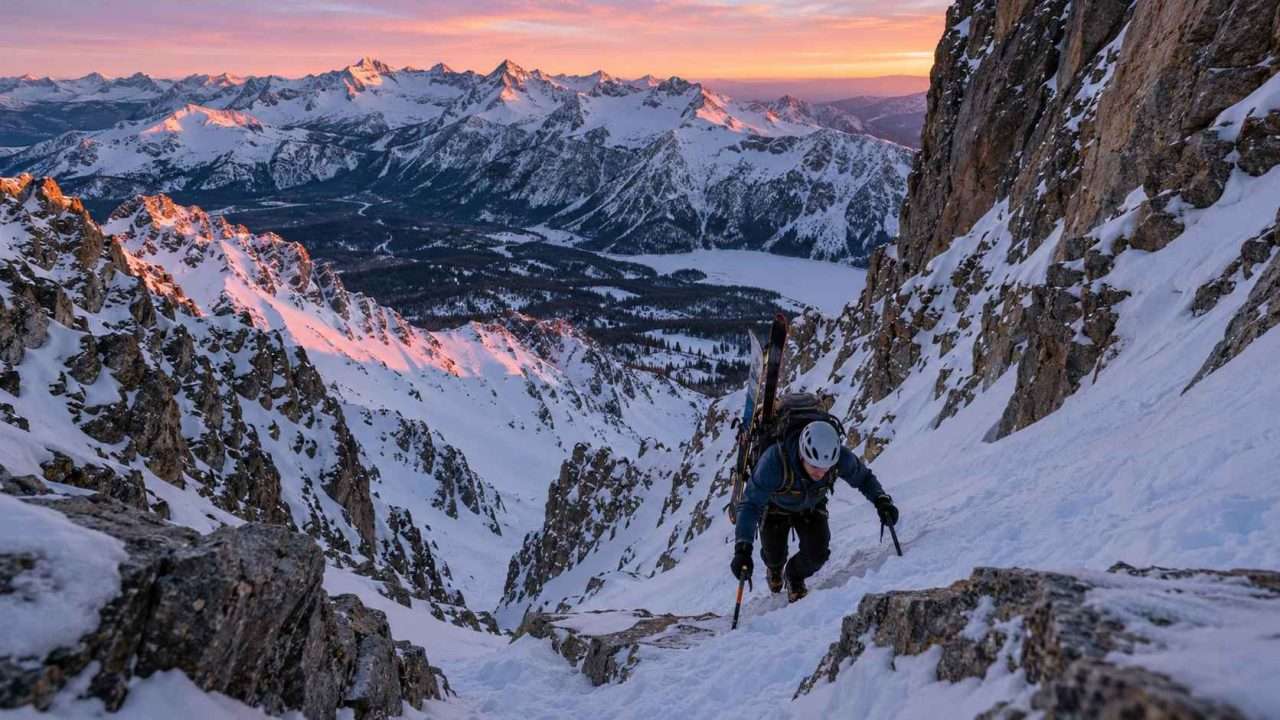
It’s 5 a.m., your skins are on, and the line you’ve been eyeing all week starts with a short rock step and a bootpack up a narrow couloir. Your ski helmet is strapped to your pack. The question is though, is a ski helmet for climbing that rock step good enough, or do you need to haul a second lid up the mountain?
I’ve stood at the bottom of exactly that kind of rock step, sweating into a resort helmet built for chairlifts, and asked myself the same thing. The short answer is no: a helmet certified only for skiing isn’t certified for climbing, and a climbing-only helmet isn’t certified for skiing. The good news is that a handful of helmets now carry both, and Europe has just published a standard written specifically for ski mountaineering.
Can You Use A Ski Helmet For Climbing?
You can physically wear one, of course. Nobody at the crag is going to check your label (although a few of them will smirk at your goggle strap). The real issue is that a regular ski helmet has never been tested for the hazards you face on rock and ice.
Ski helmets are certified to EN 1077 (EN meaning European Norm) in Europe and ASTM F2040 (the American Society for Testing and Materials snow sports standard) in the US. Both are built around one scenario: you fall, or you hit something, while sliding fast over snow. That’s a collision or blunt-force impact, usually to the front, side, or back of the head.
Climbing helmets are certified to EN 12492 and the UIAA 106 standard (UIAA being the International Climbing and Mountaineering Federation). Those standards are built around a different scenario: something hard falling on your head from above, or you swinging into the rock on a rope. Different problem, different test.
Common sense says you match the helmet to the hazard. As mentioned above, a ski-only helmet hasn’t been checked against rockfall, which is why a standard ski helmet for climbing is a gamble you don’t need to take.
Ski Helmet Vs Climbing Helmet: What Do The Standards Actually Test?
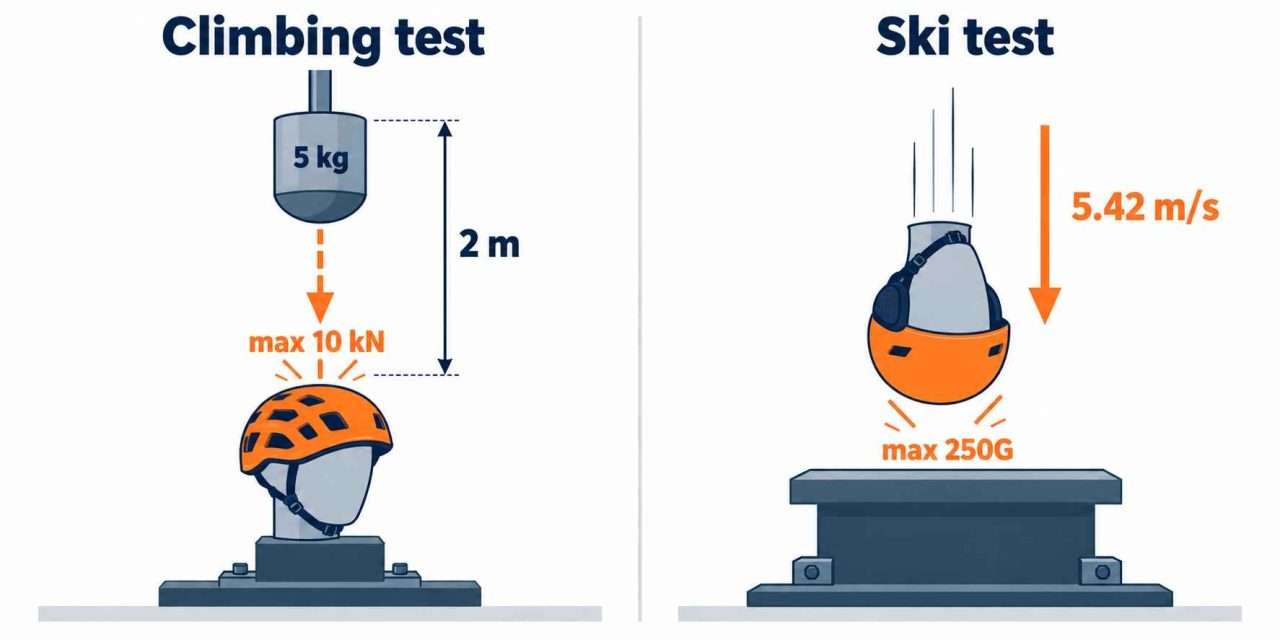
Under EN 1077, the helmet sits on a 4 kg metal headform and gets dropped at 5.42 m/s onto a steel anvil, and peak acceleration must stay under 250G (250 times the force of gravity). ASTM F2040 goes further on conditioning, testing helmets hot, cold, wet, and at room temperature against flat, hemispherical, and edge anvils, according to ASTM’s own consumer standards booklet. In other words, the helmet moves and the ground stays put.
EN 12492 flips that around. A 5 kg hemispherical striker is dropped 2 meters onto the crown of a helmet sitting on a fixed headform, then a 5 kg flat striker is dropped 500 mm onto the front, sides, and rear. The force passed through to the headform can’t exceed 10 kN (kilonewtons, a measure of force), and UIAA 106 (now version 4, based on EN 12492:2025) is tighter again, with the UIAA noting an 8 kN limit.
A skeptic might point out that ski helmets get a penetration test too. True enough, but EN 1077 drops its 3 kg cone from 75 cm, while EN 12492 drops the same mass from a full meter, aimed at sharp objects coming from above. It’s not just the height either, but also the direction the threat comes from.
| Test | Climbing (EN 12492 / UIAA 106) | Skiing (EN 1077 / ASTM F2040) |
|---|---|---|
| Designed for | Rockfall, falling ice, swinging into rock | Falls onto snow and ice, collisions with trees and people |
| How impacts are applied | Striker dropped onto a helmet on a fixed headform | Helmet on a headform dropped onto an anvil |
| Top impact | 5 kg striker from 2 m onto the crown | Crown is one of several test sites |
| Front, side, rear impacts | 5 kg flat striker from 500 mm | Front, side, rear, and crown sites |
| Pass/fail limit | 10 kN transmitted force (8 kN for UIAA) | 250G peak acceleration (EN 1077) |
| Penetration test | 3 kg cone from 1 m | 3 kg cone from 75 cm (EN 1077) |
| Conditioning | Per standard | Room temp, -25°C, aged (EN 1077); hot, cold, wet, ambient (ASTM) |
| Current edition | EN 12492:2025, UIAA 106 v4 | EN 1077:2007, ASTM F2040-18 |

Can I Use A Ski Helmet For Rock Climbing?
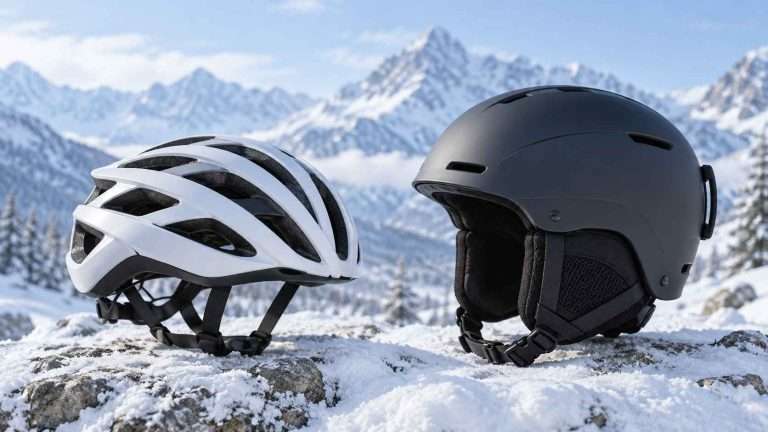
Even setting certification aside, common sense will tell you a resort ski helmet is a miserable thing to climb in, and I say that from sweaty experience. Hold a resort lid in one hand and a climbing helmet in the other and the climbing helmet feels like you’ve forgotten to pick something up. The Petzl Meteor [Ad] weighs 235 g in size S/M, and the Petzl Sirocco [Ad] just 160 to 170 g.
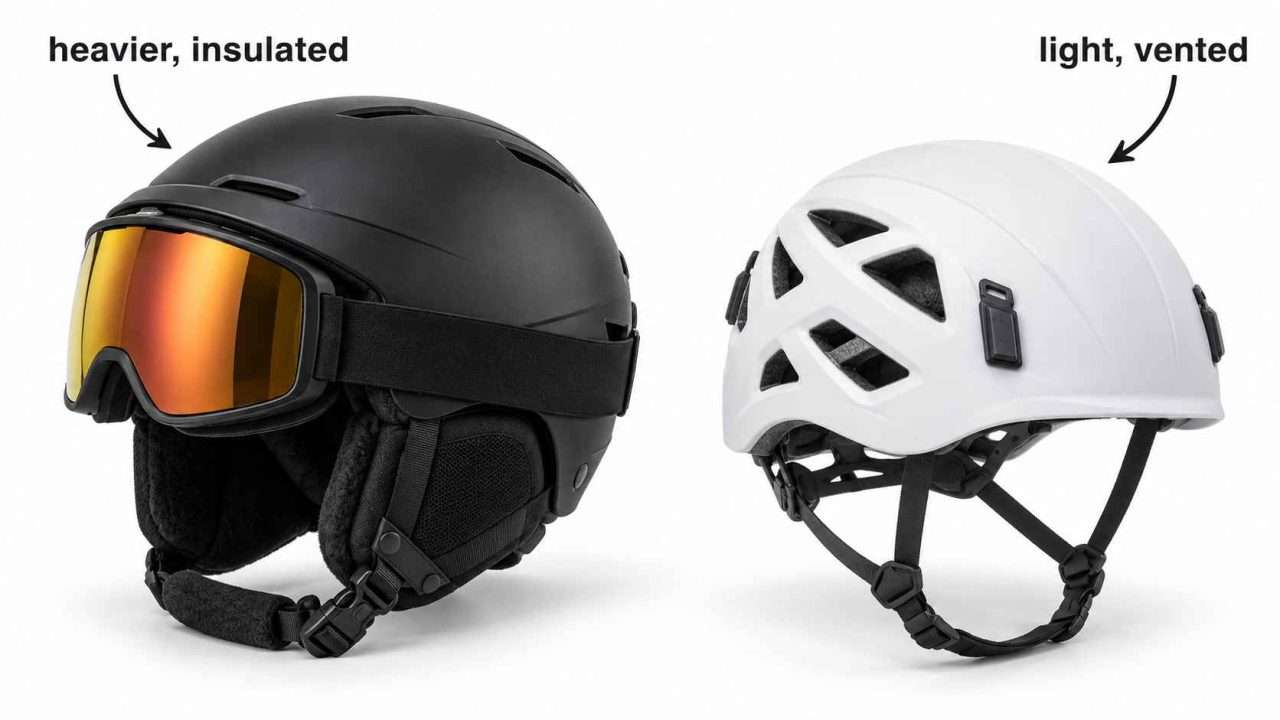
Here’s what you’d be putting up with if you wore a ski helmet for rock climbing:
- Weight and neck strain: hours of looking up at the next hold with extra weight on your head adds up (funny how the same people who weigh their carabiners will happily climb in a resort helmet).
- Heat: ski helmets carry insulation and padding to keep your ears warm on the chairlift, which is the last thing you want on a sunny rock face.
- Field of vision: a deep ski shell and a goggle-friendly brim can cut into the view straight up, which is exactly where the falling stuff comes from.
- Headlamp clips: most climbing helmets have them, while most resort ski helmets are set up for goggles instead.
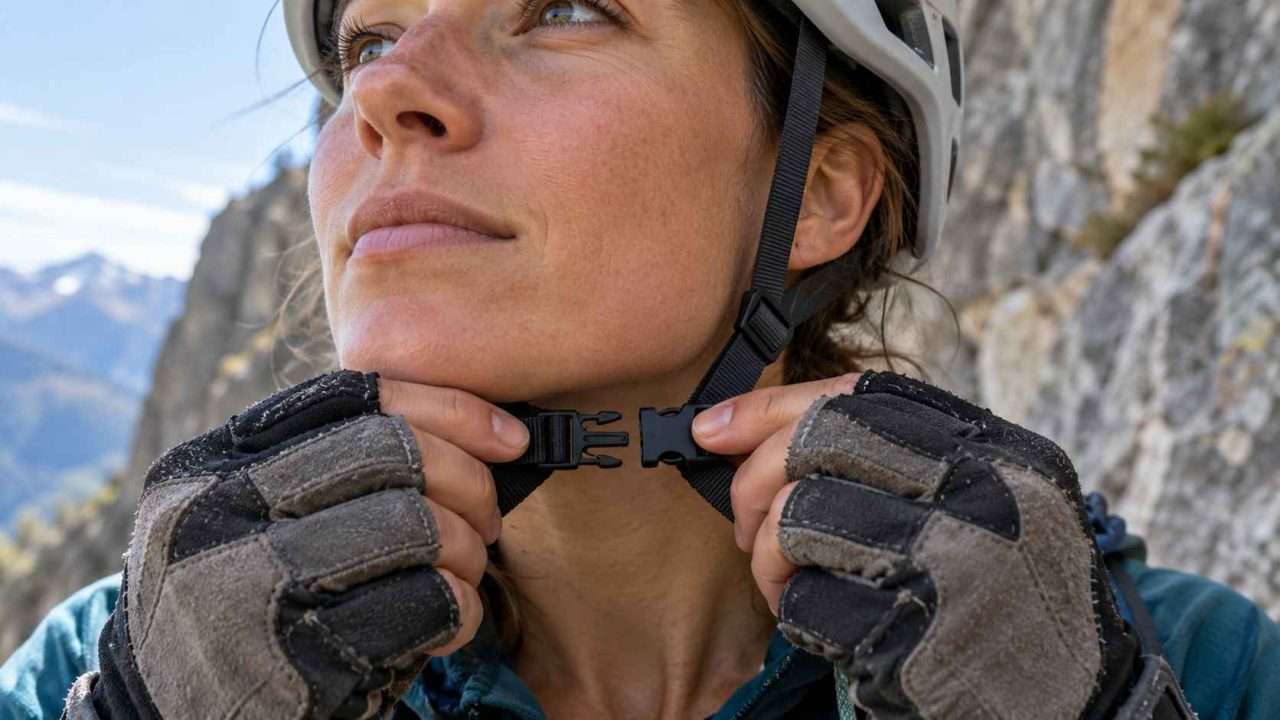
- Retention system: a climbing helmet’s chinstrap is built to keep the helmet on through a tumble and a second hit.
That last point isn’t trivial. The UIAA and British Mountaineering Council describe a fatal case where a climber wore an industrial helmet, its chinstrap released on impact (as industrial helmets are designed to do), and he was left bareheaded for the hits that followed. The helmet only protects you if it’s still on your head.
What About Using A Climbing Helmet For Skiing?
This is the question the original version of this article set out to answer, and the answer is the same in reverse. A climbing-only helmet hasn’t been tested for a high-speed fall onto hard snow, and it usually gives you less coverage and very little warmth. Not only that, but the manufacturers say so themselves.
Would a climbing helmet help in a slow tumble on a groomer? Maybe. Nobody has tested it for that, and “maybe” is a poor thing to trust at 30 mph.
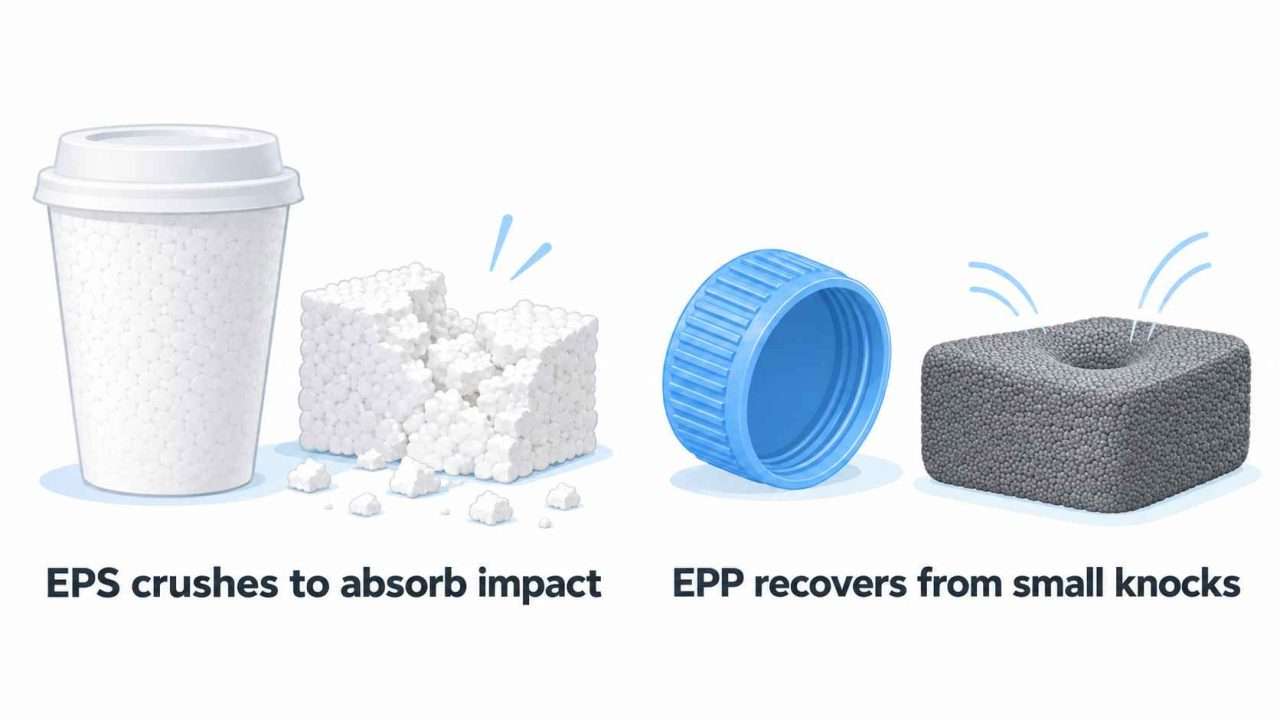
Petzl lists the Meteor and Sirocco as CE EN 12492 (CE being the European conformity mark) and UIAA certified, and both product pages state plainly that they don’t meet the new ski mountaineering standard. The Black Diamond Vision MIPS (MIPS stands for Multi-directional Impact Protection System) is a well-built climbing helmet with an EPP (expanded polypropylene) foam body, an EPS (expanded polystyrene) crown puck, and a hard shell, but it’s sold as a climbing helmet, not a ski helmet.
Quick materials refresher. EPS is the white foam your takeout coffee cup is made of, and it crushes to absorb a hit. EPP is closer to the flexible plastic of bottle tops and storage boxes, so it can recover from smaller knocks, which is one reason it turns up in durable climbing lids.
Is There A Helmet For Climbing And Skiing?
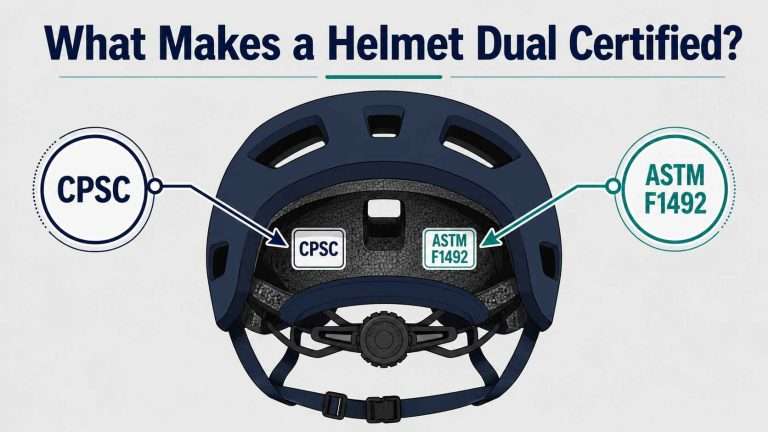
Yes, and this is where dual certification earns its keep. These helmets have been tested to both a ski standard and a mountaineering standard, so one lid covers the skin track, the rock step, and the run down. One thing to watch: most of these carry EN 1077 Class B, which has no ear coverage requirement, rather than Class A.
Disclosure: As an Amazon Associate, we earn from qualifying purchases. Disclosure Statement.
| Helmet | Certifications (per manufacturer) | Weight | Construction |
|---|---|---|---|
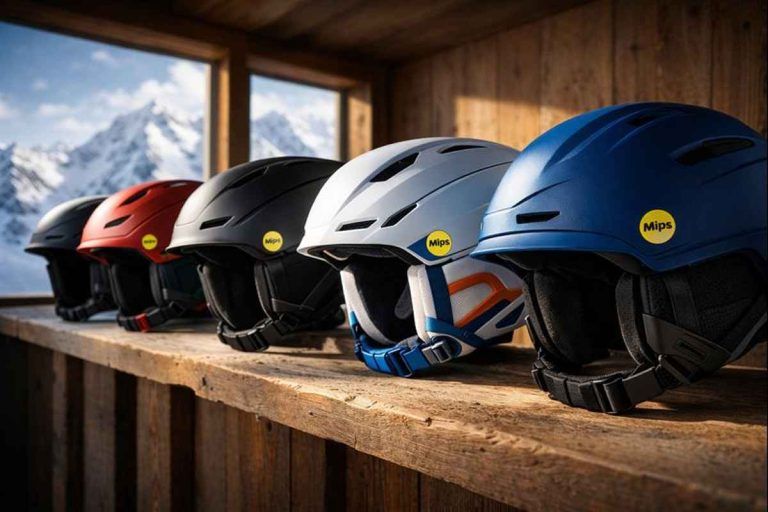
| Smith Summit MIPS | ASTM F2040, CE EN 1077 Class B, EN 12492 | 400 g (size M) | Hybrid hardshell and in-mold shell, Koroyd, MIPS |
| Salomon MTN Lab | CE EN 1077, ASTM F2040, CE EN 12492 | 14 oz (400 g) | In-mold construction, EPS 4D liner |
| Mammut Haute Route | CE EN 1077, CE EN 12492, CE EN 1078 (bike) | Not listed | ABS (Acrylonitrile Butadiene Styrene) hardshell with EPP and EPS foam |
| Petzl Meteor | CE EN 12492, UIAA (climbing only) | 235 to 245 g | Polycarbonate shell, in-mold EPS liner |
| Petzl Sirocco | CE EN 12492, UIAA (climbing only) | 160 to 170 g | EPP lateral foam, EPS top foam, thin polycarbonate crown |
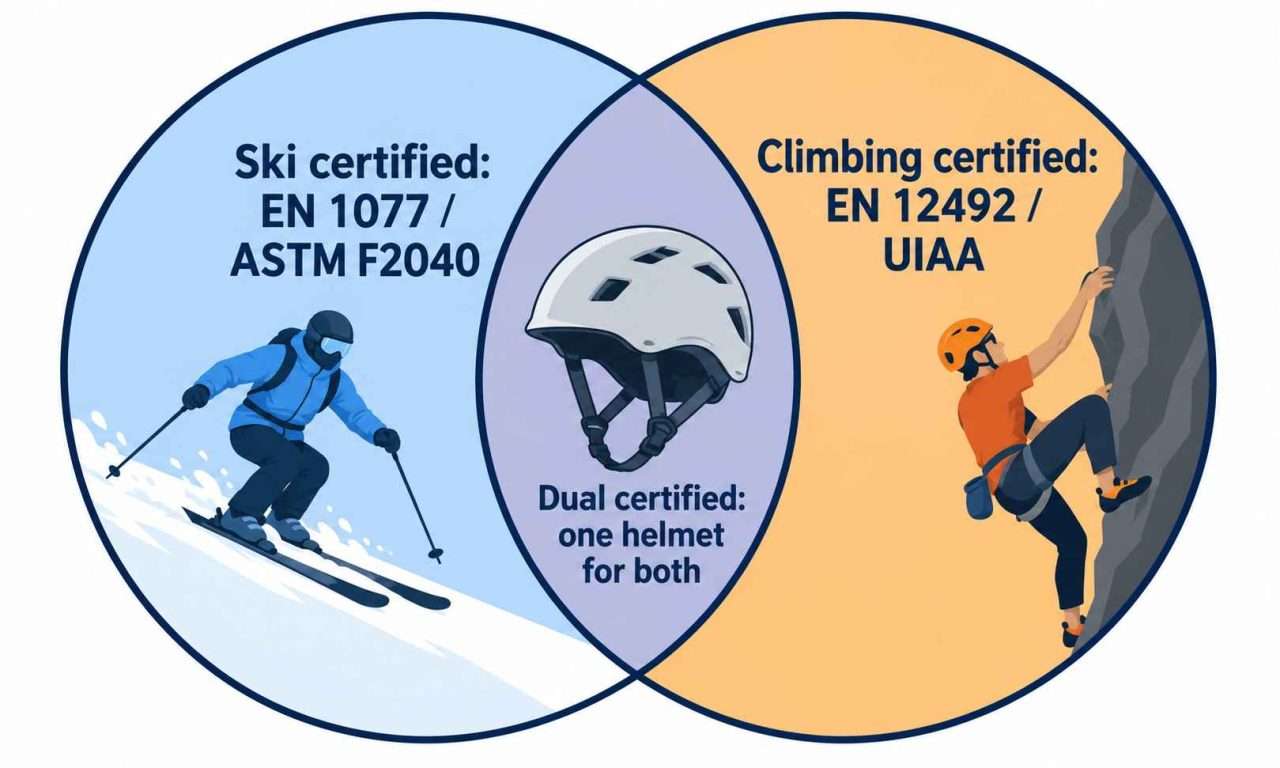
The trade-off is obvious once you hold one. The Smith Summit MIPS weighs about 400 g, roughly 165 g more than a Meteor, so climbers will notice it and skiers may find it a bit chilly around the ears. As with most things in life, the middle ground costs you a little at both ends.
What Happened To Petzl’s Ski Touring Certification?
If you read older gear advice (including the earlier version of this page), you’ll see the Meteor and Sirocco described as certified for ski touring. Back in 2019, Petzl introduced a CE ski touring certification built on its own testing protocol (labeled PCSR in Petzl’s documents), adding front, side, and rear impact requirements while keeping big vents for the climb up. Even then, Petzl was clear those helmets weren’t for resort skiing.
That changed with EN 18100:2025, the first European standard written for ski mountaineering helmets, covering ski touring, skimo (ski mountaineering racing), and splitboarding but not resort skiing. At the same time, EN 12492:2025 now excludes ski mountaineering helmets from its scope. The UIAA followed in May 2026 with UIAA 111, which adds an 8 kN limit on top of EN 18100.
According to Petzl’s own tech tip, its protocol alone is no longer enough, so the ski touring claim has been dropped from new Meteor, Meteora, and Sirocco helmets. If yours has “ski touring” printed on the label, it keeps that certification until the helmet is retired. If it doesn’t, it’s a climbing helmet, full stop.
A cynic might say all this new certification is just a ploy to sell you another helmet. Here’s the thing though: standards bodies wrote EN 18100, not marketing departments, and Petzl actually took a selling point off its own labels once the standard landed. Companies chasing a quick sale don’t usually do that.
How Do You Check What Your Helmet Is Certified For?
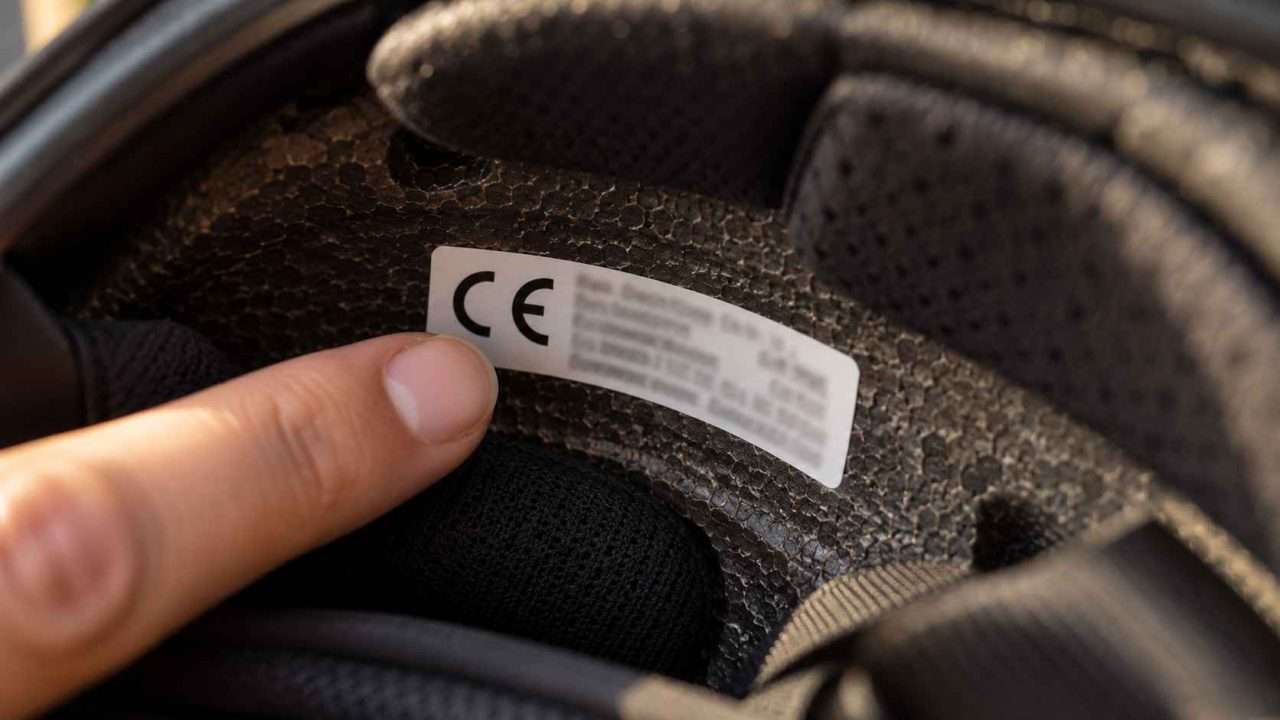
Ignore the box art and the marketing words like “mountain” or “alpine” (by the look of the shelves, every helmet ever made is alpine). Look at the label inside the shell and the instructions for use, and check for these:
- Skiing: EN 1077 (Class A or B) and/or ASTM F2040
- Climbing and mountaineering: EN 12492 and/or the UIAA mark
- Ski mountaineering: EN 18100 and/or UIAA 111 on newer helmets, or “ski touring” on older Petzl labels
- CE marking: the CE mark shows the helmet was assessed for sale in Europe against the standards listed with it
Then be honest about how you spend your days. Is it mostly resort laps with the odd rock scramble, or mostly climbing with the odd ski descent.
So, a ski helmet for climbing is the wrong tool, and so is a climbing helmet for skiing. Common sense says that if your day includes both, you buy one helmet certified for both and read the label before you leave the car.
Frequently Asked Questions
Does MIPS improve protection in a climbing helmet the same way it does in a ski helmet?
Skiing throws you sideways into hardpack at speed, which is exactly the angled impact MIPS was designed for. A climber’s classic hazard is a rock dropping straight onto the crown, where rotation plays a smaller part, but Mammut’s research found that a significant share of climbing head injuries also involve rotational impact (think swinging into the wall on a fall). So if two helmets fit you equally well and one has MIPS, common sense says take it.
How should a climbing helmet fit compared with a ski helmet?
A ski helmet sits lower and wraps around more of your head, covering your ears, and its front edge should meet your goggle frame with no strip of bare forehead showing (the dreaded gaper gap, which is as much a fashion crime as a safety problem). Whichever helmet you’re fitting, do the shake test in the store. If it moves independently of your scalp, it’s the wrong size.
Can you wear a beanie or balaclava under a climbing helmet for skiing in cold weather?
The bigger question is whether a climbing helmet should be on the ski hill at all. Unless it also carries EN 1077 (the European Norm for ski and snowboard helmets), it hasn’t been tested for downhill speeds, and even Petzl notes that its ski touring Meteor doesn’t meet the EN 1077 alpine skiing standard. For lift-served laps, wear a ski-certified helmet.
Are dual-certified ski and climbing helmets compatible with ski goggles?
Compatible on the box and comfortable on your face aren’t always the same thing, though. Many dual-certified helmets are EN 1077 Class B, which allows less side and rear coverage than a typical resort helmet, so brim shapes vary a lot between brands. Take your own goggles shopping and check for a gap at the forehead or any pressure pushing the frame down onto your nose.
Does an EPP foam helmet need to be replaced after a minor impact?
Multi-impact isn’t the same as indestructible, and damage inside the liner isn’t always visible. After any knock, check the shell for cracks, press around the foam for soft or dented spots, and look over the straps. If it was a genuinely hard hit, or you’re not sure, don’t risk it, replace it.
Are dual-certified helmets suitable for ice climbing?
Ice climbing does come with its own wish list, though. When your partner above is sending down a steady shower of ice chips (and the occasional dinner plate), you want solid top coverage, a shell that handles constant hits, and a cradle that adjusts easily over a hood or thin liner. Some featherweight race helmets are pretty minimal up top, so pick one with real coverage.
What helmet is best for skimo racing?
After that, it comes down to weight, ventilation, and fit, because you’ll be wearing it on the climbs too. The CAMP Speed Comp and Ski Trab Gara are both built for exactly this job, with dual certification and plenty of vents. Try before you buy, as some racers find the Speed Comp runs wide and short front to back.
RELATED READS