Best MIPS Ski Helmets: 10 Models From $70 to $270
When skiing or snowboarding, most accidents involve falling at an angle which can generate twisting capable of damaging brain tissue. The MIPS liner allows the helmet shell to slide relative to the head for milliseconds, reducing that concussion risk.
MIPS stands for Multi-directional Impact Protection System, a technology developed by Swedish researchers and patented in 2001. A MIPS liner works alongside, not instead of, standard safety certifications.
MIPS-equipped ski helmets are available from brands like Giro, Smith Optics, Outdoor Master, Oakley and several other major brands. Look for ASTM F2040 compliance in the U.S. or CE EN1077 in Europe. Proper fit still matters most, so always measure head circumference and try multiple brands before buying.

Note: prices shown below are MSRP (manufacturer’s suggested retail price). The actual current price is often less than the MSRP.
Giro Jackson
MIPS

- S (52-55.5cm) to XL (62.5-65cm)
- 4 Star Virg Tech Rating
- CE EN 1077 Certified
- MIPS (Integrated)
OutdoorMaster Kelvin II
MIPS

- S (48-54cm), M (54-58cm), L (58-62cm)
- 3 Star Virg Tech Rating
- ASTM F2040 & CE EN1077 Certified
- MIPS
Smith Optics
Descend MIPS

- S (51-55cm) to XL (63-67cm)
- ASTM F2040, CE EN 1077 Class B, CPSC & CE EN 1078 Certified
- MIPS + Zonal Koroyd
Giro Ledge
MIPS

- S (52-55.5cm) to XL (62.5-65cm)
- CE EN 1077 Certified
- MIPS (Integrated)
Smith Optics
Level MIPS
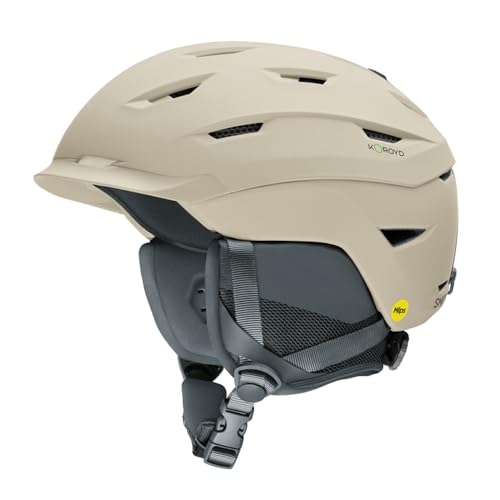
- S (51-55cm) to XL (63-67cm)
- ASTM F2040 & CE EN 1077 Certified
- MIPS + Zonal Koroyd
Giro Trig
MIPS

- S (52-55.5cm), M (55.5-59cm), L (59-62.5cm)
- CE EN 1077 Certified
- MIPS (Integrated)
Smith Optics
Rodeo MIPS

- S (51-55cm) to XL (63-67cm)
- ASTM F2040 & CE EN 1077 Certified
- MIPS
OutdoorMaster ELK
MIPS

- S (~51-54cm), M (~55-58cm), L (~59-61cm)
- ASTM F2040 & CE EN 1077 Class B Certified
- MIPS
Oakley MOD5
MIPS

- S (51-55cm), M (55-59cm), L (59-63cm)
- ASTM F2040 & CE EN 1077 Certified
- MIPS (Skull Matrix Integration)
Giro Neo
MIPS
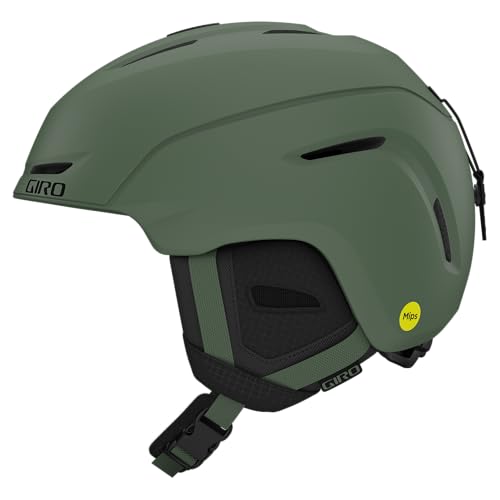
- S (52-55.5cm) to XL (62.5-65cm)
- CE EN 1077 Certified
- MIPS (Integrated)
Disclosure: As an Amazon Associate, we earn from qualifying purchases. Disclosure Statement.
Before Buying a MIPS Ski Helmet
When buying a new ski helmet it is essential that you purchase the right size for your head. The best way to do that is to measure your head circumference. Even if you know your head size, measure it again just to be sure!
For your convenience, we have provided our video, ‘How To Measure For A Ski Helmet‘ to help you with that.
VIDEO: How To Measure For A Ski Helmet
Want to see more
MIPS SKI HELMETS
Visit our shop page on Amazon
Click or Tap here!
Best MIPS Ski Helmets in 2026
Giro Jackson MIPS Ski Helmet
Best For: Freeride and all-mountain skiers who want a 4-Star Virginia Tech rated, style-forward MIPS helmet from a trusted brand.
The Giro Jackson MIPS is a freeride-inspired helmet that pairs clean styling with serious protection. Its two-piece shell combines a hard outer shell with an in-mold polycarbonate lower wrap, keeping weight manageable at 400g in Size M while maintaining durability. The integrated MIPS system is built into Giro’s In Form 2 dial-adjust fit system, and it carries a 4-Star Virginia Tech rating.
Giro’s Passive Aggressive Venting and Stack Vent Technology work together to manage airflow and reduce goggle fogging. The Vertical Tuning feature helps eliminate gaper gap with Giro goggles specifically, though fit with other brands may vary. Four sizes cover 52–65cm, including an XL for larger heads. At $220, the Jackson sits in the mid-to-upper price range — you’re paying for Giro’s build quality, fit system, and goggle integration rather than budget-tier savings.
Pros
- 4-Star Virginia Tech rating
- Integrated MIPS with In Form 2 dial-adjust fit system
- Clean, low-profile freeride design with TPU brim
- Seamless goggle integration with Giro goggles
- Four sizes including XL (up to 65cm)
Cons
- Mid-to-upper price range at $220 MSRP
- Goggle integration optimized for Giro goggles — other brands may not fit as seamlessly
- Audio system not included (compatible with aftermarket Giro/Outdoor Tech systems)
Pick up the Giro Jackson MIPS Ski Helmet from one of these vendors.
OutdoorMaster Kelvin II MIPS Ski Helmet
Best For: Budget-conscious skiers and snowboarders who want MIPS protection and solid warmth without spending over $70.
The OutdoorMaster Kelvin II MIPS is one of the most affordable MIPS-equipped ski helmets on the market. At around $70, it includes MIPS rotational impact protection, a reinforced ABS hard shell, EPS impact-absorbing core, and dual certification to ASTM F2040 and CE EN 1077 Class B standards. It earned a 3-Star Virginia Tech rating, confirming solid protection at its price point.
The Kelvin II MIPS features a dial-adjust fit system, detachable fleece-lined ear pads, and audio compatibility. Its 14 fixed vents provide reasonable airflow, though they cannot be closed in cold conditions. The ABS hard shell construction makes the helmet a bit bulkier than in-mold alternatives, and goggle integration may not be as seamless as higher-priced competitors. Available in 11 colors across three sizes. For skiers prioritizing MIPS on a tight budget, it’s a strong value pick.
Pros
- MIPS protection at a sub-$70 price
- 3-Star Virginia Tech rating
- Excellent warmth and heat retention
- Dial-adjust fit system with detachable ear pads
- 11 color options
Cons
- ABS hard shell is bulkier than in-mold helmets
- Fixed vents — no ability to close airflow in cold weather
- Goggle fit and integration may leave a gap
Pick up the OutdoorMaster Kelvin II MIPS Ski Helmet from one of these vendors.
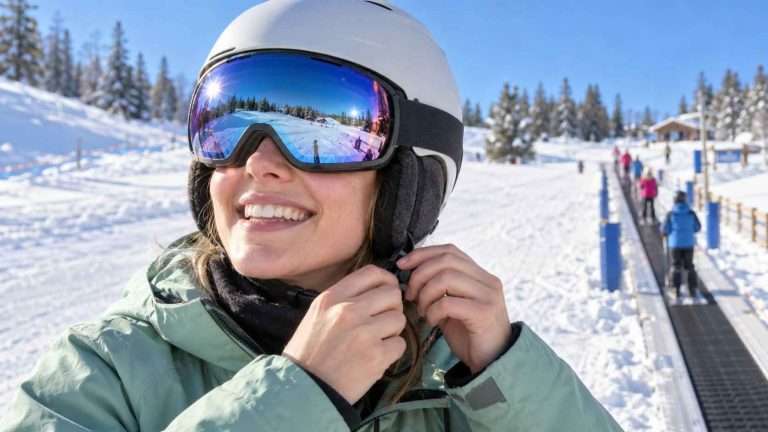

Smith Optics Descend MIPS Ski Helmet
Best For: All-mountain skiers who want MIPS + Koroyd protection, adjustable venting, and Smith goggle integration at a mid-range price.
The Smith Descend MIPS packs two impact protection technologies — MIPS and Zonal Koroyd — into a lightweight in-mold shell at $160. That’s a combination typically reserved for helmets costing $50–$100 more. At 400g in Size M, it matches the weight of pricier competitors while adding 16 adjustable vents with Smith’s one-handed Regulator climate control.
Notably, the Descend carries both ski certifications (ASTM F2040, CE EN 1077 Class B) and bicycle certifications (CPSC, CE EN 1078), making it a legitimate dual-use helmet. Smith’s AirEvac system channels air to reduce goggle fogging when paired with Smith goggles. A Round Contour Fit option is available for rounder head shapes. The Descend comes with a helmet bag and Snapfit SL2 removable ear pads that are compatible with aftermarket audio systems. For skiers who want Smith build quality and dual-layer protection without the top-shelf price, the Descend delivers strong value.
Pros
- MIPS + Zonal Koroyd — dual protection at $160
- 16 adjustable vents with one-handed Regulator control
- Dual ski and bicycle certified (ASTM F2040, CPSC, CE EN 1077, CE EN 1078)
- Lightweight in-mold construction at 400g (Size M)
- Round Contour Fit option for rounder head shapes
Cons
- Goggle integration optimized for Smith goggles — other brands may not vent as effectively
- Excellent warmth retention can run hot on sunny spring days
- Audio system not included (ear pads are compatible with aftermarket systems)
Pick up the Smith Descend MIPS Ski Helmet from one of these vendors.

Giro Ledge MIPS Ski Helmet
Best For: Park and freestyle riders who want a durable, skate-style MIPS helmet from Giro at a sub-$125 price.
The Giro Ledge MIPS is a park and freestyle-oriented helmet with a clean skate-style profile. At $125, it’s Giro’s most affordable MIPS-equipped ski helmet, using a rugged hard shell construction that’s built to handle the knocks of park riding and jibbing. The integrated MIPS system provides rotational impact protection, and Stack Vent Technology helps reduce goggle fogging.
The trade-offs for the lower price are real. At 500g in Size M, it’s notably heavier than in-mold alternatives like Giro’s own Jackson MIPS (400g). The Auto Loc 2 fit system uses a self-adjusting elastic band with three fixed circumference settings rather than a continuous dial, so fit customization is less precise. Venting is fixed — there’s no adjustable airflow control. Ear pads and goggle retainer are removable, and the helmet is compatible with aftermarket Giro audio systems. Four sizes cover 52–65cm including XL. For riders who prioritize durability and a low-profile look over weight savings, the Ledge delivers Giro’s MIPS protection at an approachable price.
Pros
- Giro MIPS protection at a sub-$125 price
- Durable hard shell built for park and freestyle riding
- Clean, minimalist skate-style design
- Seamless compatibility with Giro goggles
- Four sizes including XL (up to 65cm)
Cons
- Heavier than in-mold helmets at 500g (Size M)
- Auto Loc 2 fit system has only 3 fixed settings — less precise than a dial
- Fixed vents — no adjustable airflow control
Pick up the Giro Ledge MIPS Ski Helmet from one of these vendors.
Smith Optics Level MIPS Ski Helmet
Best For: Resort skiers who prioritize all-day comfort, warmth, and premium protection with MIPS + Koroyd in a feature-rich package.
The Smith Level MIPS is a premium all-mountain resort helmet built for skiers who spend long days on the hill and want maximum comfort and protection. It combines MIPS and Zonal Koroyd impact technologies with a hybrid shell design that blends a durable ABS exterior with a lightweight in-mold lower section. The VaporFit dial system offers precise 270-degree fit adjustment, and 20 vents with Smith’s one-handed Regulator control handle climate management.
The Level excels at warmth — its generous fleece-lined padding is among the coziest in the category, making it a standout for cold-weather resort skiing. That same warmth and 550g weight make it less suited for backcountry touring or warm spring days. AirEvac integration channels air to reduce goggle fogging with Smith eyewear. A Round Contour Fit option is available for rounder head shapes. Note that select colors are sold without MIPS, so buyers should confirm the MIPS version when purchasing. At $250, the Level sits below Smith’s top-tier Vantage 2 and Nexus while delivering most of the same protection technology. Includes a helmet bag.
Pros
- MIPS + Zonal Koroyd dual protection
- Exceptional warmth and all-day comfort
- 20 vents with adjustable Regulator climate control
- VaporFit dial for precise 270° fit adjustment
- Round Contour Fit option for rounder head shapes
Cons
- Heavier at 550g — not ideal for touring or sidecountry
- Warmth retention can run hot on spring days
- Select colors sold without MIPS — verify before buying
Pick up the Smith Level MIPS Ski Helmet from one of these vendors.
Giro Trig MIPS Ski Helmet
Best For: Freestyle and all-mountain riders who want a hard-shell MIPS helmet with adjustable venting and dial-adjust fit under $180.
The Giro Trig MIPS is a brimmed freestyle helmet that upgrades significantly over the cheaper Ledge MIPS. It keeps the durable hard shell construction but adds features typically found on pricier helmets: Thermostat Control adjustable venting for on-the-fly airflow management, the In Form dial-adjust fit system with up to 6cm of adjustment, Stack Vent Technology for goggle fog prevention, and Vertical Tuning for gaper-gap-free goggle integration.
The trade-off for these features is weight — at 570g in Size M, the Trig is one of the heavier MIPS ski helmets available, a consequence of combining hard shell durability with a full-featured dial fit and venting system. It’s available in three sizes only (S, M, L), topping out at 62.5cm, so larger-headed riders will need to look elsewhere. At $180, the Trig occupies a competitive mid-range position: it offers adjustable venting and a dial fit system that the $125 Ledge MIPS lacks, while costing $40 less than the in-mold Jackson MIPS. A solid choice for park riders and all-mountain skiers who value adjustability and don’t mind the extra weight.
Pros
- Thermostat Control adjustable venting
- In Form dial-adjust fit system (6cm range)
- Stack Vent + Vertical Tuning for seamless Giro goggle integration
- Durable hard shell built for freestyle and park use
- Brimmed design with clean styling
Cons
- Heavy at 570g (Size M) — among the heaviest in this roundup
- Only 3 sizes (S, M, L) — no XL, maxes out at 62.5cm
- Hard shell is bulkier than in-mold alternatives at a similar price
Pick up the Giro Trig MIPS Ski Helmet from one of these vendors.
Smith Optics Rodeo MIPS Ski Helmet
Best For: Budget-minded skiers who want a Smith-branded MIPS helmet with a dial-adjust fit and recycled materials at $105.
The Smith Rodeo MIPS is Smith’s budget entry into the MIPS ski helmet category, offering the brand’s build quality and goggle integration at $105. It features an ABS hard shell, a micro-adjustable dial fit system with 48-tooth precision, and MIPS rotational impact protection — a combination rarely seen from a major brand at this price. It also carries dual ASTM F2040 and CE EN 1077 Class B certification.
The trade-offs are straightforward. At approximately 550g (Size M), the ABS construction makes it heavier and bulkier than in-mold helmets at higher price points. Its 10 fixed vents provide consistent airflow but cannot be closed, which may be an issue in stormy or very cold conditions. There’s no Koroyd — that technology starts with the Descend MIPS ($160). A sustainability standout, the Rodeo meets the Global Recycled Standard with 68% recycled or upcycled content. A Round Contour Fit option is available for rounder heads. Note that select colors are sold without MIPS, so confirm before purchasing. Includes a helmet bag.
Pros
- MIPS + micro-adjustable dial fit from Smith at $105
- Dual ASTM F2040 and CE EN 1077 Class B certified
- 68% recycled/upcycled content — meets Global Recycled Standard
- Smith goggle integration and Aleck audio compatibility
- Round Contour Fit option for rounder head shapes
Cons
- Heavy at ~550g — ABS construction adds weight
- 10 fixed vents — no adjustable airflow control
- No Koroyd — MIPS only (Koroyd starts at Descend price tier)
- Select colors sold without MIPS — verify before buying
Pick up the Smith Rodeo MIPS Ski Helmet from one of these vendors.
OutdoorMaster ELK MIPS Ski Helmet
Best For: Budget skiers who want a lightweight in-mold MIPS helmet with a low-profile fit for under $70.
The OutdoorMaster ELK MIPS brings in-mold construction to the sub-$70 MIPS ski helmet market — a construction type typically reserved for helmets costing significantly more. Where OutdoorMaster’s own Kelvin II MIPS uses a heavier ABS hard shell at the same price, the ELK’s polycarbonate in-mold build comes in at a published 480g, making it one of the lightest budget MIPS ski helmets available. It carries dual ASTM F2040 and CE EN 1077 Class B certification.
The ELK features a dial-adjust fit system, detachable fleece-lined ear pads, and a goggle strap retainer. Its 8 fixed vents are fewer than most competitors, making it better suited to cold-weather resort days than spring skiing. Sizing runs snug across three sizes, topping out at approximately 61cm — there’s no XL option, which limits its reach for larger heads. Available in 12 colors. For skiers who prioritize lightweight construction and a low-profile fit on a tight budget, the ELK offers genuine in-mold MIPS value that’s hard to match at this price.
Pros
- In-mold PC construction at a sub-$70 price — rare for MIPS
- Lightweight at a published 480g
- Dual ASTM F2040 and CE EN 1077 Class B certified
- Dial-adjust fit system
- 12 color options
Cons
- Only 8 fixed vents — limited airflow, no climate control
- Sizing runs snug; tops out at ~61cm with no XL option
- Fewer vents may run warm on spring days
Pick up the OutdoorMaster ELK MIPS Ski Helmet from one of these vendors.
Oakley MOD5 MIPS Ski Helmet
Best For: Big-mountain and technical riders who want a premium, feature-rich MIPS helmet with BOA 360 fit and Fidlock magnetic buckle.
The Oakley MOD5 MIPS is Oakley’s top-shelf resort helmet, redesigned from the ground up with input from big-mountain athletes. It features Oakley’s Skull Matrix system, which integrates MIPS and the BOA fit mechanism into a single unit for a secure, customizable hold. The BOA 360 Fit System provides full-wrap adjustment, while the Fidlock magnetic buckle lets you fasten the chin strap one-handed with gloves on — a premium convenience most helmets in this roundup don’t offer.
The hybrid shell pairs Duramatter hard-shell panels with polycarbonate in-mold construction, providing extra reinforcement in high-impact zones. A Polartec Power Grid liner wicks moisture and is fully removable for washing. Adjustable ventilation covers multiple zones to manage temperature. The trade-offs are weight and price: at 638g (Size M), it’s the heaviest helmet in this roundup, and at $270, the most expensive. The fit runs narrow and performance-focused — wider heads may find it snug. Only three sizes are available, maxing out at 63cm with no XL. Includes a travel bag.
Pros
- BOA 360 Fit System + Fidlock magnetic buckle — top-tier convenience
- Skull Matrix integrates MIPS and fit system into one unit
- Adjustable multi-zone ventilation
- Polartec Power Grid moisture-wicking liner
- Excellent coverage and durable hybrid shell construction
Cons
- Heaviest in this roundup at 638g (Size M)
- Narrow, performance-focused fit — may not suit wider head shapes
- Only 3 sizes (S, M, L) — no XL, tops out at 63cm
Pick up the Oakley MOD5 MIPS Ski Helmet from one of these vendors.
Giro Neo MIPS Ski Helmet
Best For: All-mountain skiers who want Giro’s lightweight in-mold construction with adjustable venting and MIPS at a mid-range price.
The Giro Neo MIPS is described by Giro as the new foundation of their helmet line, and it delivers an impressive combination of features for its $165 price. It uses the same two-piece Hardshell with In-Mold Hardbody Lower Wrap construction found in the pricier Jackson MIPS ($220), yet adds Thermostat Control adjustable venting that the Jackson lacks. At 410g in Size M, it’s one of the lightest helmets in this roundup.
The In Form dial-adjust fit system provides up to 6cm of adjustment, and Vertical Tuning eliminates gaper gap with Giro goggles. Stack Vent Technology channels warm air away from goggles to reduce fogging. Four sizes cover 52–65cm including an XL for larger heads, and an Asian Fit version is available separately for wider head shapes. Ear pads and liner are removable, and the helmet is compatible with aftermarket Giro audio systems. For the feature set — in-mold construction, adjustable venting, dial fit, MIPS — at $165, the Neo represents one of the strongest value propositions from a major brand in this roundup.
Pros
- Adjustable Thermostat Control venting + in-mold construction at $165
- Lightweight at 410g (Size M)
- In Form dial-adjust fit (6cm) + Vertical Tuning
- Four sizes including XL (up to 65cm); Asian Fit also available
- Same shell technology as the $220 Jackson MIPS
Cons
- CE EN 1077 certification only — no ASTM F2040 listed
- Goggle integration optimized for Giro goggles — other brands may vary
- No additional impact technology (MIPS only — no Koroyd or equivalent)
Pick up the Giro Neo MIPS Ski Helmet from one of these vendors.
Want to see more
MIPS SKI HELMETS
Visit our shop page on Amazon
Click or Tap here!
Choosing A Ski Helmet
Once you’ve found a nice-looking snowboard helmet with MIPS and a properly recognized certification, we come to what is probably the most important thing to look for. A helmet that fits your head properly.
A ski helmet that is too small will be uncomfortable and you won’t want to wear it. A ski helmet that is too big may wobble around and can even catch the breeze as you pick up speed on a downhill run. But, even worse, it could even slip off your head if you have a collision.
This content was originally published on headsdontbounce.com. If it appears on another website, it is a violation of the copyright owned by headsdontbounce.com.
It’s very important that your ski helmet fits snugly and is comfortable. If the helmet does not fit comfortably, then it cannot provide adequate protection.
Safety Certification For Ski Helmets
There is no mandatory standard for ski and snowboard helmets in the United States, however, there is the voluntary standard of ASTM F2040 for snow helmet certification. Also widely accepted in the United States and numerous other countries is the European standard, CE-EN1077.
You would be well advised to avoid buying a cheap nameless brand with no certification. Ski and snowboarding helmets with MIPS as well as ASTM or CE-EN certification are available at very reasonable prices nowadays.
Before you buy your new snow helmet, always check that it conforms to one of these two standards, so that you can ski or snowboard with peace of mind and have a memorable vacation.
Frequently Asked Questions
Are MIPS Ski Helmets Really Worth It?
The price difference between a MIPS and non-MIPS version of the same helmet is often only around $20 to $30. When you weigh that against the cost of a single ER visit for a concussion, the math is pretty simple. You can find solid MIPS-equipped ski helmets starting at around $70.
Is A Helmet Without MIPS Still Good?
The point being, MIPS adds an extra layer of protection on top of those existing standards, specifically targeting rotational forces that standard certifications don’t test for. Think of it as an upgrade, not a requirement. If your budget is tight, a well-fitting certified helmet without MIPS is still doing its job.
Do I Need MIPS Certification In My Ski Helmet?
The certifications you should be looking for are ASTM F2040 for the US market and CE EN 1077 for the European market. Those are the actual safety standards your ski helmet needs to meet. MIPS is an add-on technology that works alongside those certifications to address rotational forces, something those standards have historically not tested for.
Can You Replace The MIPS Liner In A Ski Helmet?
Some newer MIPS implementations, like the MIPS Air Node system, are held in place with hook-and-loop connectors and can be gently removed for cleaning. But if the MIPS layer is damaged in a crash, the right move is to replace the entire helmet, not just the liner. EPS foam is single-impact only, so if you’ve hit hard enough to worry about the MIPS layer, the foam has likely done its job too.
Can I Use A MIPS Ski Helmet For Other Sports?
So no, you shouldn’t use your MIPS ski helmet as your everyday bike helmet. The certifications exist for good reasons. If you want one helmet for multiple activities, look for a dual-certified or multi-sport helmet that has actually passed the testing requirements for each sport you plan to use it in.
Does MIPS Affect Helmet Ventilation Or Comfort?
Newer versions like MIPS Spherical and MIPS Integra are built right into the helmet’s construction from the ground up, so the ventilation, fit, and comfort are designed with the MIPS layer already accounted for. If a MIPS helmet feels uncomfortable, it’s almost certainly a fit or sizing issue, not a MIPS issue.
What Certification Should A Ski Helmet Have?
ASTM F2040 is actually the more stringent of the two, testing at higher impact speeds. Many quality ski helmets carry both certifications. You’ll find the certification label on a sticker or tag inside the helmet. If you can’t find one, that’s a helmet to skip.
RELATED READS