How Often Should a Snowmobile Helmet Be Replaced? 3-5 Years
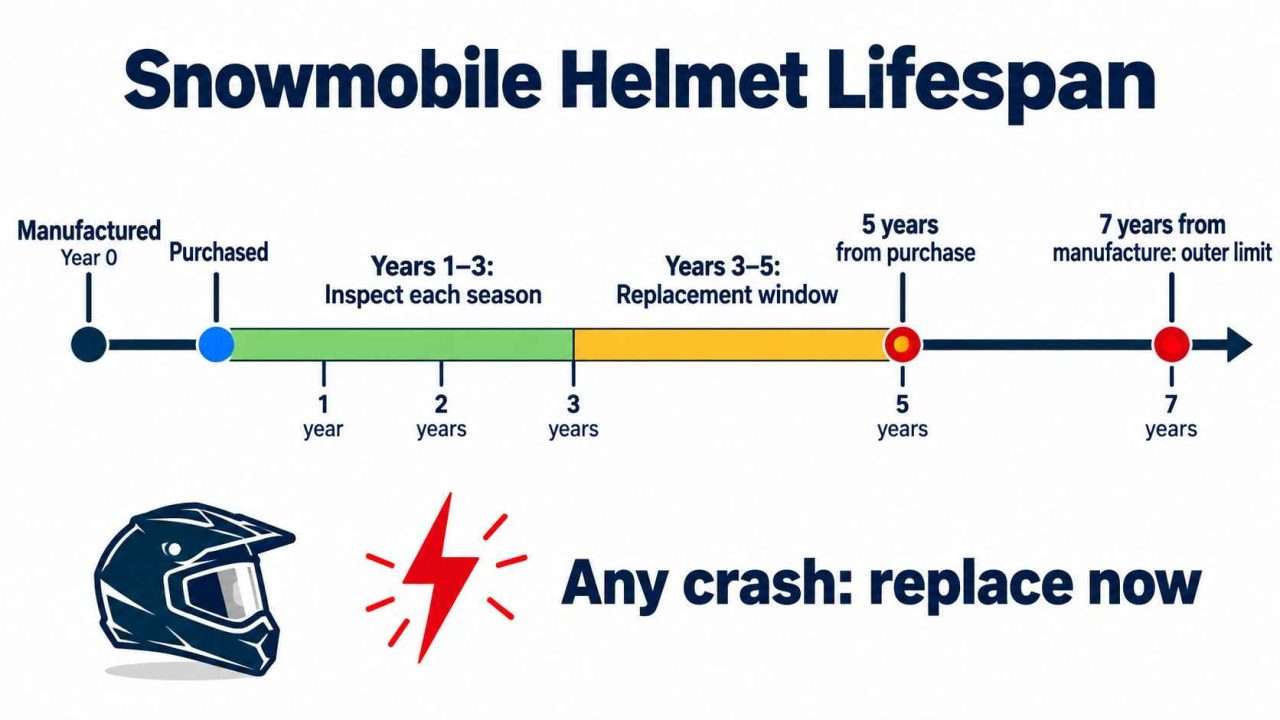
The Short Version: A snowmobile helmet should be replaced every five years of normal use, or immediately after any significant impact. The Snell Memorial Foundation and major manufacturers such as Shoei recommend this five-year interval even when no damage is visible.
Snell bases the interval on wear: putting a helmet on and off degrades its comfort pads and EPS foam liner until the fit loosens by one to two sizes. EPS foam loses its ability to deform as it ages. A helmet that shifts with the strap fastened needs earlier replacement.
It’s the first cold Saturday of the season, the sled is fueled up, and you pull your helmet down off the garage shelf where it’s been sitting since March. It looks fine. Then the question hits you: how many winters has this thing done already?
If you can’t remember, you’re in good company. Most of us buy a snowmobile helmet, ride it hard, toss it in the truck bed next to the ice auger and the gas can, and never give it another thought until something forces the issue (usually the day it smells bad enough that your riding partners start mentioning it).
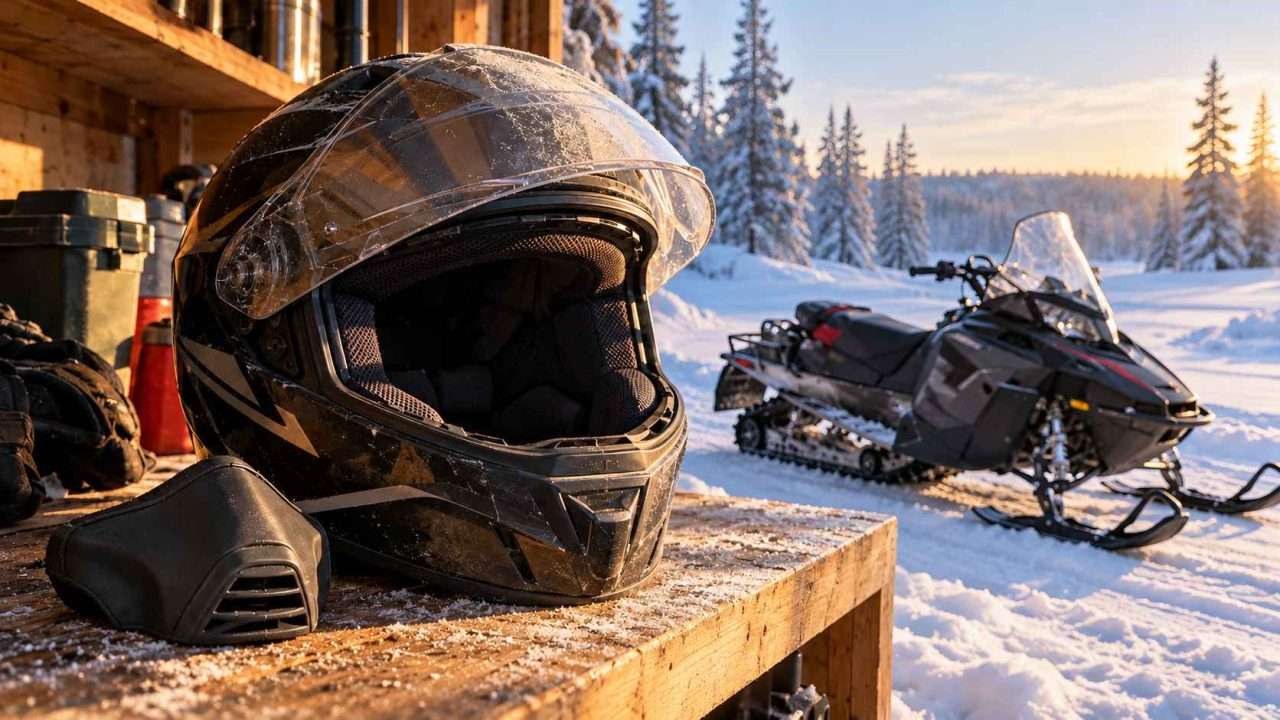
So, how often should your snowmobile helmet be replaced? Every three to five years for most riders, and straight away after any crash where your head took a hit. Beyond that, it’s a common sense call based on how you ride, how you store it, and what the helmet has been through.
Let’s take a look.
Do Snowmobile Helmets Expire?
No, snowmobile helmets don’t have a printed expiration date. There’s no “best before” stamp like you’d find on a carton of milk (although after a few winters, some liners smell like they’ve passed theirs). There’s also no law that says your helmet becomes illegal on a particular day.
What every Department of Transportation (DOT) certified helmet does have is a manufacture date label. Under Federal Motor Vehicle Safety Standard (FMVSS) No. 218, each helmet must be permanently labeled with the month and year it was made, and that label has to be readable without pulling out any padding. A quick look inside the shell should turn it up (and if yours is too faded to read, that tells you something in itself).
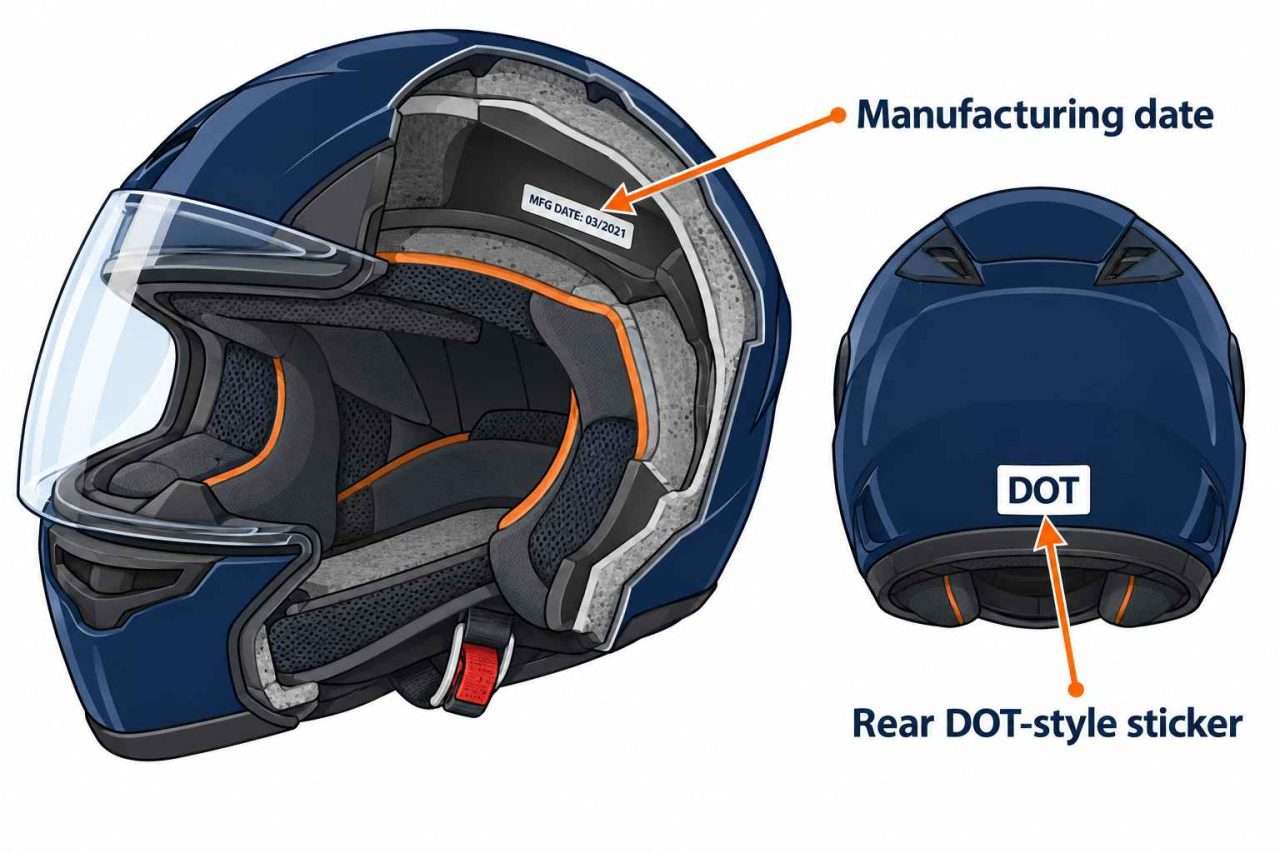
Helmets certified to the European standard, ECE 22.06 (Economic Commission for Europe), carry a production year too, which was added as a new requirement in that version of the regulation. Regardless of that, a missing expiry date doesn’t mean a helmet lasts forever.
The Snell Memorial Foundation puts it neatly. An unused helmet stored in good condition doesn’t automatically expire after five years, but one you’ve been wearing every weekend is a different story.
So, without a date to go by, how often should your snowmobile helmet be replaced? It comes down to three things: age, how hard it’s been used, and whether it’s been damaged.


How Long Do Snowmobile Helmets Last?
The figure you’ll hear most is three to five years, and it comes straight from the people who make and certify these helmets.
| Source | Replacement Guidance | The Fine Print |
|---|---|---|
| Ski-Doo (Bombardier Recreational Products) | Every 3 to 5 years | Depends on usage and environmental factors; sooner with signs of wear or damage |
| 509 | Every 5 years as a starting point | Sooner for frequent riding or exposure to high heat or harsh chemicals |
| Snell Memorial Foundation | After 5 years of normal use | Unused helmets stored well don’t automatically expire |
| Shoei | Warranty runs 5 years from purchase or 7 years from manufacture | Whichever comes first; a motorcycle brand, but the date logic carries over |
Notice the pattern. Nobody is saying ten years, and the only number above five (Shoei’s seven) is counted from the day the helmet was made, not the day you bought it.
That matters if you picked up a “new” helmet on clearance. A helmet that sat in a warehouse for two years has already used up part of its life before it ever touched your head.
Usage frequency changes the math too. The average snowmobiler covers more than 1,200 miles a year, according to International Snowmobile Manufacturers Association (ISMA) figures cited in a multi-center trauma study published in 2019, and every mile means more sweat soaking into the liner. If you ride every weekend in deep powder, plan on the shorter end of the range.
A cynic might say the only people telling you to replace your helmet are the people who sell helmets. Fair point, except Snell doesn’t make or sell helmets at all, and its five-year advice is based on testing helmets worn by the California Highway Patrol. That’s not a sales pitch, that’s common sense backed by data.
Why Does a Snowmobile Helmet Wear Out If You Never Crash It?
Material degradation, plain and simple. The parts that protect you are made of materials that age whether you ride or not, and the biggest one is the foam liner.
EPS (expanded polystyrene) is the same white foam that cushions a new TV in its box. In a helmet, its job is to crush in a crash so your brain doesn’t stop quite so suddenly.
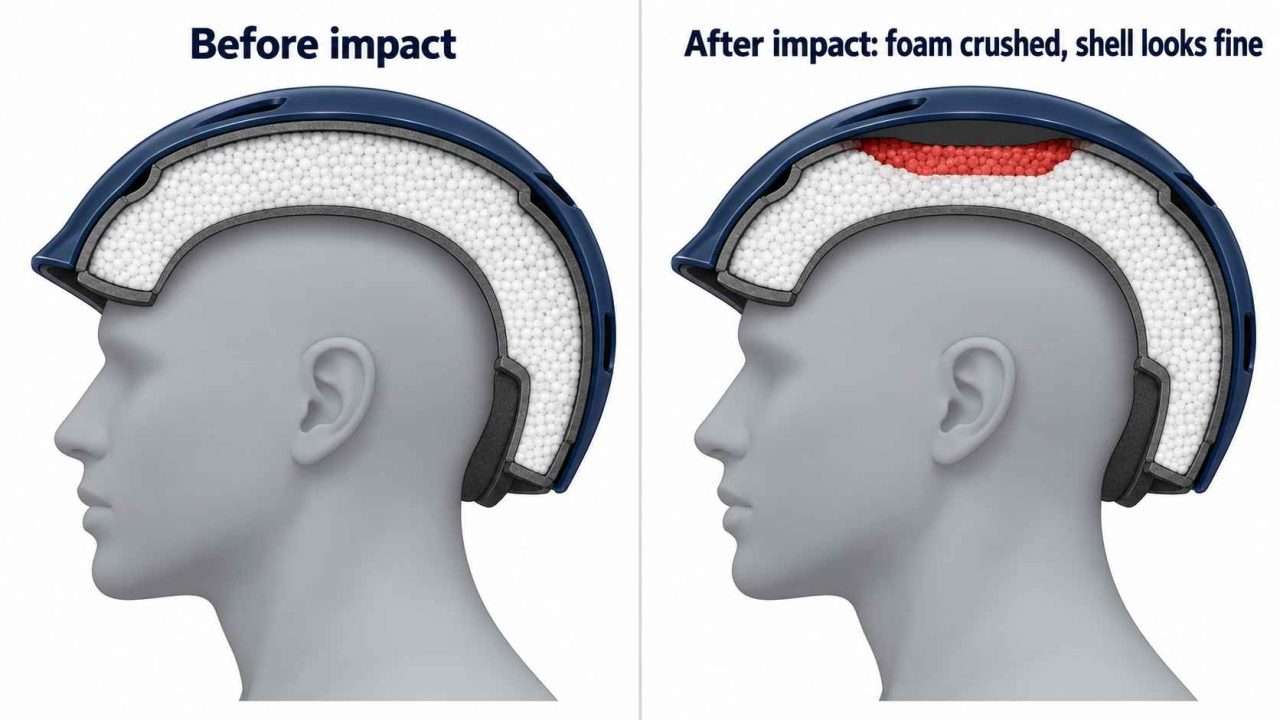
Then there’s the interior comfort padding. I’ve laid the cheek pads from a three-winter helmet next to a new set, and the old ones were noticeably thinner, even though nothing had ever hit it. According to Snell, the simple act of pulling a helmet on and off wears down the pads and foam over time, and a helmet with worn-out pads can end up one to two sizes larger than it was new.
A helmet that loose can shift or even come off in a crash, which defeats the whole purpose.
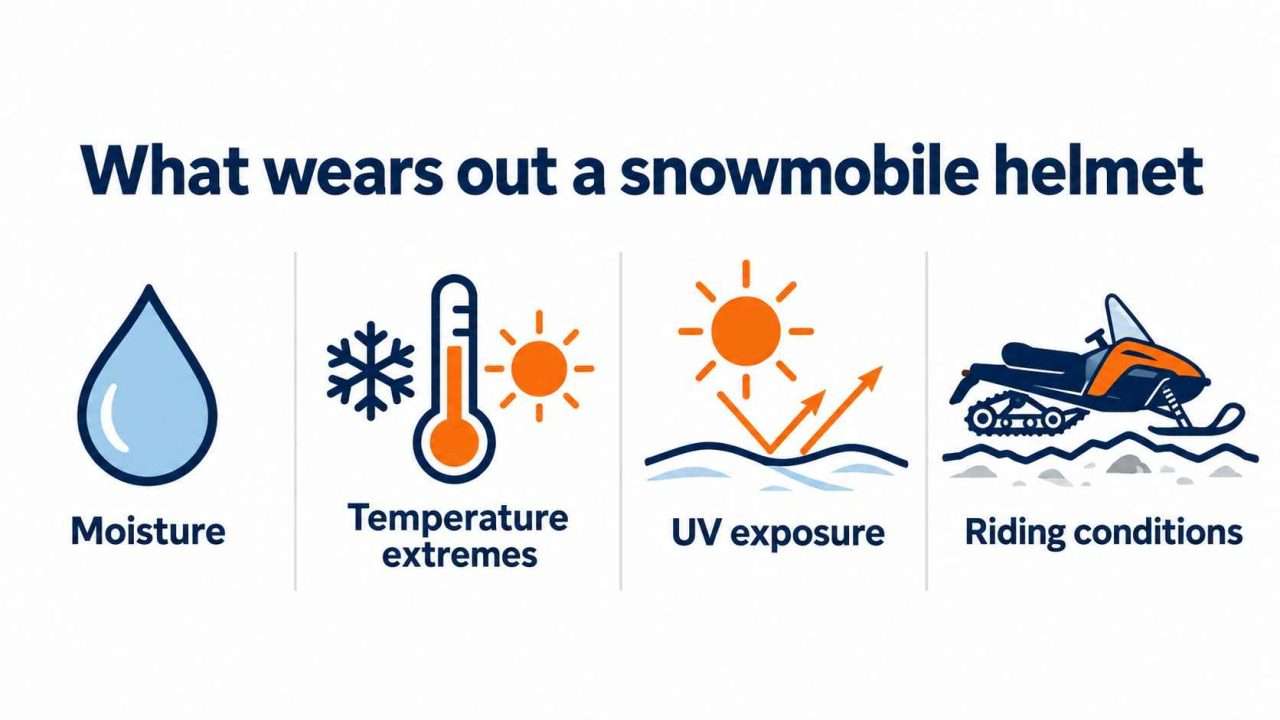
Snowmobiling adds a few extras:
- Moisture: breath, sweat and melting snow soak into the liner on every ride, and an enclosed full-face helmet is slow to dry out (leave it zipped in its bag overnight and you’ll find out exactly how slow).
- Temperature extremes: your helmet can go from a heated garage to well below zero in minutes. FMVSS 218 conditions test helmets anywhere from 5°F up to 131°F before impact testing.
- UV (ultraviolet) exposure: sunlight bouncing off snow is brutal, and 509 lists UV rays and moisture among the causes of material deterioration.
- Riding conditions: Ski-Doo lists sunlight, snow, rain and temperature swings as things that speed up wear.
The point being, a helmet that never hit anything can still be tired. You just can’t see it from the outside.
Do You Have to Replace a Snowmobile Helmet After a Crash?
Yes. If your head hit something while you were wearing it, the helmet has done its job. And no, “but it looks fine” doesn’t get it off the hook.
Most snowmobile helmets use a single-impact design, meaning the EPS liner absorbs energy by crushing permanently. It cannot and will not spring back, so that patch of foam has nothing left for the next hit. That’s why 509 says to replace a helmet after any significant impact, whether or not there’s visible damage.
Don’t just take my word for it. Federal law requires every DOT helmet to carry a label telling you that after a severe blow you should send it back to the maker for inspection or “destroy it and replace it.”
What about knocking it off the seat? Snell’s view is that a helmet dropped from your hand or off the handlebars doesn’t usually need replacing, because the real damage happens with a head inside. Repeated drops do add up, though.
Shoei will run a free impact inspection on helmets under warranty, but warns that most aren’t approved for further use.
Why so strict? A modern snowmobile can weigh over 600 pounds and top 90 mph, and a review in Clinical Orthopaedics and Related Research put the toll at roughly 200 deaths and 14,000 injuries a year in North America, with head injury the leading cause of death. That data dates from 2003, and the 2019 trauma study found 45% of its 528 snowmobile patients had head injuries.
So here’s the rule I ride by: if your head was in it when it hit, replace it before your next ride, even if it looks perfect.
What Damage Should You Look for on a Snowmobile Helmet?
Age alone doesn’t decide how often you should replace your snowmobile helmet; condition does. Give your helmet a proper once-over at the start of every season and after any spill. Here’s the five-minute helmet inspection I do every November, usually with a coffee in the other hand:
- Read the label. Find the manufacture date and do the math.
- Check the outer shell. Look for cracks, dents, deep gouges, and fading or peeling paint.
- Inspect the EPS. Pull the comfort liner and look for cracks, crushed spots or foam that feels brittle (fair warning, the smell of last season’s liner is an experience in itself).
- Test the chin strap. Check the webbing, stitching and D-rings for fraying, cuts or corrosion.
- Work the moving parts. Cycle the shield, and on a modular, make sure the chin bar latch locks every time.
- Check the fit. Buckle up, then try to roll the helmet forward and backward off your head. If it moves, the pads have packed out.
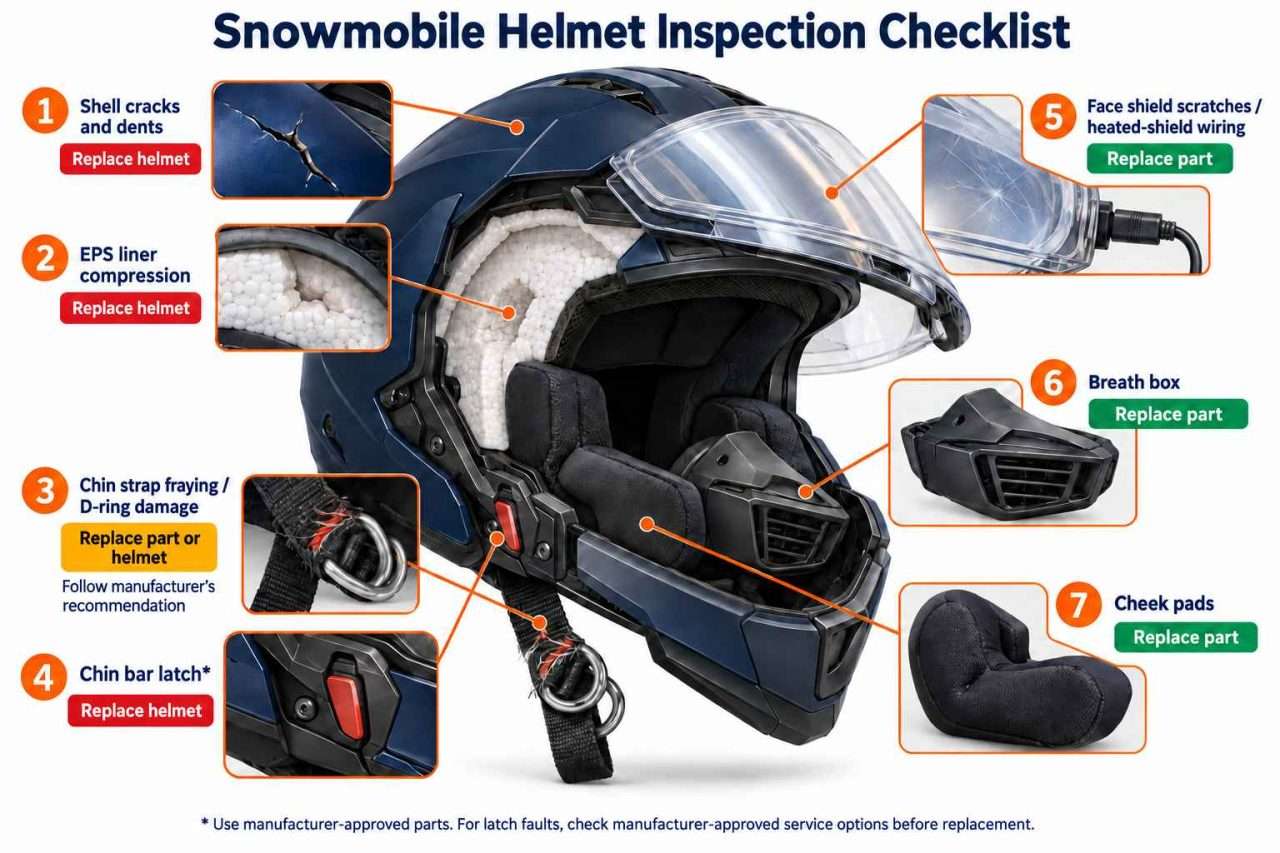
Found something? This checklist tells you whether it’s a part problem or a helmet problem.
| Component | Warning Sign | What to Do |
|---|---|---|
| Outer shell | Cracks, dents, deep gouges, flaking finish | Replace the helmet |
| EPS foam liner | Cracks, crushed or compressed spots, brittleness | Replace the helmet |
| Chin strap and D-rings | Fraying, cuts, failing stitching, corrosion | Replace part or the helmet (check manufacturer’s recommendation) |
| Chin bar or modular latch | Cracks, play, latch won’t lock | Replace the helmet |
| Face shield | Scratches, worn anti-fog coating, damaged heated-shield wiring | Replace the shield |
| Breath box or deflector | Torn, warped, won’t stay in place | Replace the part |
| Comfort and cheek pads | Packed out, torn, smelly, loose fit | Replace the pads, or the helmet if fit can’t be restored |
Can You Repair a Snowmobile Helmet Instead of Replacing It?
Some of it, yes. The bits that wear from use, as opposed to the bits that protect your skull, are usually replaceable.
Shields, breath boxes, cheek pads and comfort liners are all sold as spares by the major brands. 509, for one, sells replacement visors, liners, cheek pads and screw kits, and backs its helmet visors with a lifetime warranty (Tactical visors excluded).
What you can’t fix is the shell, the EPS liner or the retention system. The FMVSS 218 label tells owners to “make no modifications,” and Snell notes that after-market additions can invalidate its certification.
A scratched shield is a parts-counter problem. A cracked shell is a new-helmet problem, no matter how much duct tape is in your tool bag.
Can Cleaning or Storage Shorten Your Helmet’s Life?
Absolutely, and this is where a lot of helmets die young. The FMVSS 218 label itself warns that a helmet “can be seriously damaged by some common substances” without the damage being visible.
In a snowmobile garage, the usual suspects are gasoline, solvents and petroleum-based cleaners, degreasers and polishes. Snell’s advice is to clean the inside pads with mild soapy water and never use chemical cleaning products on the inside or outside of your helmet.
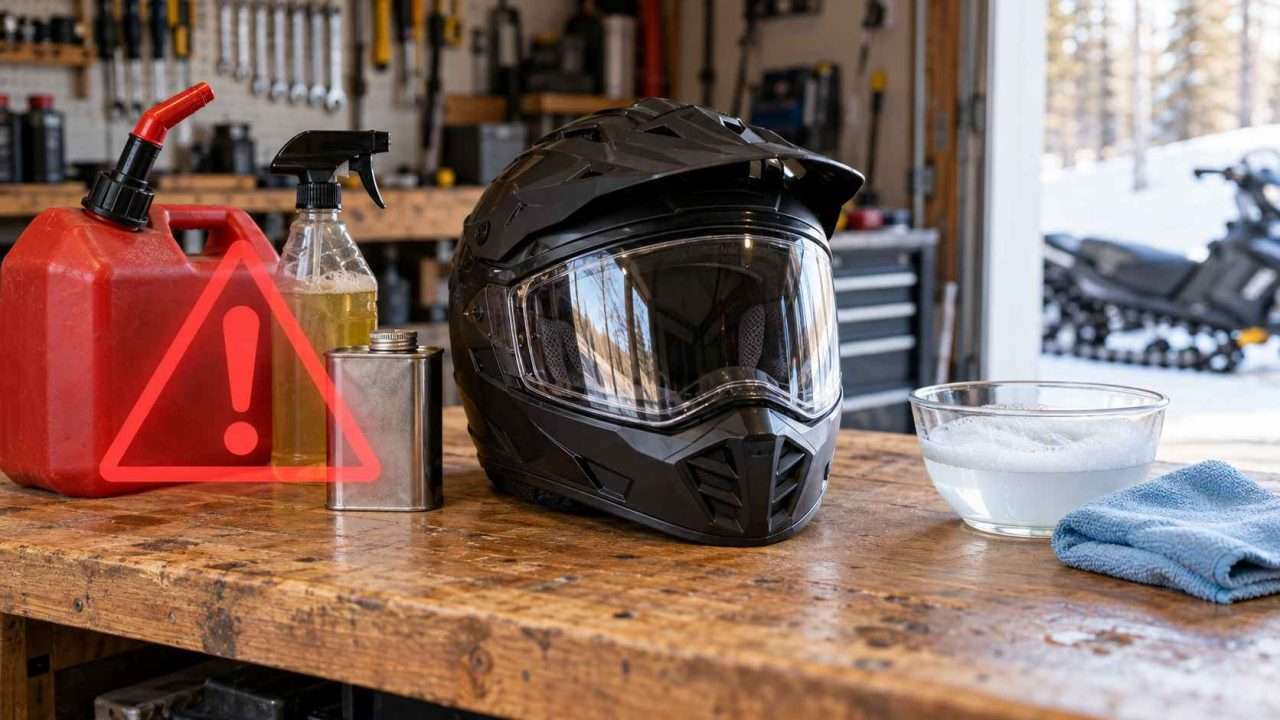
I’ve watched riders wipe a helmet down with the same shop rag they just used on the sled, which is about the worst thing you can do to it short of parking it on the exhaust. Heat is the other helmet killer. Snell warns against leaving a helmet near high heat like a muffler, which could melt the foam liner, and the same common sense applies to a car dashboard in July or an attic over summer.
For helmet storage, keep it somewhere cool, dry and out of the sun, ideally in its bag, and let it dry out fully after every ride.
Does DOT, ECE 22.06 or Snell Certification Change the Replacement Timeline?
Not directly. A certification tells you the helmet passed its tests when it left the factory, and it doesn’t add a single year to its life.
You might assume a DOT sticker means a government lab checked your helmet. It doesn’t, because DOT lets manufacturers certify their own helmets, which is one more reason to trust your own inspection over a sticker.
FMVSS 218 applies to helmets designed for motorcyclists and other motor vehicle users, and most snowmobile helmets sold here carry DOT certification. Ski-Doo, for example, says most of its own helmets are DOT certified.
If you ride in Canada or Europe, or you own a dual-certified helmet, check which version of ECE certification it carries. Under the 06 series of UN Regulation No. 22, countries can prohibit the sale of helmets that don’t meet it from 36 months after it entered into force, which is why new ECE 22.05 helmets have been phased out of much of Europe since 2024.
Your existing 22.05 helmet is still fine to wear. Even so, some current snowmobile helmets still ship with 22.05 approval (509’s own product page confirms its Altitude 2.0 Helmet is ECE 22.05 rated), so check the label when you shop if ECE matters to you.
Snell updates its standards roughly every five years, and its current certified list for motorcycle-style helmets is M2025. That five-year rhythm lines up neatly with its five-year replacement advice.
Does a MIPS Helmet Last Any Longer?
No. MIPS (Multi-directional Impact Protection System) is a low-friction layer inside the helmet designed to reduce rotational forces in angled impacts, and you’ll now find it in some snowmobile helmets, such as the 509 Altitude 2.0 Offroad Pro.
It doesn’t change the foam underneath, so the same replacement rules apply. MIPS itself warns against using a helmet if the system is damaged or displaced, so a crash means replacement just the same. It’s a clever bit of engineering, but it’s not a fountain of youth.
So, How Often Should Your Snowmobile Helmet Be Replaced?
Here’s the take-away, stripped down to what you actually need to remember:
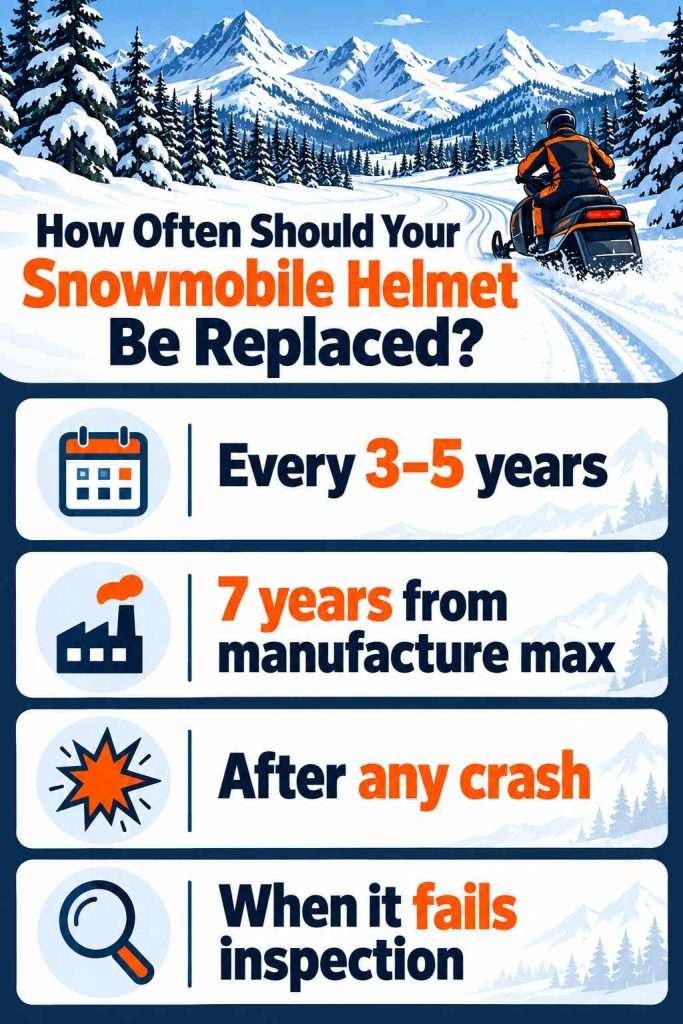
- Every three to five years from purchase, closer to three if you ride hard and often.
- Treat roughly seven years from the manufacture date as the outer limit, even for a helmet that’s barely been worn (that’s where Shoei draws its line).
- Immediately after any crash where your head was inside it.
- Sooner if the shell, EPS liner, chin strap or fit fails your inspection.
None of that is law, and nobody is going to pull you over on the trail for an old helmet. That’s how often your snowmobile helmet should be replaced if you want common sense on your side, and your head is the only one you’ve got.
When the time comes, take a look at the current snowmobile helmets when it’s time to upgrade. An old helmet is cheap right up until the day you need it.
Frequently Asked Questions
Is it safe to buy or use a secondhand snowmobile helmet?
So, buy new if you can. If it’s a hand-me-down from someone you trust, check the manufacture date under the padding, look for cracks or flat spots in the foam, and make sure it still fits snugly.
Should the snowmobile helmet replacement timeline be counted from the purchase date or the manufacture date?
You’ll usually find the manufacture date on a sticker under the comfort liner, as required by the DOT (Department of Transportation) FMVSS 218 (Federal Motor Vehicle Safety Standard 218). Take a peek before you buy (a ‘new’ helmet on clearance can already be three years old).
Do carbon fiber, fiberglass, and polycarbonate snowmobile helmet shells last different lengths of time?
So, don’t treat a carbon shell as a license to keep a helmet for a decade. Stick to the same replacement schedule whatever it’s made of.
Does an expensive snowmobile helmet last longer than a budget snowmobile helmet?
The EPS (expanded polystyrene) liner in a $500 helmet still ages and still crushes in a crash, exactly like the one in a $150 helmet. So, replace both on the same schedule (sorry, that carbon fiber price tag doesn’t come with bonus years).
Does a modular snowmobile helmet wear out faster than a full-face snowmobile helmet?
So, give the chin bar a firm tug every time you close it. If the latch starts feeling sloppy, don’t wait for the five-year mark.
Do snowmobile helmets with heated shields need to be replaced more often?
Check the shield for scratches or a separating inner lens, and look over the cord and jack for frayed wires or loose connections. Both can be replaced separately for far less than a new helmet, so don’t toss a good helmet over a dead visor.
How often should snowmobile helmet cheek pads and comfort liners be replaced?
Most snowmobile helmets have removable pads you can order from the manufacturer, and washing them in mild soapy water between seasons helps them last (if you can smell them from across the garage, that’s another clue). Go by fit, not the calendar.
RELATED READS