Snell B95 vs CPSC: Stricter Test, Zero Helmets Available
The Short Version: Snell B95 is a voluntary bicycle helmet standard that imposes stricter impact tests than mandatory CPSC 1203. B95 requires a 2.2-meter flat-anvil drop versus CPSC’s 2-meter drop, and demands third-party laboratory certification before any helmet reaches market.
CPSC allows manufacturers to self-certify compliance, while Snell independently tests helmets and conducts follow-up testing of retail samples. As of mid-2026, Snell’s own certified helmet list shows no currently produced open-face bicycle helmets carrying B95 certification. For everyday riders, B95 is a stricter standard with virtually nothing on shelves to show for it.
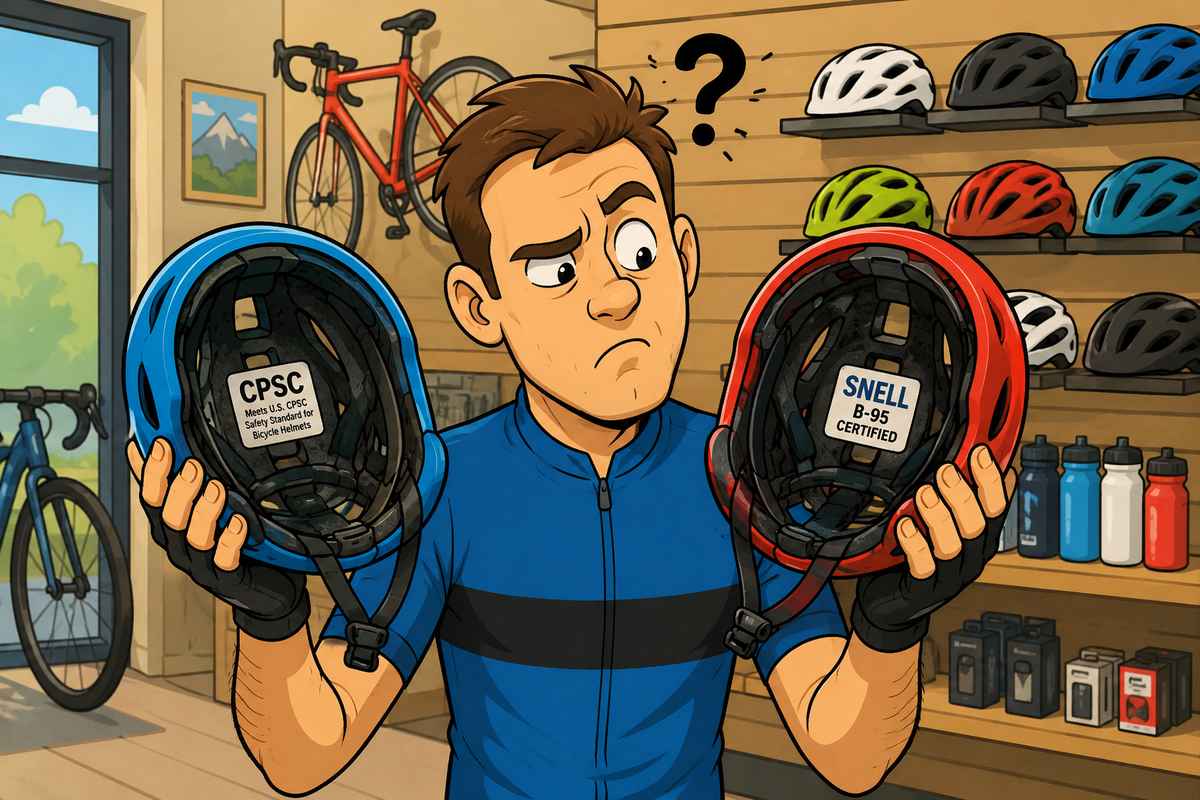
If you’ve gone looking for the “safest” bicycle helmet certification, there’s a good chance you’ve come across Snell. It has a reputation as the gold standard, the tougher test, the one that separates serious helmets from the rest. CPSC, by comparison, sounds like the bare minimum.
That’s not quite right. The relationship between Snell B-95 and CPSC (Consumer Product Safety Commission, under 16 CFR Part 1203) is more interesting than a simple good-better ranking, and understanding the difference changes how you think about what “safer” actually means when it’s printed on a helmet box.
The short version is this: Snell B-95 is a tougher test than CPSC on paper, but it’s almost impossible to find a bicycle helmet that actually carries the certification. That raises a question worth exploring – if it’s stricter, why don’t more helmets use it? And does CPSC leave you under-protected? Let’s take a look.
What Are CPSC and Snell B-95?
CPSC stands for the Consumer Product Safety Commission (CPSC 16 CFR Part 1203), and any bicycle helmets manufactured on or after March 10, 1999, have been legally required to pass it. It’s not optional, and it’s not a suggestion. Manufacturers cannot legally put a bike helmet on the US market without it meeting the standard. The standard covers four performance tests: impact attenuation, peripheral vision, retention system strength, and positional stability.
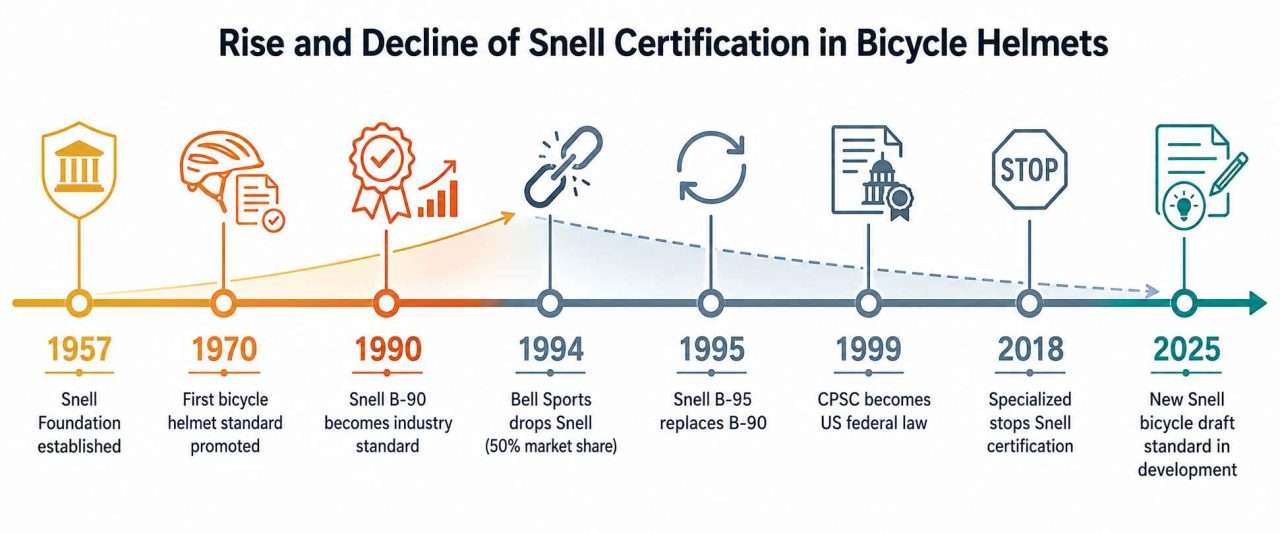
The Snell Memorial Foundation is a California-based nonprofit that has been testing and certifying helmets since 1957. It was founded after William “Pete” Snell, a popular amateur sports car racer, died of head injuries in 1956 when his helmet failed during a crash. His friends, associates, and Dr. Howard Snively – the track physician who witnessed the accident firsthand – started the Foundation to do something about it. Since then, Snell has developed certification programs covering everything from motorcycle helmets to ski helmets to bicycle helmets.
Snell B-95 is the Foundation’s 1995 standard for bicycle helmets (with a 1998 revision). It’s voluntary – manufacturers don’t have to pursue it – and it sets more demanding impact test requirements than CPSC. The question is whether “more demanding” translates to “meaningfully better protection” for the average cyclist.
How Does the Testing Actually Differ?
Both standards test helmets by placing them on an instrumented headform – essentially a metal head with an accelerometer inside – and dropping it onto anvils. The accelerometer records the peak g-force transmitted through the helmet. If that number exceeds the standard’s threshold, the helmet fails. Simple concept, different execution.
The biggest difference between CPSC and Snell B-95 is the drop height on the flat anvil. CPSC requires a 2.0-meter flat anvil drop; Snell B-95 requires 2.2 meters for initial certification testing. That extra 0.2 meters means more kinetic energy at impact – about 10 percent more, in fact. The Snell certification flat anvil test is specified at 110 joules of impact energy; CPSC’s equivalent test comes in at roughly 98 joules. Not a massive gap, but a real one. For follow-up market surveillance testing, Snell drops back to 100 joules – still comparable to CPSC – but the initial certification hurdle is genuinely higher.
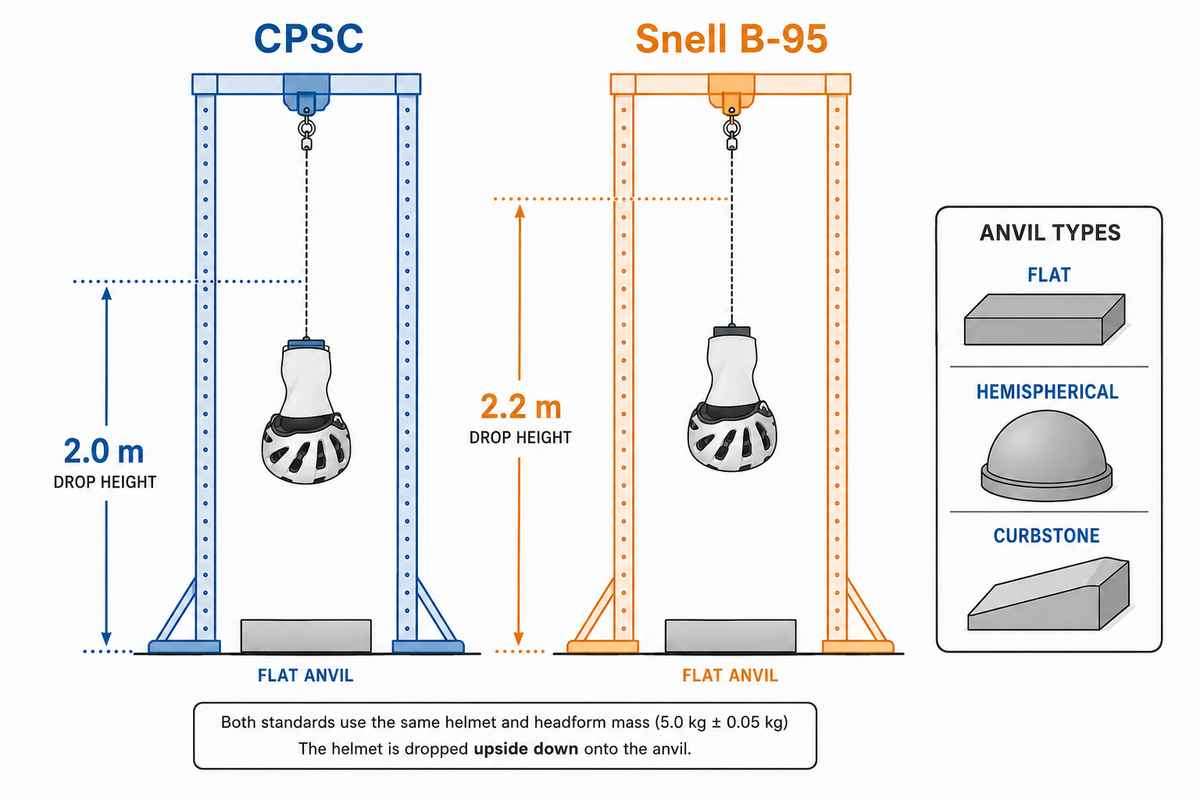
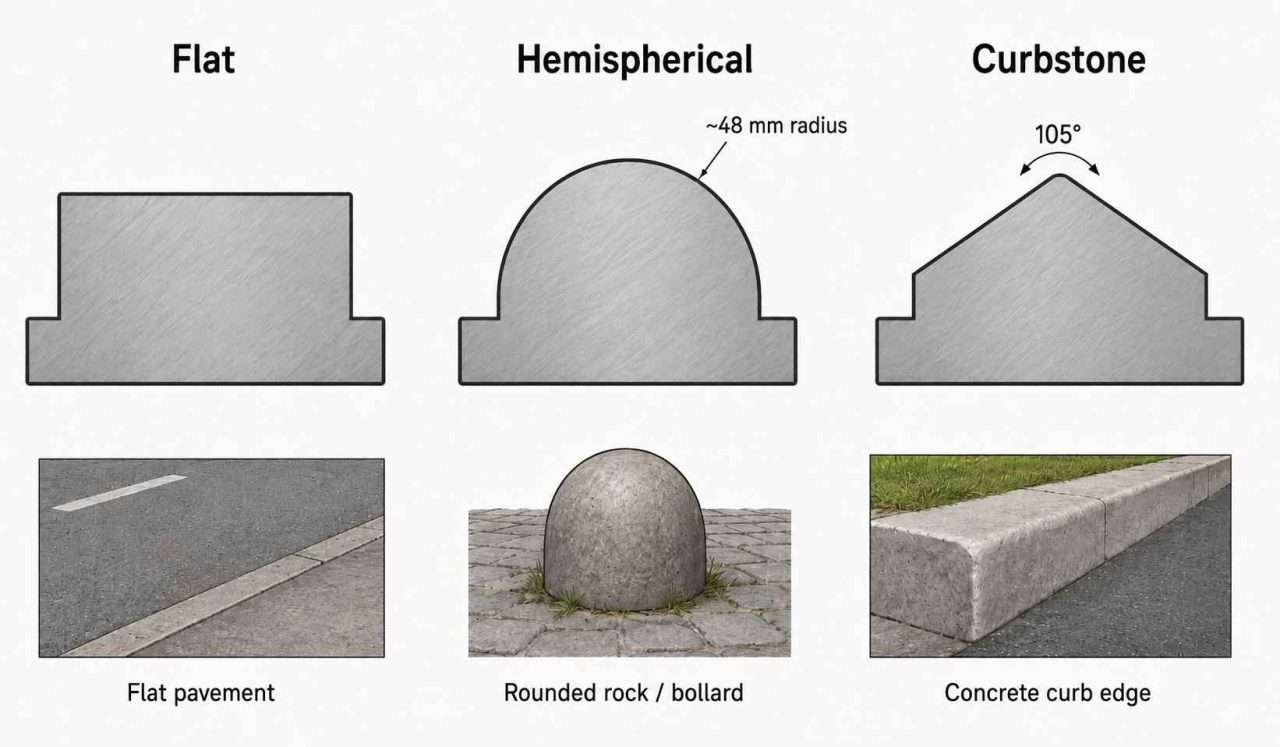
Both standards use the same three anvil types: flat, hemispherical, and kerbstone (or curbstone, as CPSC labels it). The hemispherical and kerbstone drop energies are closer between the two, with Snell B-95 certification testing at 72 joules and CPSC at 65 joules for those anvils. Both standards require helmets to pass with a maximum peak g-force of 300g. So the threshold is identical – the difference is purely in how hard the helmet gets hit to achieve that reading.
CPSC vs Snell B-95: Side-by-Side Comparison
| Feature | CPSC 16 CFR Part 1203 | Snell B-95 |
|---|---|---|
| Legal Status | Mandatory (US law) | Voluntary |
| Max Peak G-Force | 300g | 300g |
| Flat Anvil Drop Energy (Certification) | ~98 J (2.0 m) | 110 J (2.2+ m) |
| Hemispherical Anvil Energy | 65 J (1.2 m) | 72 J (1.3+ m) |
| Kerbstone/Curbstone Anvil | 65 J (1.2 m) | 72 J (1.3+ m) |
| Anvil Types Used | Flat, Hemispherical, Curbstone | Flat, Hemispherical, Kerbstone |
| Peripheral Vision Required | 105° each side | 110° each side |
| Positional Stability Test | Yes | Yes |
| Retention System Strength | ≤30 mm deflection | ≤30 mm deflection |
| Pre-Treatment Conditioning | Heat, cold, wet | Heat, cold, wet |
| Certification Process | Manufacturer self-certification | Snell lab testing |
| Follow-Up Market Testing | Minimal (CPSC spot checks) | Regular random sample purchases |
| Currently Certified Helmets | All US bicycle helmets | None (as of June 2026) |
Mobile users: swipe the table left or right to see all columns.
What Does “Self-Certification” vs Snell’s Process Actually Mean?
This is the part of the comparison that doesn’t get enough attention. It’s not just about drop heights – it’s about who’s doing the checking.
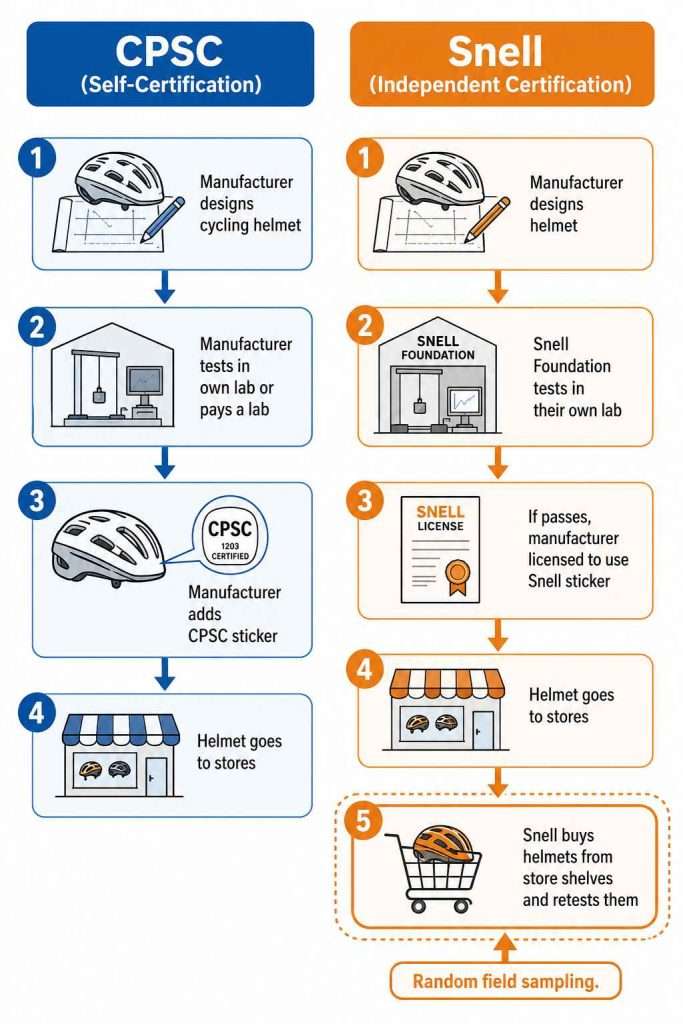
CPSC operates on a self-certification model. Manufacturers are legally required to ensure their helmets comply, but the testing process is largely their own responsibility. They must base certification on a “reasonable testing program,” and at least one helmet from each production lot needs to be tested.
There’s no independent Snell-style lab involved by default, and CPSC’s follow-up market surveillance – pulling helmets from store shelves and re-testing them – is limited. The Bicycle Helmet Safety Institute (BHSI) has noted this distinction explicitly: the main practical difference between Snell and CPSC is the certification procedure, not just the technical specs.
Snell does it differently. For initial certification, helmets go to Snell’s own testing facility in North Highlands, California, and the Foundation also conducts a site visit to the manufacturer’s factory. After certification, Snell buys helmets randomly from retail outlets and tests them against the standard’s ongoing requirements. If a certified model starts failing those random samples, the certification gets pulled. It’s a more rigorous quality control loop than what CPSC requires.
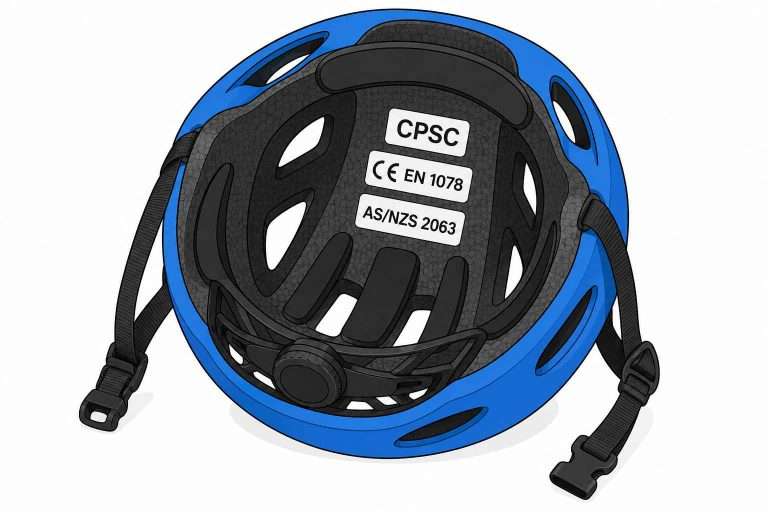

The point being: two helmets can both say “CPSC certified” on the label, but one might have been tested extensively by an independent lab and the other minimally by the manufacturer. A Snell sticker means the Foundation tested it, verified the factory, and keeps checking it. That’s a meaningful difference in process, even when the performance requirements are close.
Why Does Almost No Bicycle Helmet Use Snell B-95?
Here’s the uncomfortable reality for anyone who went looking for a Snell-stickered road bike helmet recently: you probably couldn’t find one. As of June 2026, the Snell Foundation’s active certified helmet list does not appear to show any currently produced road-style bicycle helmets carrying B-95 certification. The list is not empty, however; it still includes some B-95A certified cycling helmets whose last certified production ended many years ago.
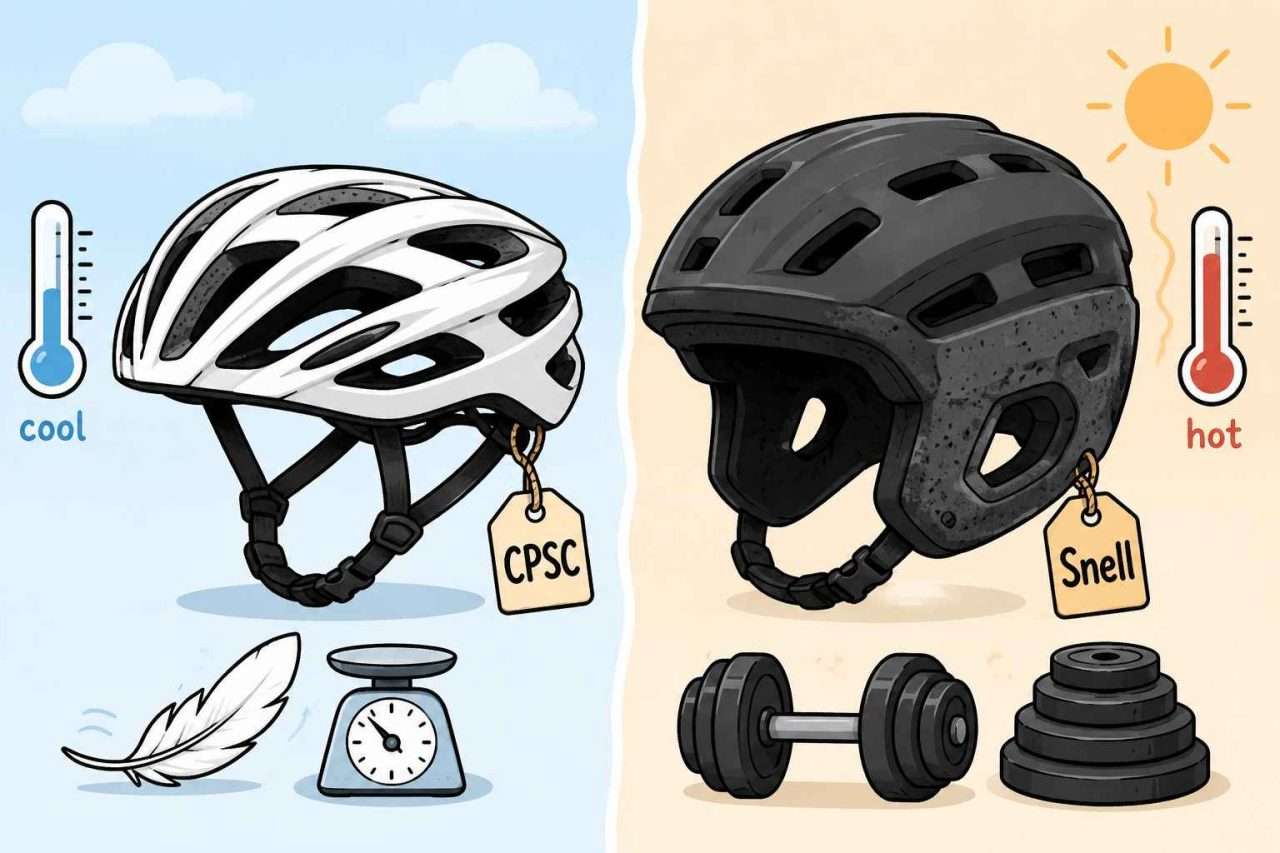
That’s not because manufacturers can’t make helmets that pass Snell B-95. It’s because they’ve chosen not to pursue the certification, and there’s a practical reason for that. Higher drop heights and greater impact energies require more foam to absorb the hit. More foam means a heavier helmet. A heavier helmet means worse ventilation and a less comfortable ride. And here’s the thing – cyclists won’t buy heavy, hot helmets even if they offer marginally better lab performance. The market made that call.
The BHSI describes Snell B-95 as “more stringent than CPSC, but little-used” – and that characterization has been accurate for decades. Some manufacturers briefly pursued Snell bicycle certification in the 1990s when it carried more prestige, but the market trend toward lightweight and airy helmets made the thicker foam required for Snell an increasingly tough sell. Snell’s 2025 updates have focused on its motorsport and motorcycle standards (M2025 and SA2025); the bicycle standard has seen no comparable revival.
A cynic might say that manufacturers just don’t want to pay for Snell certification when CPSC compliance is already required and covers the legal bases. There’s some truth to that. But the foam-weight-ventilation tradeoff is a genuine engineering constraint, not just a marketing excuse.
How Does ASTM F1447 Fit Into This?
There’s a third player worth knowing about. ASTM F1447-24 – published by ASTM International (formerly the American Society for Testing and Materials) – sits between CPSC and Snell in terms of strictness. Its drop heights match CPSC (2.0 meters on the flat anvil, 1.2 meters on the hemispherical and curbstone anvils), but it sets a tighter peak g-force threshold: no more than 275g, versus CPSC’s 300g.
That 25g margin matters in practical terms. A helmet that just squeaks through CPSC testing at 299g has passed legally, but there’s not much headroom left. An ASTM F1447-certified helmet had to come in under 275g at the same impact energies – a tougher ask for the foam. Some premium manufacturers pursue dual CPSC and ASTM certification for exactly this reason: it tells the buyer the helmet didn’t just scrape over the legal bar.
ASTM certification can be granted through self-certification or via the Safety Equipment Institute (SEI), an independent nonprofit that tests helmets on behalf of manufacturers. Helmets with an SEI mark on the ASTM sticker have been verified by a third party, which adds a layer of confidence similar to (though less rigorous than) Snell’s approach.
Three-Way Comparison: CPSC vs ASTM F1447 vs Snell B-95
| Feature | CPSC 1203 | ASTM F1447-24 | Snell B-95 |
|---|---|---|---|
| Legal Status | Mandatory | Voluntary | Voluntary |
| Max Peak G-Force | 300g | 275g | 300g |
| Flat Anvil Drop | 2.0 m (~98 J) | 2.0 m (~98 J) | 2.2+ m (110 J) |
| Curved Anvil Drops | 1.2 m (65 J) | 1.2 m (65 J) | 1.3+ m (72 J) |
| Who Does the Testing | Manufacturer (self-cert) | Manufacturer or SEI (3rd party) | Snell Foundation |
| Follow-Up Market Testing | Limited | Limited | Regular random samples |
| Helmets Available in US Market | All bicycle helmets | Many premium helmets | None currently |
Mobile users: swipe the table left or right to see all columns.
Does a Tougher Standard Mean Safer on the Road?
This is where common sense needs to get involved. A helmet that passes a higher drop test isn’t automatically safer in every real-world crash – it just means it handled more energy in a lab before failing. The real question is whether the additional test severity corresponds to significantly different crash outcomes, and that’s harder to answer than it sounds.
The BHSI, which has been independently evaluating bicycle helmets since 1988, puts it plainly: in practice, a Snell B-95 bicycle helmet isn’t much different in real-world protection from one that meets CPSC. The lab numbers differ, but the foam technology hasn’t changed fundamentally. What Snell genuinely adds is the certification process – the independent testing, the ongoing market surveillance. That’s a quality assurance story more than a pure performance story.
Not only that, but the 10-percent increase in flat anvil drop energy that separates Snell B-95 from CPSC represents a relatively small performance margin compared to the massive gap between wearing any certified helmet and wearing nothing at all. A cyclist who puts on a properly fitted CPSC-certified helmet has already captured the vast majority of the protective benefit available from a bicycle helmet. The question of whether Snell adds another increment on top is legitimate, but it shouldn’t distract from that baseline reality.
There’s also a variable worth flagging: certification standards test for linear impacts only. They drop a helmeted headform straight down onto an anvil. What they don’t test is rotational acceleration – the twisting force that happens when your head catches a surface at an angle, which is actually how many concussions occur. Neither CPSC nor Snell B-95 covers this, which is why technologies like MIPS (Multi-directional Impact Protection System) exist as a separate layer of protection beyond any standard’s pass/fail line.
What About Other Helmet Standards That Work Like Snell?
It’s worth noting that Snell isn’t the only certification body that operates independently of manufacturers. The Canadian Standards Association (CSA) runs a lab-based certification process for its bicycle helmet standard, CAN/CSA D113.2-M89. And in the motorcycle world, Snell’s SA and M standards are widely used and carry genuine market weight – you’ll find plenty of motorcycle helmets with current Snell certifications because the motorcycle market’s performance expectations align better with what Snell’s process demands.
ASTM International is a standards body, not a certifier – it writes the specification, but manufacturers or third-party labs do the actual testing. The Safety Equipment Institute (SEI) fills the independent-testing role for ASTM bicycle helmets in a way that’s conceptually similar to what Snell does: third-party verification, not manufacturer self-assessment. If you’re buying a helmet and want some version of independent quality assurance without the now-impossible task of finding a Snell B-95 bicycle model, look for an SEI mark alongside ASTM F1447 certification.
For comparison: the EN 1078 standard, used across Europe, doesn’t specify an independent certification body in the way Snell does – it relies on CE marking procedures which vary by manufacturer and notified body. That’s a different oversight model again, and one worth understanding if you’re buying helmets across markets. For a full comparison of the CPSC vs EN 1078 vs ASTM bicycle helmet standards, our article covers the complete picture.
What Should You Actually Look For on a Helmet Label?
Given that Snell B-95 bicycle helmets don’t exist on the current market, the practical question becomes: how do you choose the best-protected option from what’s actually available?
First, make sure the helmet carries CPSC certification – that’s non-negotiable for US riders, and it covers the legal baseline. Every bicycle helmet in a US store should have it; if you’re buying online from overseas, check the label carefully.
Second, look for ASTM F1447 certification alongside CPSC. The lower 275g threshold means the foam had to work harder to pass, and if the ASTM sticker also carries the SEI mark, an independent lab verified it.
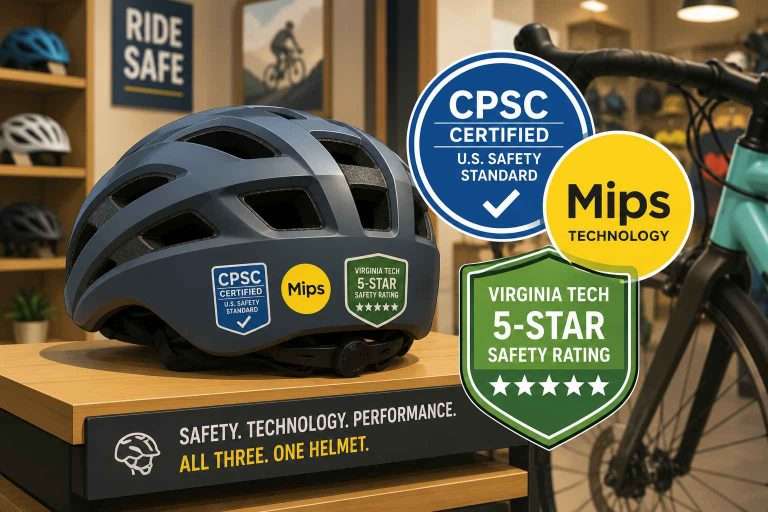
Third, look at Virginia Tech’s STAR rating system, which runs its own independent tests on helmets and publishes rankings. A high STAR rating tells you a helmet performed well beyond the minimum pass/fail line of any standard – it’s the closest thing to what Snell’s original promise was, applied to the modern US market.
None of that replaces the fit question, by the way. A Snell-certified helmet that sits two inches back on your forehead offers less protection than a basic CPSC helmet worn correctly. Fit matters at least as much as certification level, and it costs nothing extra.
So, Which Standard Offers Better Protection?
On paper, Snell B-95 demands more from the helmet in the lab. The flat anvil drop is higher, the impact energies are greater, and the certification process involves independent verification that CPSC’s self-certification model doesn’t require. If you could buy a Snell B-95 certified bicycle helmet today, it would represent a genuinely more demanding test passed under more rigorous oversight.
In practice, you can’t buy one, and the BHSI’s assessment that real-world performance differences between Snell B-95 and CPSC helmets are modest is worth taking seriously. CPSC’s mandatory standard has driven enormous improvements in the bicycle helmet market since 1999, and a well-made CPSC helmet with ASTM dual certification is a solidly protective piece of equipment.
So, the real-world answer is: for the cyclist buying a helmet today, CPSC plus ASTM F1447 plus a strong Virginia Tech STAR rating gets you as close to “Snell-level confidence” as the current market allows. That’s not a consolation prize – it’s actually a well-stacked combination.
For an overview of all the standards your helmet might need to meet, depending on where you ride, see our complete guide to bicycle helmet safety standards. And if you’re curious about how the testing procedures themselves work – the drop rigs, the anvils, the conditioning chambers – that’s covered in depth in our article on how bicycle helmets are actually tested during certification.
Snell Bicycle Helmet Certification: Your Questions Answered
Can a helmet be certified to both CPSC and Snell B-95?
That said, you won’t find any of them on the shelf. Snell B-95 demands slightly higher drop heights and greater head coverage area than CPSC, and the helmets that pass would tend to be bulkier. The market reality is that most manufacturers stick to CPSC – it’s the law, and most consumers aren’t looking for the extra weight and reduced ventilation that often comes with B-95 certification.
Is Snell worth it?
So the value of a Snell sticker isn’t just “it survived a slightly harder hit in the lab.” It’s that someone independent checked the work – and then checked it again off the shelf. For a lot of riders, a solid CPSC helmet is perfectly fine. But if you want that extra layer of independent verification, Snell gives you something real.
What is the difference between Snell B-90 and B-95?
B-90 lines up closely with the CPSC standard – the drop heights are the same, and the level of protection is comparable. B-95 pushes beyond both. The practical trade-off is that helmets built to pass B-95 tend to need thicker foam to absorb those harder hits, which is why they often end up heavier and less ventilated than CPSC-only or B-90 helmets. That’s the main reason B-95 helmets are relatively uncommon on the market.